Free NewsletterPro Login
Home » Deep Briefs »  » Difference Between 10K and 10Q: What Every Investor Needs to Know

Difference Between 10K and 10Q: What Every Investor Needs to Know

Published: Feb 25, 2026 
Disclosure: Briefs Finance is not a broker-dealer or investment adviser. All content is general information and for educational purposes only, not individualized advice or recommendations to buy or sell any security. Investing involves significant risk, including possible loss of principal, and past performance does not guarantee future results. You are solely responsible for your investment decisions and should consult a licensed financial, legal, or tax professional before acting on any information provided.
Summary:

A 10-K is a company's full annual report - audited, detailed, and filed once a year.

A 10-Q is a shorter quarterly snapshot - filed three times a year and unaudited.

Both are free on the SEC's EDGAR database and give investors a complete picture of a company's financials.

Whether you’re a beginner or advanced investor you need to know how to research a stock.

Why? Knowing a company’s business and financials gives you a better picture on how to value the stocks and know if it’s a good investment for you.

Otherwise, you’re stuck listening to TV analysts and reddit posts…

One of the ways investors research a stock is by looking at its financial reports.

These come in two types:

  • 10-K
  • 10-Q

These two documents are where all of a publicly traded company’s financial data lives

Every number you see on CNBC, every analyst report, every earnings headline - it all comes from these SEC filings.

Now, looking at them for the first time can be overwhelming - but once you know what to look for it will be a breeze.

And in the end, analyzing financial reports makes you a more informed investor.

Let's break down what a 10-K and !0-Q reports are a comparison, and how to actually read them.

Our market analysts are reviewing financial reports, data, and more, and showing you which potential opportunities might outpace the S&P 500 in the long-term on Market Briefs Pro.

Subscribe to Market Briefs Pro by clicking here.

What Is a 10-K?

A 10-K is a company's annual financial report, filed once a year with the SEC (Securities and Exchange Commission). 

Think of it as the most complete financial picture a company is legally required to show you.

Here's what makes it stand out:

  • It covers the entire fiscal year.
  • It's audited - meaning an independent accountant has verified the numbers.
  • It goes deep - you'll find the company's strategy, products, customers, competition, risks, and all three major financial statements (balance sheet, income statement, and cash flow statement).

Because it's audited and comprehensive, the 10-K is considered the gold standard for financial analysis. 

If you want to truly understand a company before investing, the 10-K is your starting point.

What Is a 10-Q?

A 10-Q is a quarterly report, filed three times a year (the fourth quarter is covered by the annual 10-K).

Here's how it's different:

  • It covers just one quarter - three months of business activity.
  • It is not audited.
  • It's shorter and faster to read than a 10-K.
  • The numbers could change when the annual 10-K comes out - though this is rare.

The 10-Q is great for staying current. If something major happened with a company in the last 90 days, the 10-Q is where you'll find it first.

10-K vs. 10-Q: Side-by-Side

10-K10-Q
FrequencyOnce a yearThree times a year
Time PeriodFull fiscal yearOne quarter (3 months)
Audited?YesNo
LengthLong and comprehensiveShorter snapshot
Best forDeep researchStaying up to date
Where to findSEC EDGAR / Investor Relations pageSEC EDGAR / Investor Relations page

Which One Should You Read?

It depends on where you are in your research.

Starting fresh on a company? Go to the 10-K. 

It will tell you how the company makes money, who their customers are, what risks they face, and what the full-year financials look like. 

It's the most reliable and complete picture you can get.

Already invested and keeping tabs? The 10-Q is your friend. 

It gives you the latest quarterly numbers so you can track whether the business is growing, slowing, or shifting.

The smart move is to use both. Start with the 10-K to understand the company. Then use the 10-Q to stay current.

Where to Find Them (For Free)

10k’s and 10-Q’s are available online for free - you just need to know where to look.

Here’s how to find them in under a minute;

Option 1: SEC EDGAR
Go to sec.gov, click "Search Filings," and type in the company name or stock ticker. 

You'll get a full list of every filing - 10-Ks, 10-Qs, and more - going back years.

Option 2: The Company's Investor Relations Page
Go to the company's website, scroll to the bottom, and look for "Investors" or "Investor Relations." 

Most companies publish their reports there as well.

EDGAR is usually the easier option since every company's filings are organized the same way.

What's Actually Inside These Reports?

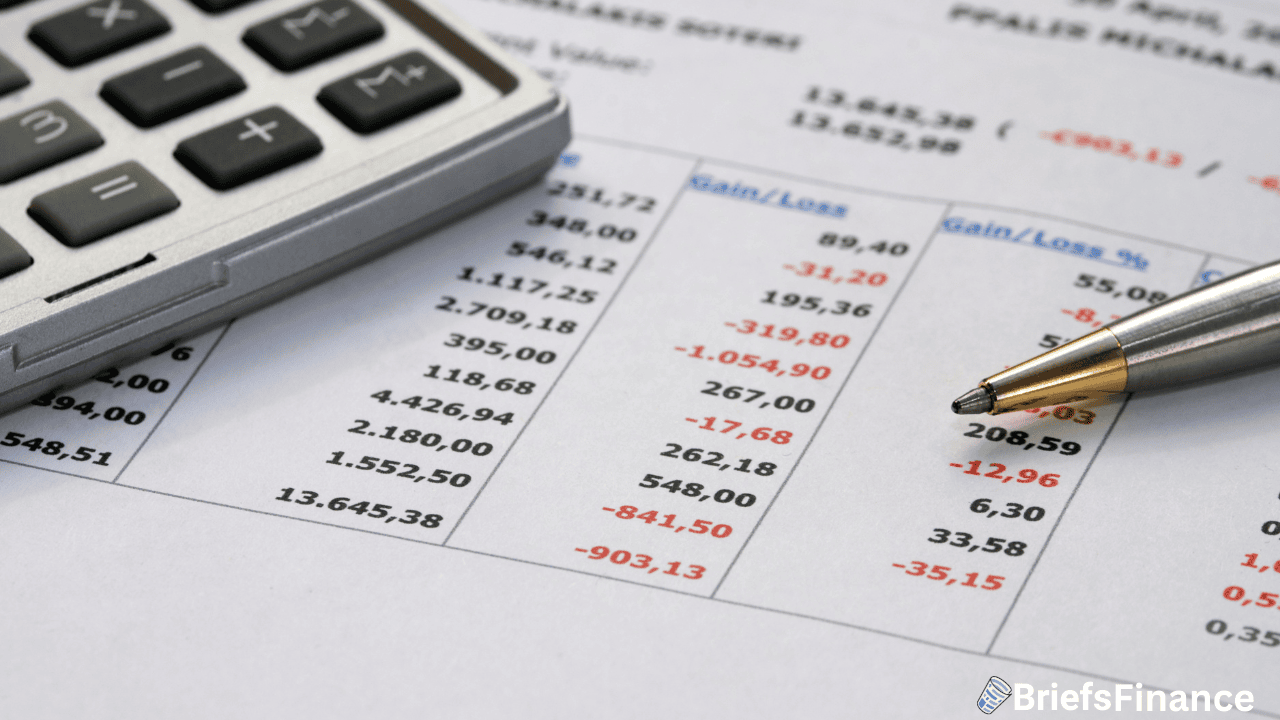
Whether you're reading a 10-K or 10-Q, you're going to find three financial statements that do the heavy lifting:

The Balance Sheet - Think of this as the company's net worth statement. 

Assets minus liabilities tells you the financial foundation of the business.

The Income Statement - This is like a profit and loss report. 

Revenue minus expenses equals profit (or loss). This is where you'll see if the company is actually making money.

The Cash Flow Statement - This shows how money moves through the business. How is it being generated? Where is it going?

These three statements - found inside every 10-K and 10-Q - are the foundation of any serious stock analysis.

The Bottom Line on 10-K’s and 10-Q’s

Public companies are legally required to file 10-K’s and 10-Q’s.

They can't skip them, and they can't lie to them - that's securities fraud. 

That makes them one of the most trustworthy sources of financial information available to any investor.

The 10-K gives you the full picture, once a year, fully audited.
The 10-Q gives you a quarterly update to keep you current.

They’re both free to access and easy to find.

And they're the same documents that professional analysts, hedge funds, and financial journalists use every single day.

In fact, these are the exact numbers our market analysts use to identify which stocks may be a potential opportunity right now and in the future.

The problem: You have to spend hours reading through reports to discover these opportunities on your own.

Our analysts do the work for you in Market Briefs Pro - they show you the opportunities and break everything down in plain English.


Subscribe to Market Briefs Pro today.


Blogs

May 5, 2026
How to Create Multiple Income Streams: A Beginner's Playbook
  • Most people rely on a single income stream from their job - which is also the most heavily taxed.
  • Multiple income streams come from a mix of cash flow, dividends, side businesses, real estate, and royalties.
  • The fastest path for most beginners is starting with one extra stream - usually dividends or a side hustle - and stacking from there.
Read More
May 5, 2026
The 60/40 Portfolio Explained: A Beginner's Guide
  • A 60/40 portfolio holds 60% in stocks and 40% in bonds (or other fixed income).
  • It's designed to balance growth from stocks with stability from bonds.
  • Your "right" mix depends on age, time horizon, income needs, and how well you sleep when markets drop.
Read More
May 5, 2026
How to Invest in Silver: A Beginner's Guide
  • Silver is both a precious metal and an industrial metal, used in solar panels, electronics, and medical tech.

  • Investors can buy silver four main ways: physical bars and coins, ETFs, mining stocks, or futures contracts.
  • Most beginners are best served by allocating a small slice of their portfolio to silver - usually between 1% and 3%.

Read More
May 1, 2026
Asset Allocation by Age: The Right Portfolio Mix at Every Stage of Life
  • Younger investors should hold mostly stocks because they have decades to recover from crashes and benefit from compounding.
  • Allocations gradually shift toward bonds and stable income as retirement approaches, but stocks remain important even past age 65 to outpace inflation.
  • Annual rebalancing is essential - it forces you to buy low and sell high while keeping your portfolio aligned with your actual life stage.
Read More
April 30, 2026
Stablecoin Explained: Why Some Cryptocurrencies Actually Aren't Volatile
  • Stablecoins are cryptocurrencies pegged to stable assets like the US dollar, giving crypto-style speed and access without the volatility of Bitcoin or Ethereum.
  • Fiat-backed stablecoins like USDC are the safest option, while algorithmic stablecoins have failed spectacularly and should generally be avoided.
  • Stablecoins fit a portfolio as cash reserves with better yields, a hedge against crypto volatility, and a fast, cheap rail for international transactions.
Read More
April 30, 2026
Buy Now, Pay Later Risks: Why This "Easy" Payment Method Is Dangerous to Your Wealth
  • Buy now, pay later services like Klarna, Affirm, and Sezzle are debt products designed to feel harmless while keeping users in a cycle of overspending.
  • BNPL exploits psychological debt blindness, triggers late fees, and damages credit scores without helping users build positive credit history.
  • Building real wealth means waiting 30 days, paying upfront when you have the cash, and avoiding systems built to extract money from your future income.
Read More
April 30, 2026
Dividend Payout Ratio: The Secret Metric That Shows If a Stock Is Safe or Risky
  • Dividend payout ratio is total dividends paid divided by net income, showing the percentage of earnings a company returns to shareholders.
  • A 20-50% payout ratio is generally safe and sustainable, while ratios above 75% often signal a dividend cut is coming.
  • High dividend yields can be warning signs, not opportunities - safety and dividend growth matter more than the headline yield number.
Read More
April 30, 2026
Ethereum for Beginners: What It Is and Why Smart Investors Are Paying Attention
  • Ethereum is a blockchain platform that runs smart contracts, while Ether (ETH) is the cryptocurrency that powers the network.
  • Use cases include decentralized finance, NFTs, gaming, supply chain tracking, and digital identity - many still experimental.
  • Most investors should treat Ethereum as a small allocation hedge using dollar-cost averaging, not a get-rich-quick lottery ticket.
Read More
April 30, 2026
Dollar Cost Averaging Strategy: How to Beat Emotion and Build Wealth Steadily
  • Dollar cost averaging means investing the same amount at regular intervals regardless of what the market is doing.
  • The strategy automatically buys more shares when prices are low and fewer when prices are high, lowering your average cost over time.
  • DCA removes emotion, eliminates the need to time the market, and turns volatility into a mathematical advantage for long-term investors.
Read More
April 30, 2026
The BRRRR Strategy: How to Build Real Estate Wealth Without Big Money Down
  • BRRRR stands for Buy, Rehab, Rent, Refinance, Repeat - a five-step framework for scaling real estate without saving for big down payments.
  • The strategy works by buying distressed properties below market value, adding value through smart renovations, and pulling out equity through refinancing.
  • Tax advantages like depreciation and mortgage interest deductions make BRRRR a powerful tool for owners willing to manage tenants and contractors.
Read More
1 2 3 20
5 Shares
Share via
Copy link