Behind every cutting-edge innovation is a physical and digital infrastructure that is rapidly being reshaped.
From the minerals required to build hardware, to the energy that powers datacenters and Bitcoin mines, to the cybersecurity systems that keep digital assets safe, to the strategic decisions that determine how (and whether) new technologies are adopted.
Watch the full panel here:
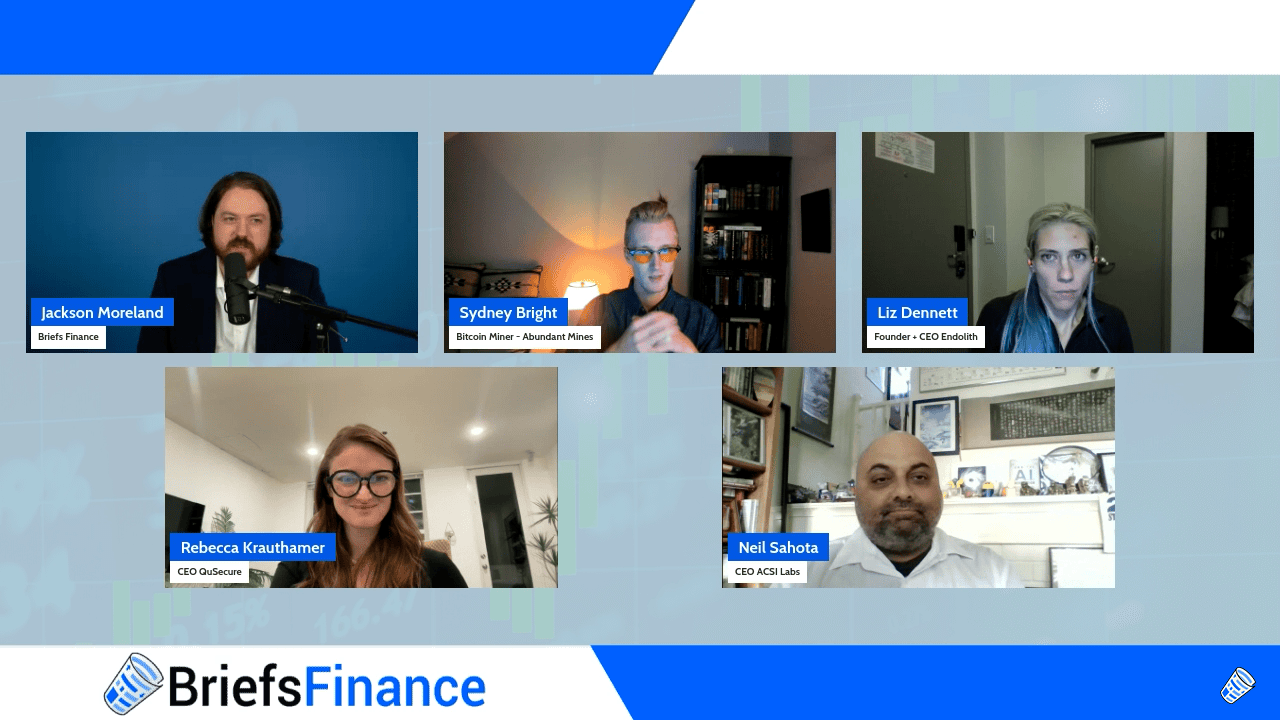
In this special panel, Briefs Finance brought together four leaders working at the frontier of this transformation:
Dr. Liz Dennett, CEO of Endolith, whose work in biomining and geomicrobiology is redefining how we source the minerals required for modern technology.
Sydney Bright, Bitcoin mining educator and infrastructure strategist at Abundant Mines, offering a data-driven perspective on energy use, mining economics, and the realities of operating high-load computing in the real world.
Rebecca Krauthamer, Co-Founder of QuSecure, a leading voice in quantum-safe cybersecurity and digital sovereignty.
Neil Sahota, AI strategist, former IBM Master Inventor, and advisor on enterprise and societal adoption of artificial intelligence.
Together, they explored the hidden forces shaping the next decade of innovation - the ones most consumers never see, but investors should.
Younger investors should hold mostly stocks because they have decades to recover from crashes and benefit from compounding.
Allocations gradually shift toward bonds and stable income as retirement approaches, but stocks remain important even past age 65 to outpace inflation.
Annual rebalancing is essential - it forces you to buy low and sell high while keeping your portfolio aligned with your actual life stage.
Stablecoins are cryptocurrencies pegged to stable assets like the US dollar, giving crypto-style speed and access without the volatility of Bitcoin or Ethereum.
Fiat-backed stablecoins like USDC are the safest option, while algorithmic stablecoins have failed spectacularly and should generally be avoided.
Stablecoins fit a portfolio as cash reserves with better yields, a hedge against crypto volatility, and a fast, cheap rail for international transactions.
Buy now, pay later services like Klarna, Affirm, and Sezzle are debt products designed to feel harmless while keeping users in a cycle of overspending.
BNPL exploits psychological debt blindness, triggers late fees, and damages credit scores without helping users build positive credit history.
Building real wealth means waiting 30 days, paying upfront when you have the cash, and avoiding systems built to extract money from your future income.
BRRRR stands for Buy, Rehab, Rent, Refinance, Repeat - a five-step framework for scaling real estate without saving for big down payments.
The strategy works by buying distressed properties below market value, adding value through smart renovations, and pulling out equity through refinancing.
Tax advantages like depreciation and mortgage interest deductions make BRRRR a powerful tool for owners willing to manage tenants and contractors.