Free NewsletterPro Login

The World's First Industrial-Scale Green Fertilizer Plant Just Got A $665 Million Greenlight

Published Apr 29, 2026
Share:
Summary:
  • Atome PLC reached a final investment decision on a 260,000-ton-per-year low-carbon fertilizer plant in Paraguay.
  • Total cost is $665 million, with $420 million in debt financing led by IDB Invest and the IFC.
  • Atome's CEO says war-driven supply shocks are making green fertilizer competitive for the first time.

Green fertilizer has long been the kind of project that pencils out on paper but never gets built at scale. That just changed - and a war helped push it across the line.

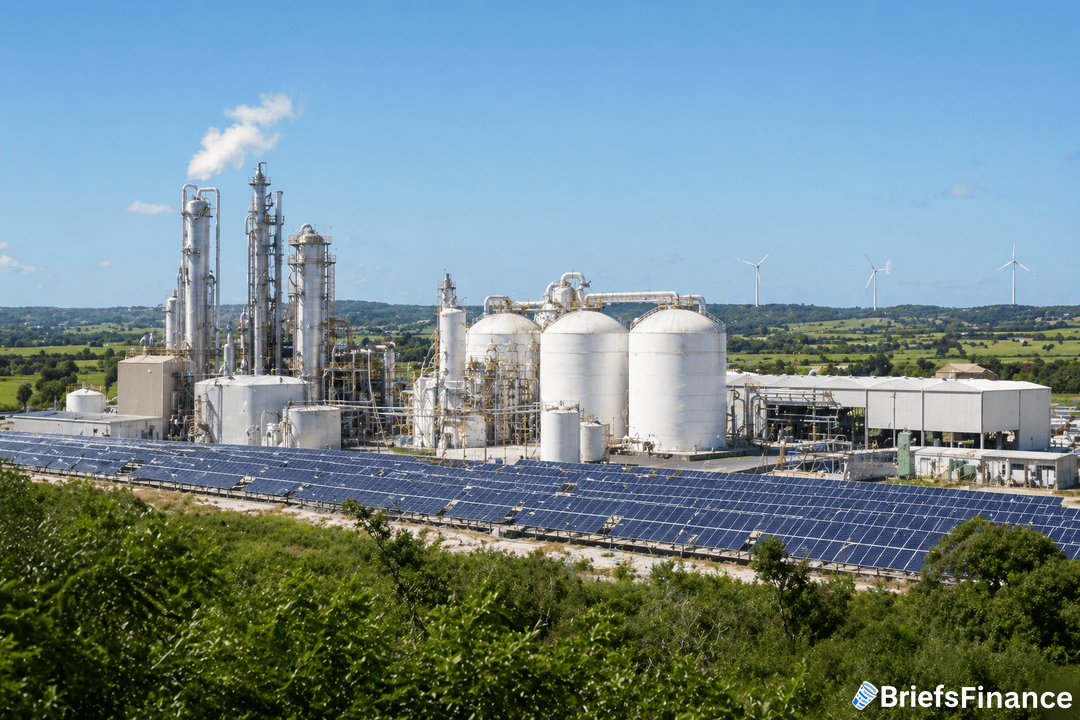
Atome PLC said this week it's reached a final investment decision on a 260,000-ton-per-year fertilizer plant in Villeta, Paraguay, with construction starting soon and full production targeted by October 2029.

The Project

The Villeta plant will run on 100% renewable power and produce calcium ammonium nitrate, which is the same fertilizer farms use today, just made without the carbon emissions tied to natural-gas-based production.

Atome has already locked in a 10-year buyer in Yara International, the Norwegian fertilizer giant, which has agreed to take the plant's full output for the duration.

The total project cost is $665 million, with $420 million of that coming as debt from international development banks led by IDB Invest and the International Finance Corp.

That makes Villeta the first industrial-scale plant of its kind anywhere in the world to clear a final investment decision.

Why The War Is The Real Story

Green fertilizer usually loses on price. Russia and its neighbors supply close to a third of the world's fertilizer at low cost, and roughly half of all fertilizer cargo passes through the Strait of Hormuz at some point in its journey to market.

Both of those numbers got harder to ignore this year as Iran's grip on the strait cut off Middle East exports and pushed spot fertilizer prices up about 50% over a recent three-week stretch.

That changes the math, since a green plant in Paraguay - far from any war zone - now looks like a hedge as much as a sustainability play.

"Supply chain disruption makes this as much a food security story as a green energy one," Atome CEO Olivier Mussat said in a recent interview with Proactive.

The Money Trail

The $420 million debt package is a big tell, since development finance institutions don't underwrite projects that can't service their debt at market terms.

That suggests the lenders are betting fertilizer prices stay high long enough to make the plant work - and Yara's 10-year offtake deal locks that view in.

For investors, it's a useful read on what supply-chain risk pricing looks like inside the global food system. Atome also signed a partnership with Casale, a Swiss engineering firm, to support future expansion - which means more plants like Villeta could be in the pipeline.

The Villeta facility is projected to displace 500,000 tons of CO2-equivalent emissions per year, which is the volume that helped unlock financing from climate-focused institutions.

What To Watch

Construction begins shortly, with full production set for October 2029 or earlier.

The swing factor is fertilizer prices. If they hold, more projects like this one clear the bar fast - if they fall, Villeta could end up being the only one of its size for years.

The London-listed Atome trades on the AIM market, and shares have been a small-cap watch for hydrogen and clean-fuel investors since the company first laid out the Villeta plan.


Disclosure

Get Market Briefs delivered to your inbox every morning for free!

No fluff. No noise. No politics. Just finance news you can read in 5 minutes.

Blogs

May 5, 2026
How to Create Multiple Income Streams: A Beginner's Playbook
  • Most people rely on a single income stream from their job - which is also the most heavily taxed.
  • Multiple income streams come from a mix of cash flow, dividends, side businesses, real estate, and royalties.
  • The fastest path for most beginners is starting with one extra stream - usually dividends or a side hustle - and stacking from there.
Read More
May 5, 2026
The 60/40 Portfolio Explained: A Beginner's Guide
  • A 60/40 portfolio holds 60% in stocks and 40% in bonds (or other fixed income).
  • It's designed to balance growth from stocks with stability from bonds.
  • Your "right" mix depends on age, time horizon, income needs, and how well you sleep when markets drop.
Read More
May 5, 2026
How to Invest in Silver: A Beginner's Guide
  • Silver is both a precious metal and an industrial metal, used in solar panels, electronics, and medical tech.
  • Investors can buy silver four main ways: physical bars and coins, ETFs, mining stocks, or futures contracts.
  • Most beginners are best served by allocating a small slice of their portfolio to silver - usually between 1% and 3%.
Read More
May 1, 2026
Asset Allocation by Age: The Right Portfolio Mix at Every Stage of Life
  • Younger investors should hold mostly stocks because they have decades to recover from crashes and benefit from compounding.
  • Allocations gradually shift toward bonds and stable income as retirement approaches, but stocks remain important even past age 65 to outpace inflation.
  • Annual rebalancing is essential - it forces you to buy low and sell high while keeping your portfolio aligned with your actual life stage.
Read More
April 30, 2026
Stablecoin Explained: Why Some Cryptocurrencies Actually Aren't Volatile
  • Stablecoins are cryptocurrencies pegged to stable assets like the US dollar, giving crypto-style speed and access without the volatility of Bitcoin or Ethereum.
  • Fiat-backed stablecoins like USDC are the safest option, while algorithmic stablecoins have failed spectacularly and should generally be avoided.
  • Stablecoins fit a portfolio as cash reserves with better yields, a hedge against crypto volatility, and a fast, cheap rail for international transactions.
Read More
April 30, 2026
Buy Now, Pay Later Risks: Why This "Easy" Payment Method Is Dangerous to Your Wealth
  • Buy now, pay later services like Klarna, Affirm, and Sezzle are debt products designed to feel harmless while keeping users in a cycle of overspending.
  • BNPL exploits psychological debt blindness, triggers late fees, and damages credit scores without helping users build positive credit history.
  • Building real wealth means waiting 30 days, paying upfront when you have the cash, and avoiding systems built to extract money from your future income.
Read More
April 30, 2026
Dividend Payout Ratio: The Secret Metric That Shows If a Stock Is Safe or Risky
  • Dividend payout ratio is total dividends paid divided by net income, showing the percentage of earnings a company returns to shareholders.
  • A 20-50% payout ratio is generally safe and sustainable, while ratios above 75% often signal a dividend cut is coming.
  • High dividend yields can be warning signs, not opportunities - safety and dividend growth matter more than the headline yield number.
Read More
April 30, 2026
Ethereum for Beginners: What It Is and Why Smart Investors Are Paying Attention
  • Ethereum is a blockchain platform that runs smart contracts, while Ether (ETH) is the cryptocurrency that powers the network.
  • Use cases include decentralized finance, NFTs, gaming, supply chain tracking, and digital identity - many still experimental.
  • Most investors should treat Ethereum as a small allocation hedge using dollar-cost averaging, not a get-rich-quick lottery ticket.
Read More
April 30, 2026
Dollar Cost Averaging Strategy: How to Beat Emotion and Build Wealth Steadily
  • Dollar cost averaging means investing the same amount at regular intervals regardless of what the market is doing.
  • The strategy automatically buys more shares when prices are low and fewer when prices are high, lowering your average cost over time.
  • DCA removes emotion, eliminates the need to time the market, and turns volatility into a mathematical advantage for long-term investors.
Read More
April 30, 2026
The BRRRR Strategy: How to Build Real Estate Wealth Without Big Money Down
  • BRRRR stands for Buy, Rehab, Rent, Refinance, Repeat - a five-step framework for scaling real estate without saving for big down payments.
  • The strategy works by buying distressed properties below market value, adding value through smart renovations, and pulling out equity through refinancing.
  • Tax advantages like depreciation and mortgage interest deductions make BRRRR a powerful tool for owners willing to manage tenants and contractors.
Read More
1 2 3 20
0 Shares
Share via
Copy link