First Things First: What Is a Dividend?
Before we talk about Aristocrats, let's back up.
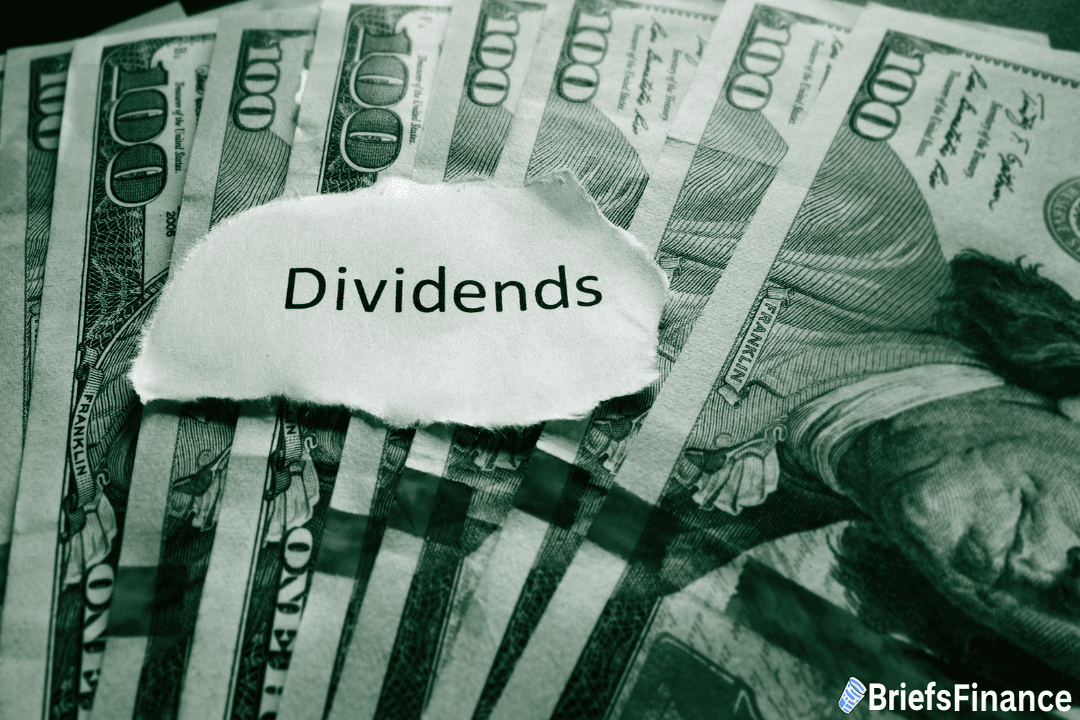
A dividend is cash a company pays you just for owning its stock.
You don't have to sell anything. You don't have to do anything. You just hold the shares, and the money shows up in your account - usually every quarter.
Dividends are paid out of a company’s profits - and not every company pays a dividend.
That’s because companies are not legally obligated to pay a dividend. Many companies have paid dividends for years.
For instance, Dividend Kings have paid dividends for at least 50+ years.
And while there are around 57 recognized Dividend Kings, there are plenty of other companies that have been paying dividends for 25+ years.
Companies with 25+ years of paying dividends in the S&P 500 are known as Dividend Aritocrats.
The point? These are companies that have proven track records of returning profits to shareholders.
Know these companies literally pays - so let’s break down what a dividend aristocrat is, the full list, and how investors can actually buy shares in these companies.
Dividend Aristocrats are just one potential investment opportunity for investors.
Our market analysts are researching new stocks every week in Market Briefs Pro.
Click here to subscribe and find out which stocks our analysts are watching right now.
What Is a Dividend Aristocrat?
Not every company pays a dividend. And not every company that pays a dividend keeps raising it.
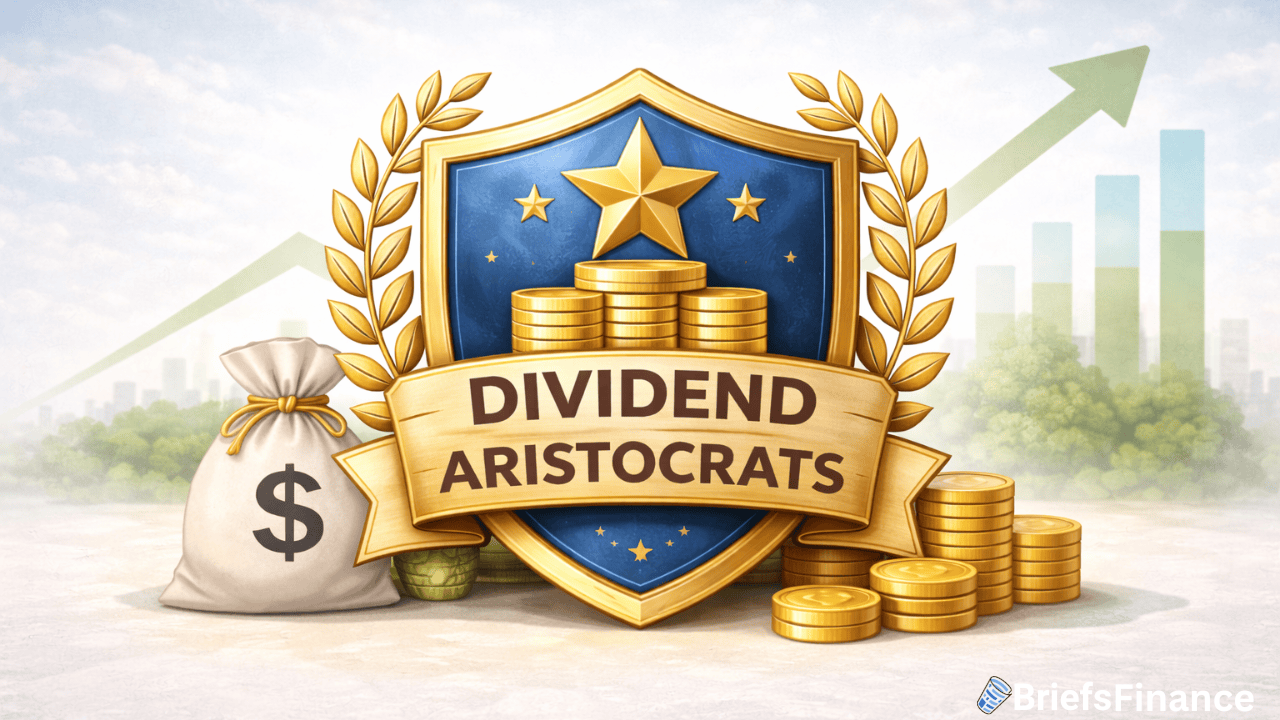
A Dividend Aristocrat is a company in the S&P 500 that has increased its dividend every single year for at least 25 consecutive years.
That's two-plus decades of commitment - through recessions, market crashes, pandemics, and interest rate cycles.
These companies raised their payouts through the dot-com crash, the 2008 financial crisis, and even COVID-19 in 2020.
That kind of consistency doesn't happen by accident. It signals a business with strong cash flow, disciplined management, and real staying power.
As of 2026, there are 69 Dividend Aristocrats on the S&P 500.
Why Do Dividend Aristocrats Matter to You?
When you invest in a Dividend Aristocrat, you're not just buying a stock. You're buying a track record.
You're buying a business that has weathered every major financial storm of the last quarter century and still found a way to pay shareholders more each time.
Dividends are also one of the best ways to fight inflation. While a fixed savings account stays frozen in place, a growing dividend keeps up with rising prices.
Most Dividend Aristocrats also let you enroll in a DRIP - a Dividend Reinvestment Plan.
That means every dividend payment automatically buys you more shares.
More shares generate more dividends. Which buys more shares. It's the compound growth snowball, and it's powerful.
The Full Dividend Aristocrats List 2026
Here are all 69 Dividend Aristocrats, organized alphabetically so you can find them quickly. Yields are current as of early 2026.
| Company | Ticker | Consecutive Years of Dividend Increases | Dividend Yield |
| A.O. Smith | AOS | 32 | 1.8% |
| Aflac | AFL | 42 | 2.2% |
| Air Products & Chemicals | APD | 43 | 2.6% |
| Albemarle | ALB | 31 | 0.9% |
| Amcor | AMCR | 41 | 5.2% |
| Archer-Daniels-Midland | ADM | 50 | ~3.8% |
| Atmos Energy | ATO | 41 | 2.2% |
| Automatic Data Processing | ADP | 50 | ~2.1% |
| Brown & Brown | BRO | 31 | 1.0% |
| Brown-Forman | BF.B | 41 | 3.2% |
| Cardinal Health | CAH | 40 | 0.9% |
| Caterpillar | CAT | 32 | 0.8% |
| C.H. Robinson | CHRW | 27 | 1.4% |
| Chevron | CVX | 38 | 3.9% |
| Chubb | CB | 31 | 1.2% |
| Church & Dwight | CHD | 29 | 1.2% |
| Cincinnati Financial | CINF | 64 | ~2.9% |
| Cintas | CTAS | 42 | 0.9% |
| Clorox | CLX | 47 | ~3.6% |
| Coca-Cola | KO | 63 | ~3.1% |
| Colgate-Palmolive | CL | 62 | ~2.3% |
| Consolidated Edison | ED | 50 | ~3.5% |
| Dover Corporation | DOV | 70 | ~1.4% |
| Ecolab | ECL | 33 | 1.0% |
| Emerson Electric | EMR | 48 | ~2.0% |
| Erie Indemnity | ERIE | 37 | 2.1% |
| Essex Property Trust | ESS | 31 | 4.0% |
| Eversource Energy | ES | 25 | 4.4% |
| Expeditors International | EXPD | 31 | 1.0% |
| ExxonMobil | XOM | 42 | 2.7% |
| FactSet Research Systems | FDS | 25 | 2.2% |
| Fastenal | FAST | 26 | 2.1% |
| Federal Realty Investment Trust | FRT | 57 | ~4.3% |
| Franklin Resources | BEN | 44 | 4.7% |
| General Dynamics | GD | 32 | 1.7% |
| Genuine Parts | GPC | 69 | ~3.2% |
| Hormel Foods | HRL | 59 | ~4.0% |
| IBM | IBM | 30 | 2.6% |
| Illinois Tool Works | ITW | 61 | ~2.5% |
| J.M. Smucker | SJM | 24* | 4.2% |
| Johnson & Johnson | JNJ | 63 | ~3.1% |
| Kimberly-Clark | KMB | 52 | ~3.8% |
| Linde | LIN | 33 | 1.2% |
| Lowe's | LOW | 62 | ~2.0% |
| McCormick | MKC | 39 | 2.8% |
| Medtronic | MDT | 47 | 2.9% |
| NextEra Energy | NEE | 30 | 2.7% |
| Nordson | NDSN | 61 | ~1.2% |
| Nucor | NUE | 51 | ~1.5% |
| Ohio Art (Leggett & Platt) | LEG | 53 | ~9.0% |
| Pentair | PNR | 48 | ~1.2% |
| People's United Financial | PBCT | 30 | ~4.3% |
| PPG Industries | PPG | 54 | ~2.0% |
| Procter & Gamble | PG | 68 | ~2.5% |
| Realty Income | O | 31 | 5.0% |
| Roper Technologies | ROP | 32 | 1.1% |
| S&P Global | SPGI | 51 | ~0.8% |
| Sherwin-Williams | SHW | 47 | 0.9% |
| Stanley Black & Decker | SWK | 57 | ~4.1% |
| Sysco | SYY | 55 | ~2.9% |
| T. Rowe Price | TROW | 38 | 5.5% |
| Target | TGT | 56 | ~4.1% |
| V.F. Corporation | VFC | 51 | ~7.5% |
| W.W. Grainger | GWW | 53 | ~0.8% |
| Walmart | WMT | 52 | ~1.3% |
| West Pharmaceutical Services | WST | 32 | 0.3% |
| Xcel Energy | XEL | 52 | ~3.2% |
*J.M. Smucker note: S&P added them to the index in 2023 despite a 21-year streak at the time. Their dividend was paused in the 1990s but has grown without interruption since.
Yields marked with ~ are approximated based on available 2025–2026 data and may have changed. Always verify current yields on a financial platform like Yahoo Finance or your brokerage before investing.
Dividend Aristocrats vs. Dividend Kings
You might see "Dividend Kings" mentioned alongside Aristocrats. Here's the quick breakdown:
Dividend Aristocrats → 25+ consecutive years of dividend increases, must be in the S&P 500.
Dividend Kings → 50+ consecutive years of dividend increases (the truly elite tier).
All Dividend Kings are essentially Aristocrats (or would be), but not all Aristocrats have reached King status yet.
Companies like Procter & Gamble, Coca-Cola, and Johnson & Johnson sit comfortably in the King tier with 60+ year streaks.
How Do You Actually Invest in Dividend Aristocrats?
You have two main routes.
Option 1: Pick individual stocks. Go through the list above, research the companies that interest you, and build your own portfolio.
This gives you full control over which names you hold and at what weights.
Option 2: Consider ETFs. The NOBL ETF allows investors to invest in multiple Dividend Aristocrats, all at once.
There’s also general ETFs for dividends as well, such as VYM and VIG - while not exclusive to Dividend Aritocrats, investors can gain exposure to dividend companies and companies with high dividend yields.
What to Watch Out For
Dividend Aristocrats are some of the most reliable income stocks in the market.
But "reliable" doesn't mean "risk-free."
Dividend cuts happen. Even Aristocrats can be removed from the list if business conditions deteriorate.
During COVID in 2020, ExxonMobil - a 40+ year Aristocrat - kept its dividend flat (not growing) rather than cutting it entirely.
They held on. Others didn't.
Airlines, retailers, and banks slashed dividends across the board.
High yields can be a warning sign. A yield of 7%, 8%, or 9% often means the stock price has dropped significantly, which automatically inflates the yield percentage.
That can signal trouble. The Aristocrat list includes a few high-yielders worth examining closely.
Taxes matter. Dividends are taxable income.
Qualified dividends (which most Aristocrat dividends are) get taxed at preferential capital gains rates - 0%, 15%, or 20% depending on your income bracket.
If you're investing in a taxable brokerage account, keep this in mind.
Tax-advantaged accounts like IRAs shelter dividend income from annual taxes, which can significantly improve long-term returns.
Dividend Aritocrats: The Bottom Line
Dividend Aristocrats are not flashy. They're not the AI stocks dominating headlines. They're not going to 10x in a year.
What they will do is pay you - and pay you more - year after year, through good markets and bad.
Over 25, 30, or 40 years of compounding, that consistency can build serious wealth.
Keep in mind though: Dividends are never guaranteed.
Dividends Kings and Aristocrats have managed to keep paying dividends for decades, but that does not mean they always will.
Still Dividend Aristocrats could be a potential opportunity for some investors seeking income and cash flow from their assets.
Looking for more potential opportunities?