Here's something nobody wants to hear: you can't time the stock market.
Not because you're not smart enough. Not because you don't have the right app. But because literally nobody can do it consistently. Professional investors with teams of analysts and supercomputers can't do it. You can't either.
So instead of trying to guess the perfect moment to invest, the smartest investors use a strategy called dollar cost averaging. It's boring. It's not sexy. But it's one of the most powerful wealth-building tools available to regular investors - and it works.
DCA is about staying consistent - and so is staying informed. Market Briefs is a free daily newsletter that breaks down what's happening in the markets, economy, and business in a quick morning read. Join 300,000+ readers and start every day with what actually matters.
What Is Dollar Cost Averaging Strategy?
Dollar cost averaging (DCA) is simple: invest the same amount of money at regular intervals, no matter what the market is doing.
That's it.
You pick a number - let's say $500. Every month, you invest $500 into your chosen investment. Market is up? You invest $500. Market is down? You still invest $500. Market is sideways and confusing? Still $500.
Over time, this simple discipline removes emotion from investing. You're not buying more when the market is soaring (when you should be cautious). You're not panic-selling when it crashes (when you should be buying). You're just consistently deploying capital.
Why Dollar Cost Averaging Strategy Works: The Math
Let's use a real example.
Imagine you want to invest in a stock index fund. You decide to invest $1,000 per month.
Month 1: Stock costs $100
- You buy 10 shares
Month 2: Stock drops to $80 (market panic)
- You buy 12.5 shares
Month 3: Stock drops to $60 (more panic)
- You buy 16.67 shares
Month 4: Stock bounces back to $80
- You buy 12.5 shares
Month 5: Stock climbs to $100
- You buy 10 shares
Look what happened: while the stock price dropped initially, you accumulated more shares at lower prices. When it bounced back, you owned more shares.
Over these five months, you invested $5,000 total. Your average cost per share? $84.21.
If you'd tried to time it and invested all $5,000 at month 1 ($100 per share), you'd have bought 50 shares at an average cost of $100. You'd be underwater.
With DCA, you bought 61.67 shares at $84.21 average cost. That's more shares at a better price.
This is the mathematical advantage of DCA: in volatile markets, regular investments at fixed amounts automatically force you to buy more when prices are low and less when prices are high.
Dollar Cost Averaging Strategy in Zero to Pro Investing Philosophy
The Zero to Pro framework emphasizes that real wealth comes from time in the market, not timing the market.
As Nate explains in the Zero to Pro course, real investments need years to compound. You can't invest for six months and expect explosive returns. That's trading, and it's gambling.
DCA is the investing approach for people who understand:
- Time is your superpower: The longer money compounds, the more wealth it builds
- Volatility is your friend: Market drops are buying opportunities when you have a plan
- Emotion destroys wealth: Panic selling and FOMO buying kill more investment returns
than bad stock picks
When you commit to DCA, you're saying: "I'm investing for the long term. I'm not trying to outsmart the market. I'm going to let compounding and time do the work."
The Beauty of Dollar Cost Averaging Strategy: No Timing Required
Most people delay investing because they're waiting for "the right time."
"I'll start investing when the market cools down." "I'll invest after the election." "I'll start once interest rates stabilize."
And you know what? They're still waiting five years later. The market never feels "right." There's always something.
With DCA, there's no "right time." You just start.
You commit to $200 per month in a stock fund. That's your plan. Recession? Still $200. Bull market? Still $200. You execute the plan regardless of headlines.
This removes the paralysis that keeps most people poor.
Dollar Cost Averaging Strategy in Crypto and Volatility Assets
DCA is especially powerful with volatile investments like cryptocurrency.
Bitcoin went from $68,000 (November 2021) to $16,000 (November 2022). Brutal. People who put all their money in at $68,000 were underwater for years.
But someone doing DCA through that period?
- Month 1 at $68,000: $1,000 buys 0.015 BTC
- Month 6 at $40,000: $1,000 buys 0.025 BTC
- Month 12 at $16,000: $1,000 buys 0.0625 BTC
They accumulated more Bitcoin at lower prices. When Bitcoin eventually recovered, they owned significantly more coin than someone who invested it all upfront.
How to Set Up Your Dollar Cost Averaging Strategy
1. Choose Your Investment Stock fund, individual stock, cryptocurrency, gold - whatever fits your strategy.
2. Choose Your Amount $100, $500, $1,000 per month - whatever you can consistently afford without disrupting life.
3. Choose Your Frequency Monthly is most common, but weekly or quarterly works too.
4. Automate It Set up automatic transfers from your bank to your brokerage. Make it happen without you thinking about it.
5. Ignore the Noise Don't check prices obsessively. Don't try to "improve" your timing. Execute your plan.
The Compounding Effect of Dollar Cost Averaging Strategy
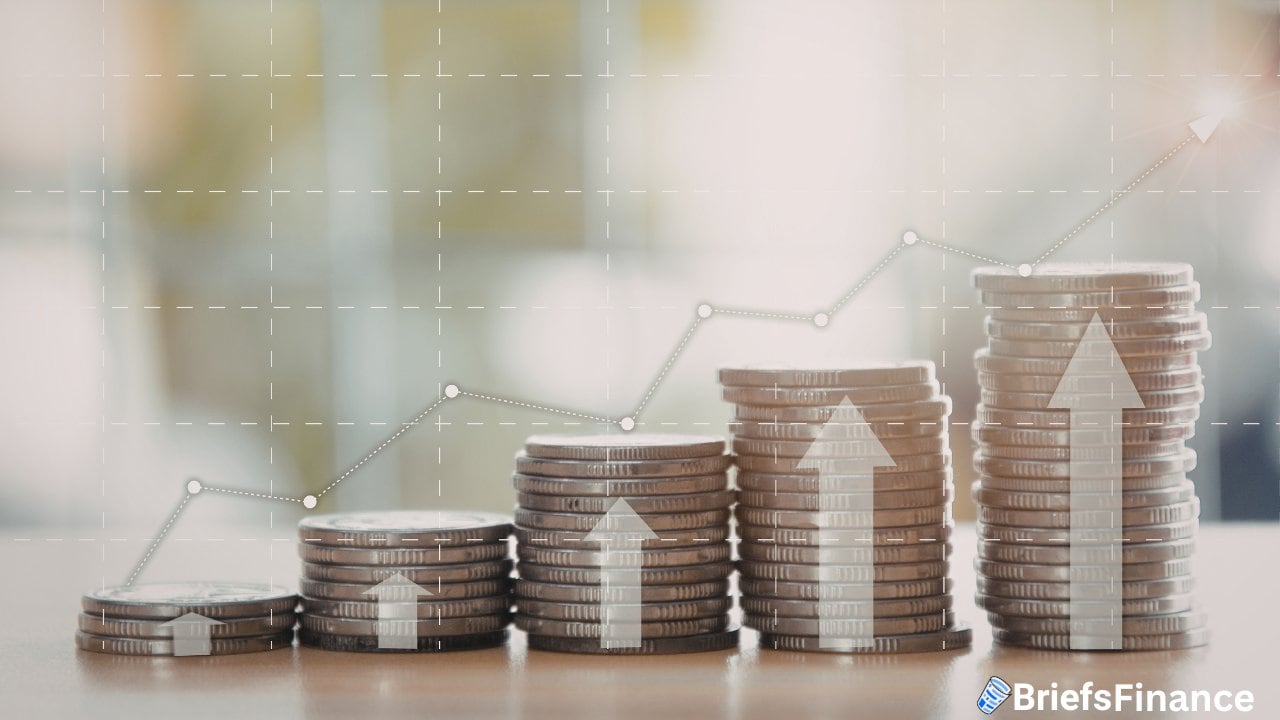
Let's say you're 25 years old and you commit to investing $500 per month until age 65.
That's 40 years of $500/month investments = $240,000 of your own money.
If that investment grows at 8% annually (historical market average), here's the actual math:
- After 10 years: $100,000+ (your $60k + gains)
- After 20 years: $270,000+
- After 40 years: $1.6 million+
You contributed $240,000. The market contributed over $1.3 million.
This is compounding. This is time in the market. This is why starting early with DCA crushes trying to time the market perfectly.
Dollar Cost Averaging Strategy and Avoiding FOMO
DCA is the antidote to FOMO (fear of missing out).
You see Bitcoin jump 50% in a week. FOMO says: "I need to buy now or I'll miss out!"
DCA says: "I'm already buying Bitcoin. My plan includes Bitcoin. Adding extra now because I'm emotional isn't smart."
You see the market crash 20%. Panic says: "Sell everything!"
DCA says: "Great, my monthly $500 just bought more shares at lower prices. My plan is working."
DCA turns market volatility from an emotional stress into a mathematical advantage.
The Only Risk with DCA: Starting Too Late
The only real mistake you can make with DCA is not starting until you're 50 years old.
Time is literally the only variable you can't get back. Starting five years earlier with $300/month compounds to dramatically more wealth than starting late with $1,000/month.
If you're waiting for "the right time" to start investing, here's your permission slip: there is no right time. Start now with DCA.
Key Takeaway: The Power is in the Plan
Dollar cost averaging works because it:
- Removes emotion from investing
- Forces you to buy low (through discipline)
- Lets time and compounding work
- Requires no market prediction ability
- Works in any market condition
You don't need to be a genius. You don't need a financial advisor. You need to commit to a regular investment schedule and stick to it through market ups and downs.
That's it. That's the entire strategy.
The investors who win long-term are the ones who stay informed without getting overwhelmed. Market Briefs gives you the day's biggest financial stories every morning - free, fast, and actually enjoyable to read.