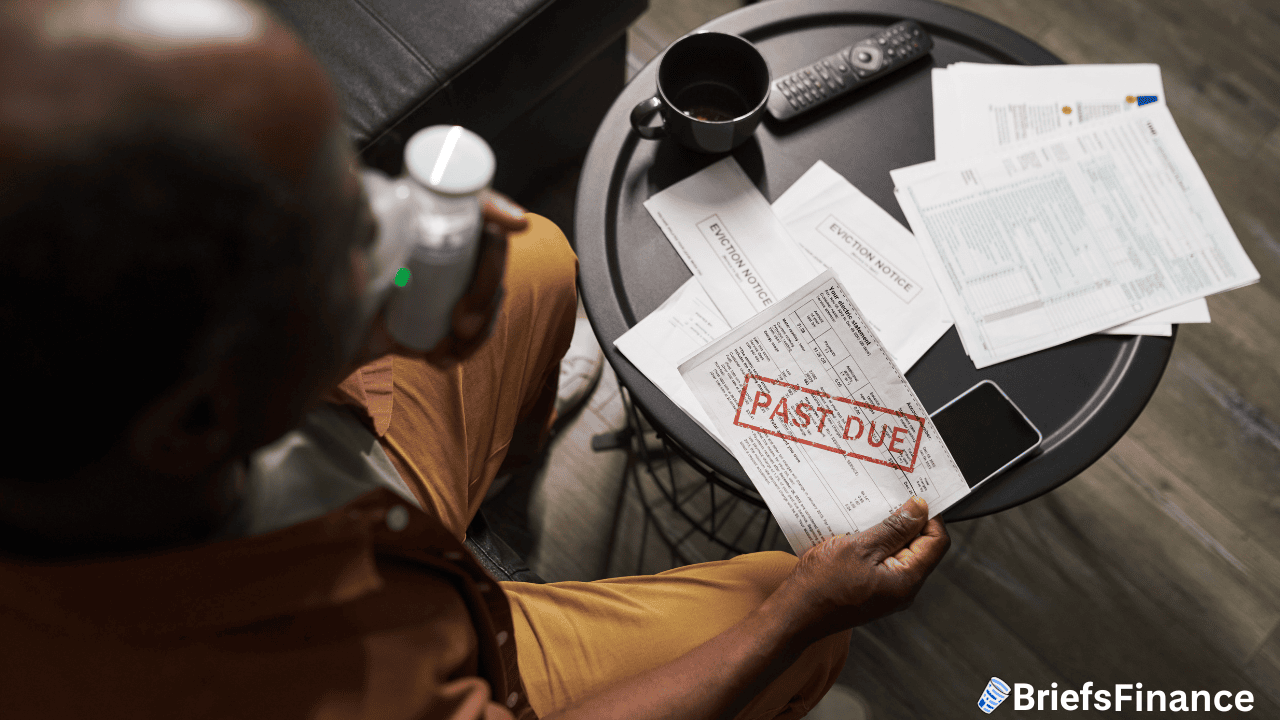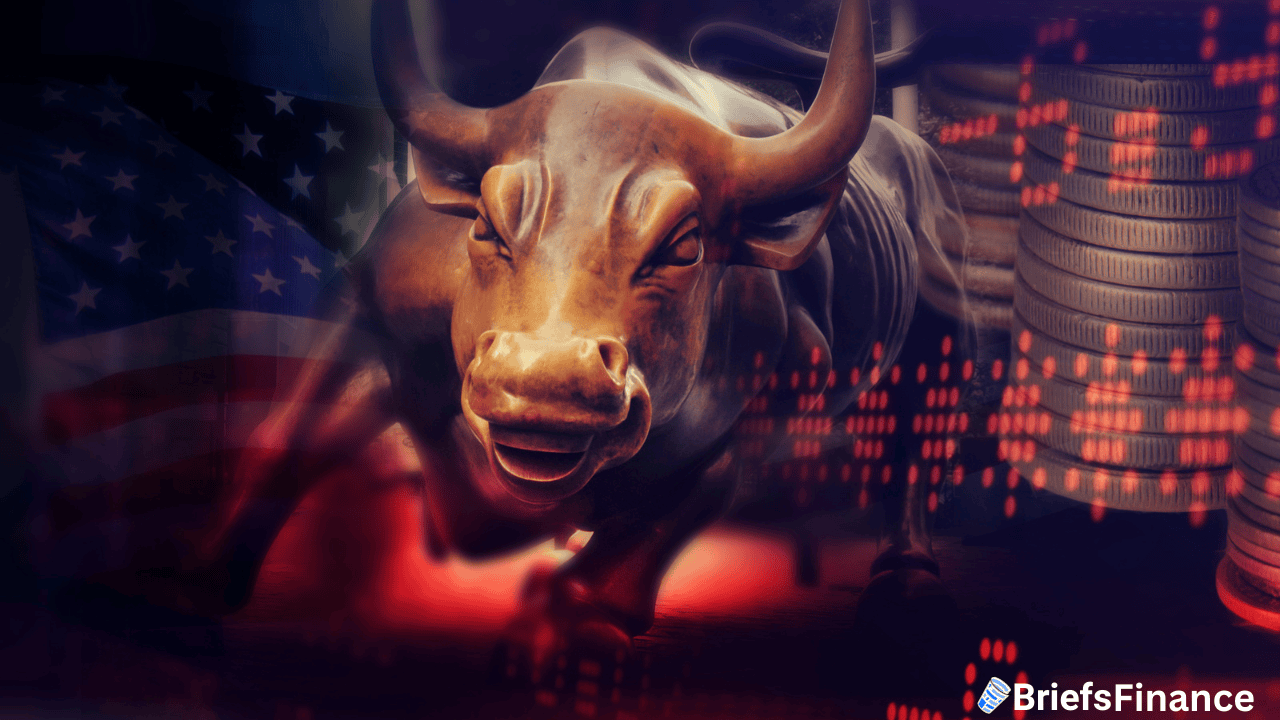
Market crashes trigger panic in even the most intelligent investors, not because they lack knowledge, but because human brains are wired to avoid losses at all costs.
What Happens in Your Brain During a Market Crash
Your brain treats financial losses like physical threats.
When you see your portfolio dropping 20%, 30%, or 40%, your amygdala (the brain's alarm system) activates. This is the same part of your brain that fires when you encounter a snake or hear a loud crash.
The amygdala triggers your fight-or-flight response. Your heart rate increases. Stress hormones flood your system. Rational thinking takes a backseat to survival instinct.
This made sense 100,000 years ago when immediate reactions saved lives. It works terribly for investing, where the "threat" is abstract and the best response is often doing nothing.
Why Smart People Make Dumb Decisions
Intelligence doesn't protect you from emotional responses.
A study by Brad Barber and Terrance Odean found that high-IQ investors often perform worse than average investors. Why? Because they're more confident in their ability to time the market and more likely to overtrade during volatile periods.
Smart investors rationalize panic. They find seemingly logical reasons to sell: "The fundamentals have changed," "This time is different," or "I'll buy back in when things stabilize."
But these are justifications for emotional decisions, not rational analysis.
The Psychological Biases That Destroy Returns
Several cognitive biases work together to sabotage your investing during crashes.
Loss Aversion: Losses Hurt More Than Gains Feel Good
Research by Daniel Kahneman and Amos Tversky showed that losses feel approximately 2.5 times worse than equivalent gains feel good.
Losing $10,000 causes more psychological pain than gaining $10,000 causes pleasure. This asymmetry makes you hypersensitive to portfolio declines.
During a crash, this bias screams at you to "make the pain stop" by selling. The temporary relief of selling feels better than the ongoing anxiety of watching losses mount, even if selling locks in those losses permanently.
Recency Bias: The Recent Past Predicts the Future
Your brain gives disproportionate weight to recent events.
After stocks rise for two years, you unconsciously expect them to keep rising. After they fall for two months, you expect endless declines.
During the 2020 COVID crash, when the S&P 500 dropped 34% in March, many investors extrapolated that trajectory. "If we're down 34% in one month, we'll be down 100% by summer!" This thinking ignores that markets don't move linearly.
The reality? The S&P 500 recovered all losses by August and ended 2020 up 16%.
Herd Mentality: Safety in Numbers
Humans evolved to survive in groups. Going against the crowd felt dangerous.
When everyone around you is selling, your brain interprets their behavior as information. "They must know something I don't," you think. The urge to follow the herd becomes overwhelming.
This is why market crashes accelerate. Selling begets more selling. Panic becomes contagious.
In March 2020, retail investors pulled $326 billion from stock funds. Many of those same investors bought back in months later at higher prices, locking in permanent losses.
Availability Bias: Vivid Memories Drive Decisions
You overweight information that's easily recalled, especially dramatic events.
The 2008 financial crisis remains vivid for anyone who lived through it. When markets stumble, those memories flood back. Your brain pattern-matches current conditions to 2008, even when the situations are completely different.
In reality, most market corrections (10%+ declines) don't become crashes. Most crashes don't become financial crises. But your brain remembers the worst-case scenario most clearly.
Anchoring: The Wrong Reference Points
You fixate on arbitrary numbers as reference points.
If your portfolio hit $500,000 at its peak, that becomes your anchor. When it drops to $400,000, you don't see "$400,000 in wealth." You see "$100,000 lost."
This framing makes you desperate to "get back" to $500,000. You might take excessive risks, sell quality investments at lows, or make impulsive decisions chasing quick recovery.
The $500,000 peak was just a moment in time. It's not a promise or a baseline. But your brain treats it like one.
Why Market Crashes Feel Different Than They Are
The actual numbers tell a different story than your emotions.
Historical Context
Since 1950, the S&P 500 has experienced:
- 37 corrections (declines of 10-20%)
- 12 bear markets (declines exceeding 20%)
- Average time to recover from bear markets: 13 months
- Average gain in the year following a bear market bottom: 40%+
Despite these temporary setbacks, the market has trended upward over every 20-year period in history.
The Recovery You Don't See Coming
Market recoveries happen faster than crashes.
The 2020 crash took 33 days to fall 34%. The recovery to new highs took 126 days. That's a 3.8:1 ratio of recovery time to crash time.
But here's the problem: The recovery often begins when sentiment is most negative. The market bottom on March 23, 2020, occurred when unemployment was spiking and COVID cases were accelerating.
If you wait for "things to stabilize" before buying back in, you miss the recovery. The biggest gains happen in the early stages when everything still feels terrible.
What You Actually Lose vs. What You Feel Like You're Losing
During a 30% market crash, you haven't lost 30% of your future wealth. You've lost 30% of current value.
If your investment horizon is 20 years, a 30% crash followed by historical average returns barely dents your final outcome. You might end with $1.8 million instead of $2 million - but that assumes you panic sell at the bottom.
If you stay invested, the temporary paper loss becomes irrelevant. If you panic sell, you convert a temporary decline into a permanent loss.
How Smart Investors Protect Themselves
Knowing about biases isn't enough. You need systems that override emotional decision-making.
Pre-Commit to Your Strategy
Make decisions when you're calm, not during a crisis.
Write down your investment plan: asset allocation, rebalancing schedule, and specific conditions under which you'll buy or sell. Sign it. Date it. Refer to it when markets crash.
Example: "I will maintain 80% stocks/20% bonds regardless of market conditions. I will rebalance annually or when allocations drift 5%+ from target. I will not make changes based on market volatility or news headlines."
When panic hits, you follow the plan. No new decisions required.
Automate Everything Possible
Remove yourself from the decision-making process.
Set up automatic monthly investments. Enable automatic dividend reinvestment. Schedule annual rebalancing in advance.
During the 2020 crash, investors with automated monthly contributions kept buying. They didn't have to overcome fear because the decision was already made. Those automated purchases bought stocks at 30%+ discounts.
Investors making manual decisions often froze. They stopped contributing or, worse, sold.
Reframe Losses as Discounts
Train your brain to see crashes differently.
When your favorite stock drops 40%, you're not "losing 40%." You're getting a 40% discount on future purchases. The company's fundamentals likely haven't changed proportionally to the price drop.
If you believed in the investment at $100, you should love it at $60. If you don't love it at $60, you probably shouldn't have owned it at $100.
Practice Small Losses
Deliberately expose yourself to minor market volatility.
If you've never experienced a market decline, your first big crash will hit hard. But if you've weathered several 10-15% corrections, a 30% crash feels more manageable.
Don't wait until you have $500,000 invested to test your risk tolerance. Invest smaller amounts early. Experience volatility with $50,000 or $100,000. Learn how you react when the stakes are lower.
Use Time Diversification
Remember your time horizon during crashes.
If you're 35 years old saving for retirement at 65, you have 30 years. A two-year bear market occupies less than 7% of your investment timeline.
Ask yourself: "Will this crash matter in 20 years?" The answer is almost always no. The 2008 crash, the 2000 dot-com bust, the 1987 crash - none of these matter to long-term investors who stayed the course.
Limit Information Intake
Financial news amplifies panic.
During market crashes, cable news runs 24/7 coverage with dramatic graphics, countdown timers, and guest experts predicting doom. Every hour brings new reasons to panic.
Turn it off.
Check your portfolio quarterly or annually, not daily. Disable price alerts. Unfollow financial Twitter during volatile periods.
The less frequently you check, the less likely you are to make emotional decisions. Daily checkers see losses 50% of days. Annual checkers see losses only 25% of years.
The Investors Who Get Rich During Crashes
Market crashes create generational wealth for disciplined investors.
Warren Buffett's Approach
Buffett's famous advice: "Be fearful when others are greedy, and greedy when others are fearful."
During the 2008 crisis, while everyone panicked, Buffett invested $5 billion in Goldman Sachs and $3 billion in GE. He later called derivatives "financial weapons of mass destruction" but bought aggressively when prices collapsed.
His secret? He had cash ready and a plan to deploy it when others panicked.
The Rebalancing Advantage
Systematic rebalancing forces you to buy low and sell high.
If your target allocation is 70% stocks/30% bonds, a market crash pushes you to 60% stocks/40% bonds (because stocks fell). Rebalancing requires you to sell bonds and buy stocks - buying when stocks are cheapest.
No emotion required. No market timing needed. Just mechanical rule-following.
Dollar-Cost Averaging Through Crashes
Continuing to invest through crashes dramatically improves long-term returns.
An investor who contributed $500 monthly from 2007-2009 (through the financial crisis) bought shares at prices ranging from $1,500 (pre-crisis) to $700 (crisis bottom) to $1,100 (recovery).
Their average cost per share was far below the pre-crisis peak. When markets recovered, their returns exploded.
The investor who stopped contributing in 2008 missed the lowest prices of a generation.
Your Crash Action Plan
When the next market crash comes, follow these steps:
Immediately:
- Stop checking your portfolio daily
- Turn off financial news
- Review your written investment plan
- Remember your time horizon
Within the first week:
- Rebalance if your allocation has drifted 5%+ from target
- Increase contributions if you have extra cash
- Review your emergency fund (is it adequate?)
- Talk to a trusted advisor or accountability partner
What not to do:
- Don't sell quality investments
- Don't try to time the bottom
- Don't make major strategy changes
- Don't trust your gut feelings
- Don't follow the crowd
The Bottom Line
Market crashes exploit hardwired human psychology. Your brain treats portfolio losses as physical threats, triggering panic and poor decisions.
Smart investors don't resist these feelings through willpower alone. They build systems that override emotional responses: written plans, automatic investments, rebalancing rules, and limited information exposure.
The investors who panic and sell during crashes transfer wealth to the investors who stay calm and buy. The difference isn't intelligence, knowledge, or prediction ability. It's preparation and process.
Create your plan now, while markets are calm. Write down your rules. Automate your investments. Prepare for inevitable volatility.
When the next crash comes - and it will come - you won't need to be brave or smart. You'll just need to follow your plan.