At some point, almost every investor thinks the same thing: “Should I be a trader or investor?”
The reason: Trading is how Hollywood makes investing look - think the Wolf of Wall Street, with brokers in suits.
It’s sexy and it’s how people think investing can get them rich quick.
But trading and investing are not the same strategy, they don't carry the same risk, and they don't produce the same results over time.
The biggest difference? Investing is focused on building wealth - trading is focused on making short-term profits.
Let’s break down what each is in depth, compare the two strategies, and explain what you really need to know about trading vs investing.
Want to stay on top of where smart money is actually moving? You need a strategy.
Watch this free podcast with our CEO Jaspreet Singh and Head of Investment Research break down how we spot market shifts and investing opportunities.
So What Is Trading?
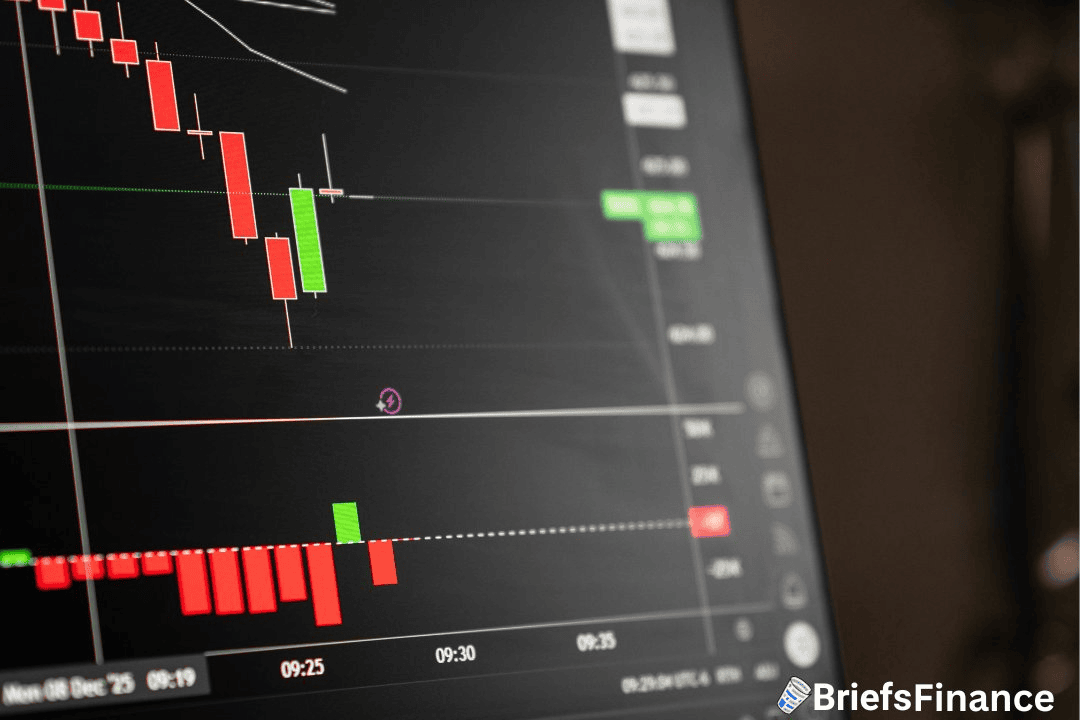
Trading means buying and selling securities, think stocks, options, futures, on a short time horizon.
A trader might hold a position for a day or sometimes a week.
The goal is to catch price swings - traders buy stocks based on market signals and then try to sell at what they feel the peak is.
Trading sounds great on paper.
But here's what the data actually says:
- 97% of day traders lose money in the long run.
- Active traders underperform the market by 6.5%.
- The phrase "hazardous to your wealth" was literally coined to describe trading.
The problem isn't that traders are dumb.
It's that the strategy itself is built on a shaky foundation.
You're competing against algorithms, hedge funds, and full-time professionals who do this every single day.
Plus, you're also fighting your own emotions.
What Is Investing?
Investing is buying an asset and letting it grow over time.
Long-term means at minimum one year.
But the investors who build real wealth think in decades, not months.
Instead of trying to time the market's daily swings, investors are betting on something simpler: that over time, the economy grows, companies earn more money, and markets go up.
Historically, that has been the better path for most investors.
And to quote legendary investor Ken Fisher:"Time in the market beats timing the market."
Investing puts emotions to the side and focuses on your goals, risk tolerance, and time horizon.
Active investing is also different from trading.
Trading means you’re not really buying the stock with any intention of holding it for its long-term value.
Active investing means you are choosing stocks you believe will perform in the long-term, based on financial and non-financial analysis of that stock.
So active investing and trading are not the same thing - so keep that in mind as you choose an investing path that makes sense for you.
The Three Things That Build Wealth
When it comes to building wealth through investing, there are three variables that matter:
- Time - how long your money has to compound and grow
- Dollars - how much you're putting in consistently
- Return - how fast your money grows
Of these three, time is the one you can never get back.
You can't go back and start at 21.
But the earlier you start investing, and the longer you hold, the more your money compounds on itself.
For example: If you invested $100 a month into the S&P 500 (that's less than $4 a day) starting at 21 and kept going until 65, you'd retire a millionaire.
A trader trying to make a quick flip rarely gets there.
Obviously, historical returns are not an indication of future returns.
But the idea is that consistency and strategy beat short-term profits almost every time.
Trading vs Investing: Side by Side
| Trading | Investing | |
| Time horizon | Days to weeks | 1 year to decades |
| Goal | Catch price swings | Compound growth |
| Risk level | Very high | Moderate |
| Time required | Full-time attention | Minimal (passive) or moderate (active) |
| Who wins | Almost nobody | Patient, consistent investors |
| Strategy | Timing the market | Time IN the market |
Two Ways to Invest
If you decide to go the investing route, there’s two main ways you can go about it:
Active investing means picking individual stocks and managing your portfolio yourself.
You research companies, read earnings reports, and decide when to buy and sell.
It takes more time and carries more risk. But when you’re right, there could also be a bigger reward.
Passive investing means putting your money into funds, like index funds or ETFs, that track a basket of companies or an entire market.
You're not betting on one company - you're betting on the whole economy.
The bottom line: Both can build wealth.
The right one depends on how much time you have and how much risk you want to carry.
Many investors choose a combination - potentially using a passive strategy as their base and then carving out a small portion of their portfolio to actively invest.
The CPA Method for Passive Investors
If passive investing is more your thing, here’s a potential strategy to consider: C-P-A.
Consistent. Invest on a set schedule - weekly, bi-weekly, monthly.
Doesn't matter which day - Just pick one and stick to it.
Patient. You're in this for years, not weeks. Whether markets go down, up, or sideways, you’re still going to be buying.
Automated. Set it up so the money moves automatically. That way you don’t have to think (or overthink) when things get crazy on Wall Street.
If it sounds simple, that’s because it is.
Hollywood makes trading and investing look complicated because that makes for a good movie.
No one wants to watch a film about a person who just passively invests a couple hundred dollars a month.
But investing does not have to be complicated and simpler can sometimes mean better for some investors.
Why Trading Is So Tempting (And Why It Usually Fails)
Why does trading often fail? The wins are loud and the losses are quiet.
You hear about the person who made 300% on a trade.
You usually don't hear about the 97% who quietly lost money.
With that said, trading isn't impossible.
Many people do it as a full-time profession.
But it requires constant attention, years of practice, and the kind of emotional discipline most people don't have when real money is on the line.
And even when you do all of that right, you can still be wrong - which adds another layer of risk that the average person may not be willing to take on.
Investing? It rewards patience.
The longer you hold a strong asset, the more the odds shift in your favor.
Again, whether you’re trading or investing, there is no guarantee that you will make money.
In fact, you will lose money at some point no matter which style you choose.
It’s about keeping more than you lose - so decide which path helps you do that more consistently and you’ll be on your way.
The Bottom Line On Trading vs Investing
Most people think that trading is what investing actually is - but they have it all mixed up.
Trading and investing are separate.
Let’s be clear: Both are hard.
Timing the market is hard. Consistently investing for decades is hard.
We can't tell you what to do with your money - so you need to choose what style makes sense for you.
But either way, you need to understand how the market works in order to stay ahead of it.
This free podcast with our CEO Jaspreet Singh and our Head of Investment Research breaks down how we spot market shifts and potential investing opportunities.