The Data Center Energy Problem
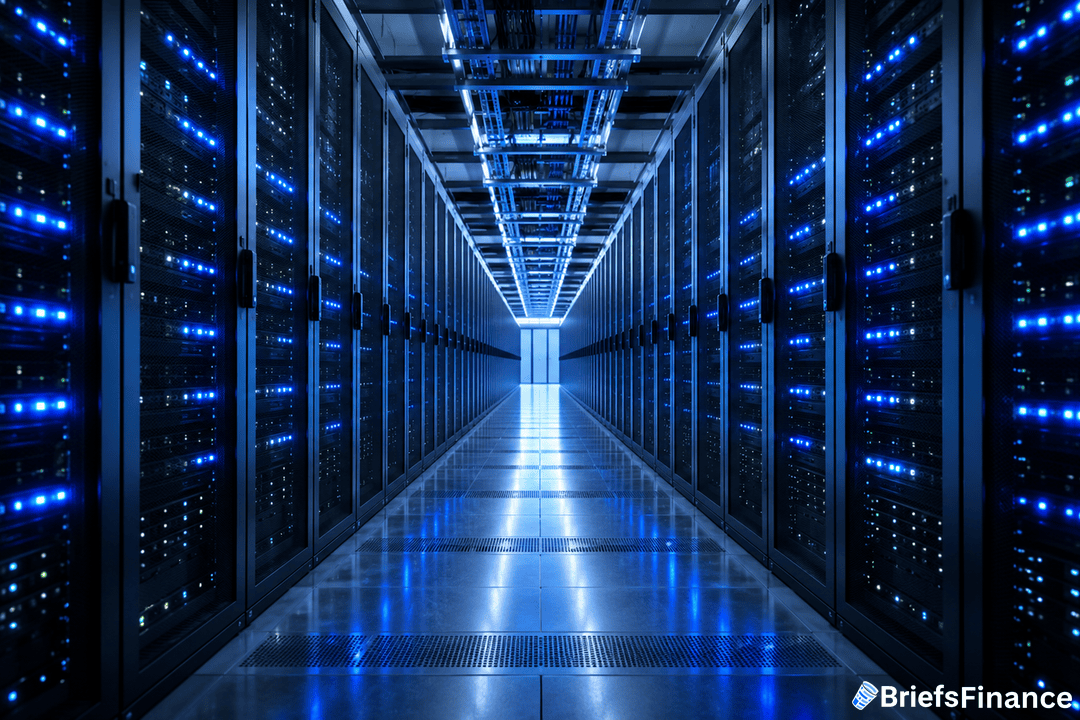
Data centers have a problem: They consume massive amounts of energy.
A single facility uses about the same amount of energy as 80,000 U.S. homes - and with AI and cloud computing driving demand, the U.S. The Department of Energy expects data center energy usage to double or even triple by 2028.
The bottom line: We don’t have enough energy to support this usage - which is sending energy bills through the roof and higher costs for companies using data centers.
Amazon Web Services alone generated $30 billion in revenue in Q2 2025, with $10 billion in operating profit.
But rising energy costs are cutting into those margins, and something has to change.
Companies are now racing to invent a new generation of data centers that aren't so energy-hungry.
Reducing heat is a big focus - data centers are just buildings with thousands of super smart computers.
The harder computers work, the hotter they get, and the more energy they use.
The solution? Create naturally cooler environments - either by sinking data centers underwater or launching them into space.
That may sound like science fiction, but companies like Vertiv Holdings (VRT) and Intuitive Machines (LUNR) are currently working on any solution that solves this data center power problem.
These new innovations are leading to big opportunities for the two companies as data center demand heats up globally.
But which has the upper hand in the data center power space?
Let’s compare VRT and LUNR - we’ll break down what each of them is doing for data centers today, what the market is pricing in, and the risks you need to consider as an investor.
Looking for more data and research? Subscribe to Market Briefs Pro.
Our analysts broke down these potential opportunities (and a few other ones) more in-depth in our report - so subscribe here if you want to read the full thing.
Vertiv Holdings (VRT): The Infrastructure Play
What Does VRT Do?
Vertiv provides the nuts and bolts that keep data centers running - thermal management systems, sealed pods for underwater environments, and cooling infrastructure.
Whether data centers go underwater or stay on land, they'll more than likely need Vertiv's equipment.
The company supplies parts to Microsoft's immersion cooling projects, underwater data center developers, and traditional facilities.
Why VRT Stands Out
Vertiv has so far been a consistent performer because it doesn't need to bet on a single innovation winning. The company benefits from the entire data center supply chain.
- Proven profitability: Vertiv is profitable today.
- Broad exposure: Supplies equipment for both traditional and next-gen facilities.
- Strong track record: Up 800% over 5 years, as of January 23rd, 2026.
So as long as the world needs data centers, Vertiv may be able to benefit - which means this is a potential opportunity investors may want to keep their eye on.
Intuitive Machines (LUNR): The Space Bet
What Does LUNR Do?
Intuitive Machines specializes in lunar landing crafts and space infrastructure.
In February 2024, the company became the first to complete a soft landing on the moon using a U.S.-built craft in 51 years.
So, why are we talking about them and data centers?
Recently, it partnered with Lonestar Data Holdings to test data centers in space.
In February 2025, Lonestar successfully launched a data center into lunar orbit and completed processing tasks for clients before losing stability during landing.
Why Space Data Centers?
Space offers two major advantages:
- Free cooling: The vacuum of space provides natural temperature regulation.
- Clean energy: Solar power is abundant and consistent in orbit.
According to Lonestar CEO Christopher Stott: "Think about space simply as a new data center region with its own unique geography...The unique physical properties give us access to free clean energy and natural cooling."
The LUNR Opportunity (And Risk)
Intuitive Machines offers one of the only ways for investors to access space data center infrastructure.
The upside:
- Revenue jumped from $79.5 million in 2023 to $228 million in 2024.
- Critical partnerships with companies like Lonestar.
- First-mover advantage in lunar infrastructure.
The downside:
- Operating at a loss as of January 2026
- High volatility as a small-cap stock.
- Competitors catching up in moon landing technology.
- Uncertainty around business model sustainability.
LUNR may help businesses figure out space data centers - but for now, it’s more of a speculative opportunity.
VRT vs LUNR Stock: Key Comparison
| Factor | VRT Stock | LUNR Stock |
| Business Model | Infrastructure supplier | Space logistics & landing |
| Profitability | Profitable today | Operating at a loss |
| Risk Level | Lower - diversified exposure | Higher - speculative technology |
| 1-Year Return | +24% | -13% (with high volatility) |
| Market Cap | Large-cap | Small-cap |
| Best For | Conservative investors | Risk-tolerant investors |
*Data as of January 23rd, 2026.
VRT And LUNR Risks To Consider
For Both Stocks:
- A breakthrough in energy-efficient computing could reduce the need for radical cooling solutions.
- Regulatory changes could limit what can be sunk underwater or launched into space.
- New technology could make both approaches obsolete.
VRT-Specific Risks:
- If data centers don't adopt new cooling tech, VRT's growth could slow.
- Increased competition in infrastructure supply.
LUNR-Specific Risks:
- Path to profitability remains uncertain.
- Space infrastructure may take decades to scale commercially.
- High volatility makes timing difficult.
VRT And LUNR Stock: The Bottom Line
Fact: Current data center projections aren't sustainable.
Energy usage is set to double or triple by 2028 as a result, companies are racing to solve the problem.
That could mean new innovations in the data center space, which creates potential new opportunities for investors to profit.
Vertiv Holdings (VRT) offers the infrastructure that data centers all over the world need in order to operate more efficiently.
Intuitive Machines (LUNR) is pioneering lunar landing technology and partnering with data center operators trying to reach orbit.
But changing technology or demand in the future could sink both of these opportunities as well, as no one knows what data centers will look like a decade from now.
Overall, investors should always do their own due diligence before investing in either of these stocks.
No stock is guaranteed to grow in value - and will most likely even lose value at some point.
But if data center demand continues at its current pace, VRT and LUNR have put themselves in a position to potentially benefit, which could be good news for prospective investors.
Before you go: We broke down this shift even more in Market Briefs Pro.
The full report includes more data and research, as well as other potential opportunities our market analysts spotted.
Subscribe to Market Briefs Pro and get the full report here.