
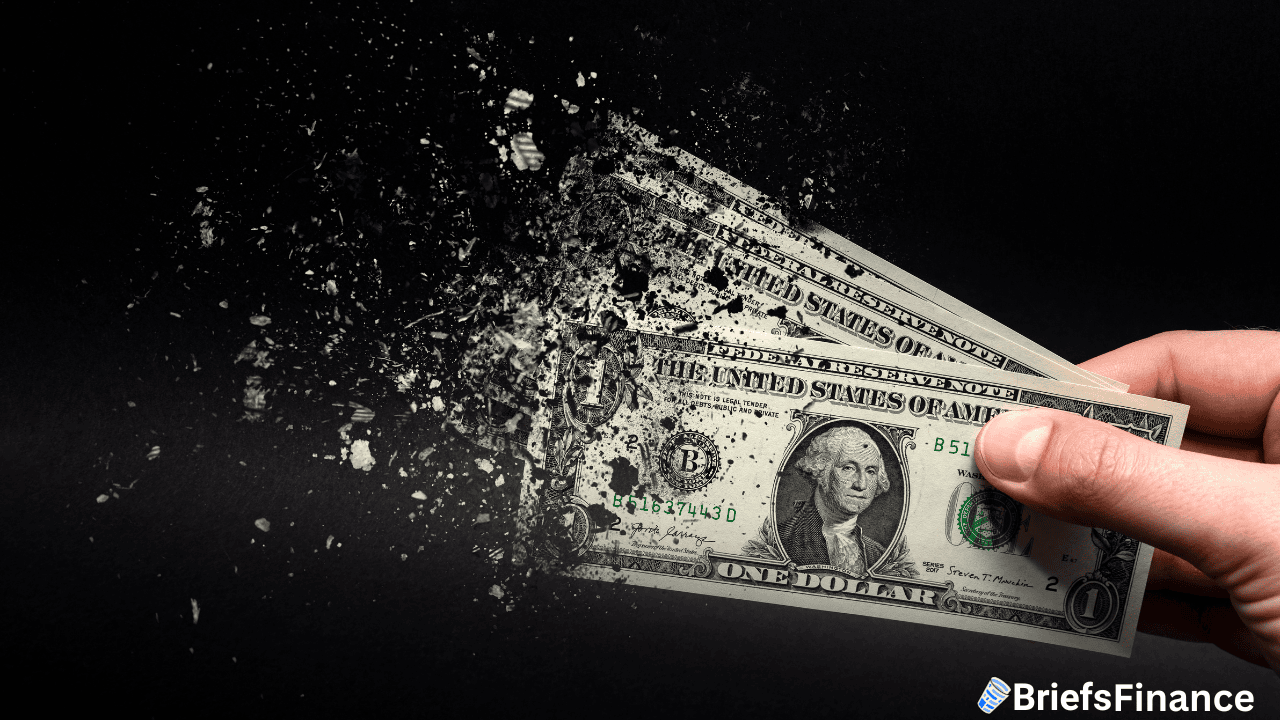
What Is Inflation, Really?
Inflation is what happens when more money flows into the economy - and prices start rising as a result.
Think of it this way. When people have more money in their pockets, they spend more.
When they spend more, businesses can charge more. When businesses charge more, everything at the store gets pricier. That's inflation in action.
Inflation is nothing new - it’s been around for decades.
You've felt it. Groceries cost more. Rent is higher.
A used car that cost $20,000 a few years ago is now $28,000. That's not a coincidence - that's inflation doing its thing.
And when inflation runs hot - like the 9.1% inflation the U.S. hit in 2022, a near four-decade high - the pinch becomes very real, very fast.
But here’s something most people don’t know: inflation actually benefits investors.
Let’s break down inflation - is it bad, how it hurts consumers, and why investors need to know how it works.
Before you read on: Growing your portfolio is one of the best ways to beat inflation.
Our market analysts are finding potential stock market opportunities that could grow to beat inflation over time.
Our CEO Jaspreet Singh is hosting a free live investor workshop where he's breaking down how to identify market shifts and potential opportunities.
Why Is Inflation Bad? (The Honest Answer)
Here's the core problem: inflation is bad because it quietly steals your purchasing power.
Purchasing power is just a fancy term for what your money can actually buy. And inflation chips away at it every single year.
Consider this: in the early 1970s, a single income was enough to support an entire family - a home, a car or two, a vacation each year, and even college tuition. That was just one paycheck.
Fast forward to today. Most households need two incomes - and they're still struggling to buy a home, afford a car, save for retirement, and pay for college.
What changed? Inflation happened. Year after year, prices crept up. And the people who just saved their money - without investing it - fell further and further behind.
The Savings Trap: Why "Just Save More" Is Bad Advice
You can never save your way to wealth.
That's not an anti-savings statement. Savings matter - for emergencies, big purchases, and as a launching pad for investing.
But if all you do is save, inflation will slowly make you poorer.
Here's why: If inflation is running at even 2–3% per year, and your bank is paying you 0.01% interest on your savings account - you are losing money in real terms every single year.
Your balance might look the same. But what it can actually buy? That's shrinking.
A $1,000 bill from 50 years ago had far more buying power than a $1,000 bill does today. Inflation is the reason why.
The lesson: save money strategically - for emergencies, big purchases, or to invest.
But don't let your cash just sit there losing value. That's not wealth-building. That's wealth-shrinking.
Who Does Inflation Hurt the Most?
Inflation doesn't hit everyone equally. And this is the part most people don't talk about.
Consumers get hit the hardest. When prices rise, everyday people have to spend more money to buy the same things they were buying before.
Their grocery bill, rent, and gas goes up.
But their paycheck? That usually doesn't keep pace.
If you're only a consumer - just spending money and saving a little - inflation makes your life more expensive without making you any richer.
But here's the flip side. Inflation actually benefits businesses and investors.
When prices go up, businesses collect more revenue.
Consumers spend more dollars at every store, restaurant, and checkout line.
That extra spending flows directly into business earnings. And when businesses earn more, investors - the people who own shares of those businesses - benefit.
That is how our system works.
Inflation disproportionately hurts the people who don't understand it. And it disproportionately benefits the people who do.
The Three Circles: Consumer, Business Owner, Investor
To really get why inflation is bad for some and not others, you need to understand how money flows through our economy.
Circle 1 - The Consumer (C): Everyone is a consumer. You go to work, get paid, and spend that money on goods and services. Most people stay stuck in this circle their whole lives.
Circle 2 - The Business (B): Businesses produce the goods and services consumers buy. When consumers spend, businesses collect that money.
Circle 3 - The Investor (I): Investors own stakes in businesses. When consumers spend more - because of inflation or otherwise - more money flows to businesses, and then to investors.
When inflation happens, money moves from the consumer into the business and to investors.
This is why wealthy people often get wealthier during inflationary periods while average consumers feel squeezed.
The goal? Stop being only a consumer. Start thinking like an investor too.
Inflation and the Stock Market: A Surprising Relationship
The stock market is not the economy. These are two separate things that don't always move together.
A perfect example: in 2022, inflation hit 9.1% - a near-40-year high.
That is rough for the economy and brutal for consumers. But at the same time? The stock market was hitting record highs.
Why? Because when consumers are forced to spend more money, that money flows into businesses. More revenue. More earnings. Higher stock prices.
From 1971 to 2021, dozens of goods and services inflated in price - dramatically.
But the S&P 500 outpaced almost all of them. Investors who stayed invested grew their wealth faster than inflation grew prices.
Why Is High Inflation Bad for the Economy?
While moderate inflation is a normal part of a healthy economy, high inflation is a different beast entirely.
When inflation runs too hot, a few damaging things happen:
1. Your savings erode fast. Purchasing power disappears when inflation spikes sharply.
2. Fixed income investments get crushed. If you own a bond paying 3% interest and inflation is running at 8%, you're actually losing 5% of your real purchasing power every year.
3. Everyday life gets more expensive. From eggs at the grocery store to rent to a used car - high inflation means everyone is paying more for everything, all at once.
4. The Fed steps in - and things get complicated. When inflation runs too hot, the Federal Reserve raises interest rates to slow things down. Higher rates make borrowing more expensive. Mortgages get pricier. Car loans cost more. Businesses borrow less. And markets can slow.
How Smart Investors Protect Themselves from Inflation
Understanding inflation is step one. Protecting yourself from it is step two.
1. Invest - don't just save. Historically, the S&P 500 has outpaced inflation over long periods of time. Investors who own shares of strong businesses benefit when prices rise, because those businesses collect more revenue.
2. Consider TIPS (Treasury Inflation-Protected Securities). These are special government bonds where your principal value adjusts with inflation.
If inflation is 3% and your TIPS pays 2% real return, you're actually earning 5% total. Your purchasing power stays protected.
3. Think about precious metals. Gold in particular has been seen across history as a store of value during times of high inflation.
Unlike paper money, which can be printed in unlimited amounts, gold has limited supply and intrinsic value.
The dollar has lost enormous purchasing power over the past century. Gold has maintained its purchasing power across the same time period.
4. Shift from consumer to investor. This is the biggest move. The more of your money that is working in the economy - through investments - rather than just sitting in a savings account or being spent, the more you benefit from the forces of inflation rather than being hurt by them.
Inflation: The Bottom Line
Inflation isn't going away. It's been a part of the U.S. economy for decades and it will continue to be.
Prices will keep rising. Your money will keep losing purchasing power if you let it sit still.
The people who are hurt most by inflation are the ones who don't understand it - and don't take action.
The people who benefit from it are the ones who learn how it works and position themselves on the right side: as investors, not just consumers.
Our market analysts are researching stocks that have the potential to possibly outpace the S&P 500 in the long-term.
That means also outpacing inflation.
Join our CEO Jaspreet Singh on March 18th to learn how to spot market shifts and potential investment opportunities.