Free NewsletterPro Login

Ethereum's Warning Sign: History Says More Pain Could Be Coming

A stylized illustration of a cylindrical cup with blue arrows and lines indicating a swirling or rotational motion inside the cup.
Published Oct 21, 2025
Share:
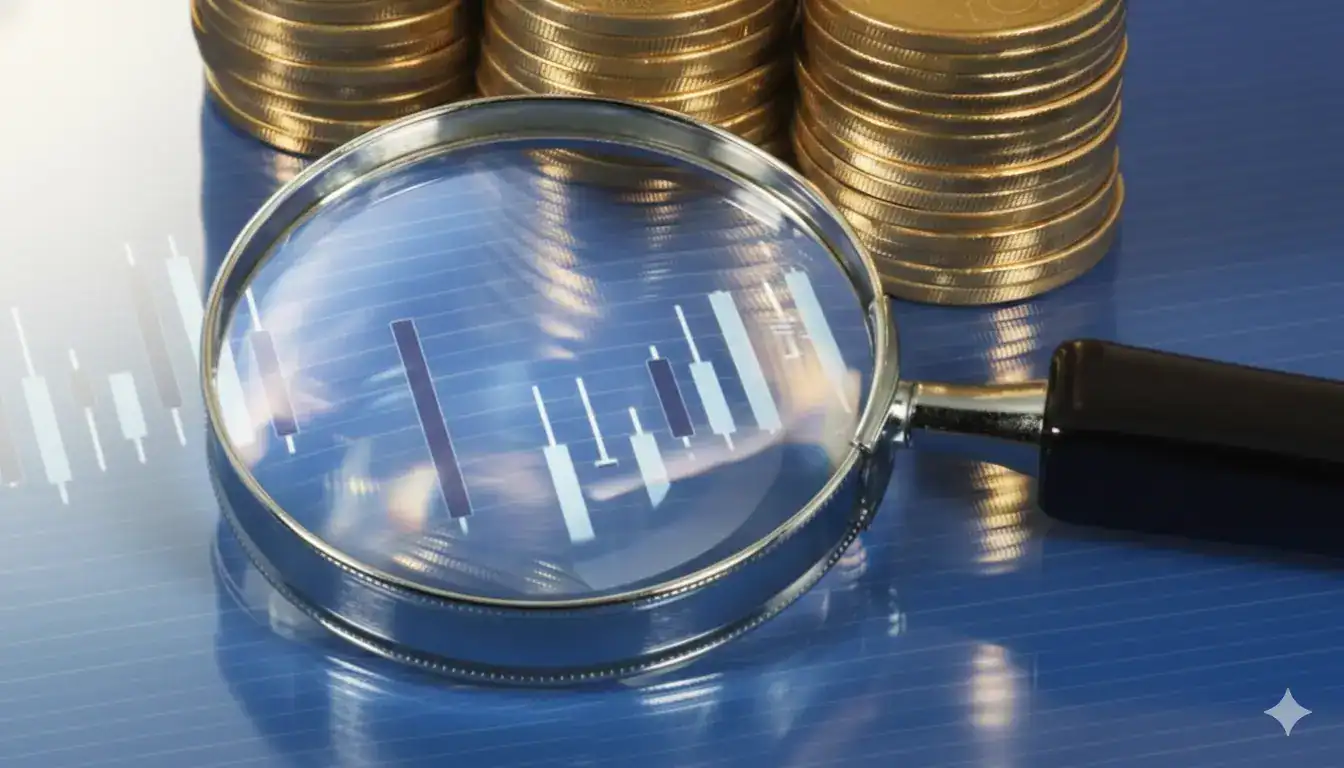
A magnifying glass focuses on a financial candlestick chart with a warning sign, hinting at price prediction uncertainty, while Ethereum coins and stacked gold coins appear in the background.
Summary:
  • Ethereum's MACD indicator just flashed a bearish "sell" signal on the weekly chart - the same pattern that preceded two previous major crashes
  • The last two times this signal appeared, ETH dropped 46% and 60% within weeks - and it's happening again in October 2025
  • Analysts say Ethereum needs to hold above $4,000 to avoid following the same pattern, but the technical setup looks worrying

What Happened?

A key technical indicator just flipped negative for Ethereum, and crypto traders are nervous because this same signal has predicted major crashes before.

The indicator is called MACD (Moving Average Convergence Divergence) - essentially a tool that tracks whether momentum is building or fading for an asset. On Ethereum's weekly chart, the MACD line just crossed below the signal line, which traders interpret as a "sell" signal.

Why does this matter? Because the last two times this exact pattern appeared, Ethereum got hammered. In mid-2024, ETH dropped 46% after the signal. More recently in early 2025, the same signal preceded a brutal 60% crash within just a few weeks.

Now it's happening again in October 2025, with Ethereum currently trading around $3,874 - already down about 20% from recent peaks.

Why This Matters

Technical analysis isn't magic, but patterns do repeat in markets because human psychology and trading behavior tend to follow similar cycles. The MACD indicator specifically tracks momentum - whether buying pressure is increasing or decreasing.

When the MACD line crosses below the signal line, it suggests momentum is shifting from buyers to sellers. Think of it like a car that was accelerating but is now slowing down - the trend is changing direction.

For Ethereum, this signal has been remarkably accurate at predicting major downturns. Twice in the past 18 months, it flashed right before steep selloffs. That's why traders are paying attention now.

The key level to watch is $4,000. Technical analysts say if Ethereum can hold above that price, it might avoid repeating the pattern. But if it breaks below $4,000, history suggests we could see another significant drop - potentially in the 40-60% range if the pattern holds.

What makes this particularly concerning is the timing. Ethereum is already showing weakness, and this bearish signal is appearing just as broader crypto markets face liquidity issues and risk-off sentiment. Multiple negative factors stacking up rarely ends well for prices.

The Bottom Line

Technical indicators aren't guarantees - markets can always behave differently than they did in the past. But when a signal has correctly predicted two major crashes in the past 18 months, it's worth paying attention.

For Ethereum holders, this is a warning shot. The pattern suggests more downside could be coming, especially if ETH breaks below $4,000. That doesn't mean you should panic sell, but it does mean being aware of the risk.

Some context: Ethereum has additional challenges beyond just technical signals. The crypto market is facing tightening liquidity, Bitcoin is struggling, and investor appetite for risk assets is weak right now. Technical signals tend to work better when they align with fundamental conditions - and right now, the fundamentals aren't great either.

What should everyday investors do? If you own Ethereum, watch that $4,000 level closely. A clean break below it could trigger more selling as traders who follow technical patterns start dumping.

Conversely, if ETH can hold above $4,000 and then rally, it might invalidate the bearish signal.
The uncomfortable truth is that catching falling knives is dangerous.

If this pattern plays out like the last two times, Ethereum could have significantly more downside ahead. That might create a buying opportunity eventually, but trying to time the bottom is risky.

For now, the technical setup looks bearish, the historical precedent is concerning, and the broader market conditions aren't helping. Caution seems warranted until Ethereum can prove it won't follow the same script as 2024 and early 2025.

Disclosure

Get Market Briefs delivered to your inbox every morning for free!

No fluff. No noise. No politics. Just finance news you can read in 5 minutes.

Blogs

May 5, 2026
How to Create Multiple Income Streams: A Beginner's Playbook
  • Most people rely on a single income stream from their job - which is also the most heavily taxed.
  • Multiple income streams come from a mix of cash flow, dividends, side businesses, real estate, and royalties.
  • The fastest path for most beginners is starting with one extra stream - usually dividends or a side hustle - and stacking from there.
Read More
May 5, 2026
The 60/40 Portfolio Explained: A Beginner's Guide
  • A 60/40 portfolio holds 60% in stocks and 40% in bonds (or other fixed income).
  • It's designed to balance growth from stocks with stability from bonds.
  • Your "right" mix depends on age, time horizon, income needs, and how well you sleep when markets drop.
Read More
May 5, 2026
How to Invest in Silver: A Beginner's Guide
  • Silver is both a precious metal and an industrial metal, used in solar panels, electronics, and medical tech.
  • Investors can buy silver four main ways: physical bars and coins, ETFs, mining stocks, or futures contracts.
  • Most beginners are best served by allocating a small slice of their portfolio to silver - usually between 1% and 3%.
Read More
May 1, 2026
Asset Allocation by Age: The Right Portfolio Mix at Every Stage of Life
  • Younger investors should hold mostly stocks because they have decades to recover from crashes and benefit from compounding.
  • Allocations gradually shift toward bonds and stable income as retirement approaches, but stocks remain important even past age 65 to outpace inflation.
  • Annual rebalancing is essential - it forces you to buy low and sell high while keeping your portfolio aligned with your actual life stage.
Read More
April 30, 2026
Stablecoin Explained: Why Some Cryptocurrencies Actually Aren't Volatile
  • Stablecoins are cryptocurrencies pegged to stable assets like the US dollar, giving crypto-style speed and access without the volatility of Bitcoin or Ethereum.
  • Fiat-backed stablecoins like USDC are the safest option, while algorithmic stablecoins have failed spectacularly and should generally be avoided.
  • Stablecoins fit a portfolio as cash reserves with better yields, a hedge against crypto volatility, and a fast, cheap rail for international transactions.
Read More
April 30, 2026
Buy Now, Pay Later Risks: Why This "Easy" Payment Method Is Dangerous to Your Wealth
  • Buy now, pay later services like Klarna, Affirm, and Sezzle are debt products designed to feel harmless while keeping users in a cycle of overspending.
  • BNPL exploits psychological debt blindness, triggers late fees, and damages credit scores without helping users build positive credit history.
  • Building real wealth means waiting 30 days, paying upfront when you have the cash, and avoiding systems built to extract money from your future income.
Read More
April 30, 2026
Dividend Payout Ratio: The Secret Metric That Shows If a Stock Is Safe or Risky
  • Dividend payout ratio is total dividends paid divided by net income, showing the percentage of earnings a company returns to shareholders.
  • A 20-50% payout ratio is generally safe and sustainable, while ratios above 75% often signal a dividend cut is coming.
  • High dividend yields can be warning signs, not opportunities - safety and dividend growth matter more than the headline yield number.
Read More
April 30, 2026
Ethereum for Beginners: What It Is and Why Smart Investors Are Paying Attention
  • Ethereum is a blockchain platform that runs smart contracts, while Ether (ETH) is the cryptocurrency that powers the network.
  • Use cases include decentralized finance, NFTs, gaming, supply chain tracking, and digital identity - many still experimental.
  • Most investors should treat Ethereum as a small allocation hedge using dollar-cost averaging, not a get-rich-quick lottery ticket.
Read More
April 30, 2026
Dollar Cost Averaging Strategy: How to Beat Emotion and Build Wealth Steadily
  • Dollar cost averaging means investing the same amount at regular intervals regardless of what the market is doing.
  • The strategy automatically buys more shares when prices are low and fewer when prices are high, lowering your average cost over time.
  • DCA removes emotion, eliminates the need to time the market, and turns volatility into a mathematical advantage for long-term investors.
Read More
April 30, 2026
The BRRRR Strategy: How to Build Real Estate Wealth Without Big Money Down
  • BRRRR stands for Buy, Rehab, Rent, Refinance, Repeat - a five-step framework for scaling real estate without saving for big down payments.
  • The strategy works by buying distressed properties below market value, adding value through smart renovations, and pulling out equity through refinancing.
  • Tax advantages like depreciation and mortgage interest deductions make BRRRR a powerful tool for owners willing to manage tenants and contractors.
Read More
1 2 3 20
0 Shares
Share via
Copy link