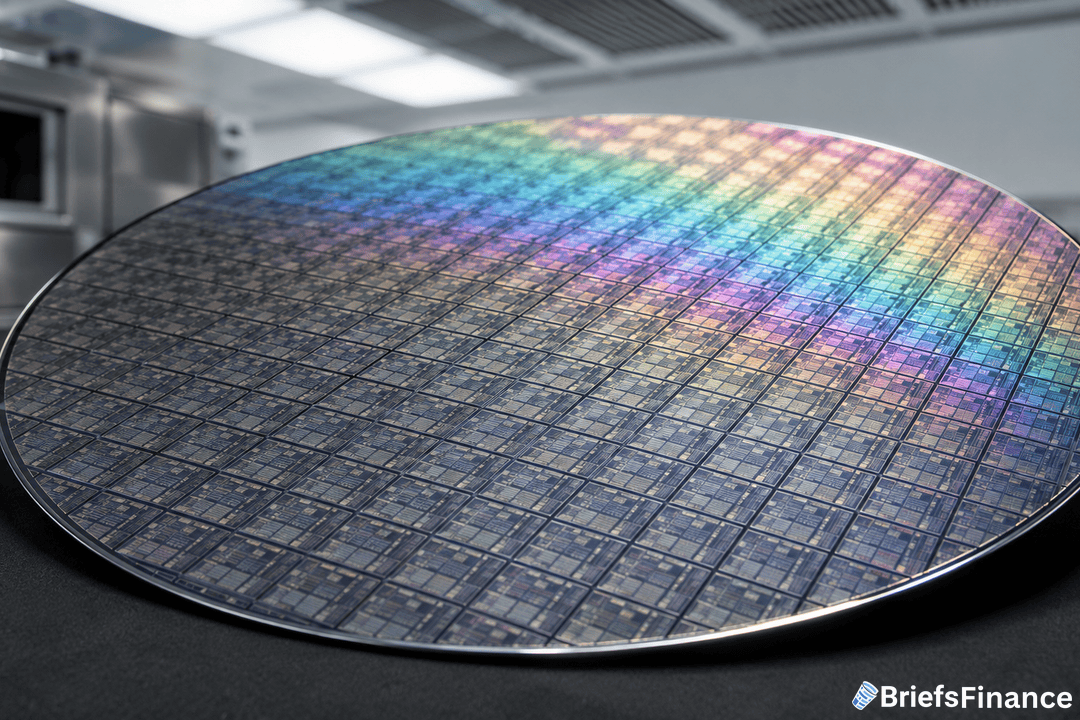
Nvidia just gave up on China, and its CEO said it himself. Huawei picked Monday to roll out a new way of building chips, one that could let China keep pace without the equipment U.S. sanctions blocked.
Huawei calls its new method "LogicFolding," and instead of one layer of logic on a chip, the design stacks two. That packs more transistors into the same space and improves power efficiency.
The company plans to use the design in this fall's Kirin smartphone chips, which power its Mate 90 line. By 2031, Huawei says the method could match the performance of 1.4-nanometer chips, the leading edge of what TSMC and others are building toward.
For context, TSMC has just started making 2-nanometer chips at scale, and smaller numbers mean faster, more efficient silicon.
We break down what moves like this actually mean for your portfolio in Market Briefs - delivered every weekday morning, with a free 45-minute investing masterclass when you join.
Last week, Nvidia CEO Jensen Huang told CNBC the company had "conceded" the Chinese market to Huawei. That's a big deal, since China is the second-largest consumer economy on the planet.
The U.S. has blocked Nvidia from selling its top chips, including the H200, to Chinese buyers, and that window keeps shrinking. Huawei, meanwhile, has been steadily building its own chip stack since 2023, when it shocked the market with a 5G-capable Mate 60 phone running on its own silicon.
If Huawei can scale the new design, it locks in another long stretch of chip self-sufficiency for China.
Not everyone is buying the 1.4-nanometer pitch. Paul Triolo at DGA Group said stacked designs help with density but don't solve the harder problems of yield, heat, and power.
Neil Shah at Counterpoint Research said the approach is "still unproven at scale." His take: the smartphone launch is the warm-up, and the real test is whether Huawei can run the design in AI data centers, where heat and packaging problems get much worse.
That's also why fund managers have been piling into chip stocks on every side of the supply chain - the winners are not yet decided.
Huawei is also branding its research in academic language, what it calls "tau scaling," and says it has produced 381 chips using the method over six years. Compare that to "Moore's Law," the long-standing industry rule that even Huang has said is over - Huawei wants its name on the next chapter.
The pressure on Nvidia keeps growing even as it opens new CPU markets elsewhere, while Washington has also delayed broader chip tariffs to give domestic chipmakers time to catch up.
Whether Huawei's chips can actually deliver is a separate question, and the answer starts this fall.
If you want a read like this on the market every morning, join 350,000+ investors reading Market Briefs - you also get a free investing masterclass thrown in as a bonus.