The president's broker just made a call most retail investors didn't see coming. Sell some of the biggest names in Big Tech and buy a conveyor-belt sushi chain, with the disclosure released last week showing the rotation in detail.
President Trump's latest financial disclosure, signed May 8 and released Thursday by the disclosure the U.S. Office of Government Ethics, shows he picked up Class A common stock in Kura Sushi USA (ticker: KRUS) on Feb. 2 - with the buy valued between $1 million and $5 million.
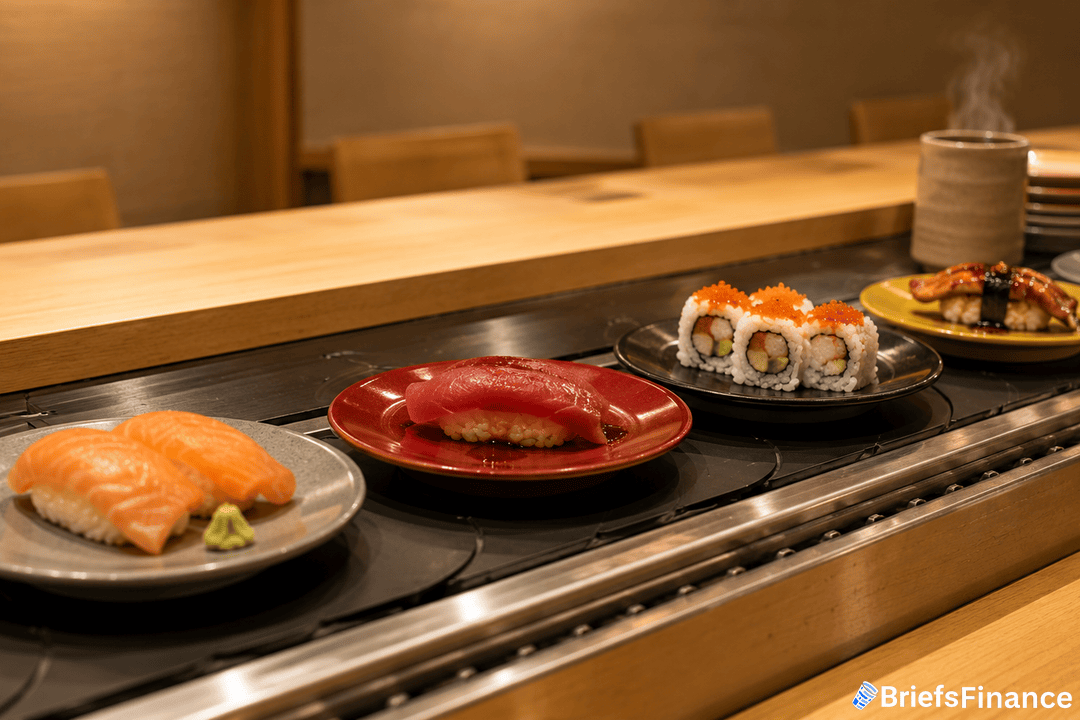
Kura Sushi runs 88 restaurants across 22 states and Washington, D.C., out of its Irvine, California headquarters. The chain is part of a Japan-based parent and is known for its conveyor-belt sushi setup, where plates spin past each table and diners grab what they want.
The Trump Organization says the accounts are run by third-party financial institutions, with spokesperson Kimberly Benza saying the investments are "maintained exclusively through fully discretionary accounts independently managed by third-party financial institutions with sole and exclusive authority over all investment decisions."
Every morning, Market Briefs breaks down portfolio moves like this in plain English - in five minutes, plus a free masterclass on finding investments when you sign up.
Kura wasn't the only restaurant stock added, with the same filing showing the account bought between $500,000 and $1 million of Chipotle Mexican Grill, $250,000 to $500,000 of Domino's Pizza, and $50,000 to $100,000 of Starbucks.
At the same time the account trimmed Big Tech, with sales of Amazon, Microsoft, and Meta shares in transaction ranges of $5 million to $25 million each. That's the kind of rotation institutional investors make when they're worried about high valuations or hunting for cheaper places to put cash.
There's a wrinkle worth a smile in the disclosure. The president has been reported to dislike raw fish for decades, with the 1993 book Lost Tycoon quoting him saying he wouldn't "eat any f---ing raw fish" during a 1990 visit to Japan. The Class A common stock doesn't seem to mind.
KRUS shares were trading around $54 when the disclosure was released.
Consumers have been pulling back on dining out for most of 2026, which makes a wave of high-profile buying in the sector look like a contrarian signal that the worst of the consumer slowdown is priced in. It could also just be a broker chasing yield in a beaten-down corner of the market.
The next disclosure will show whether this was a one-time rotation or a real shift in the portfolio.
If you want this kind of read on the market every morning, join 350,000+ investors reading Market Briefs - you also get a 45-minute investing course as a bonus.