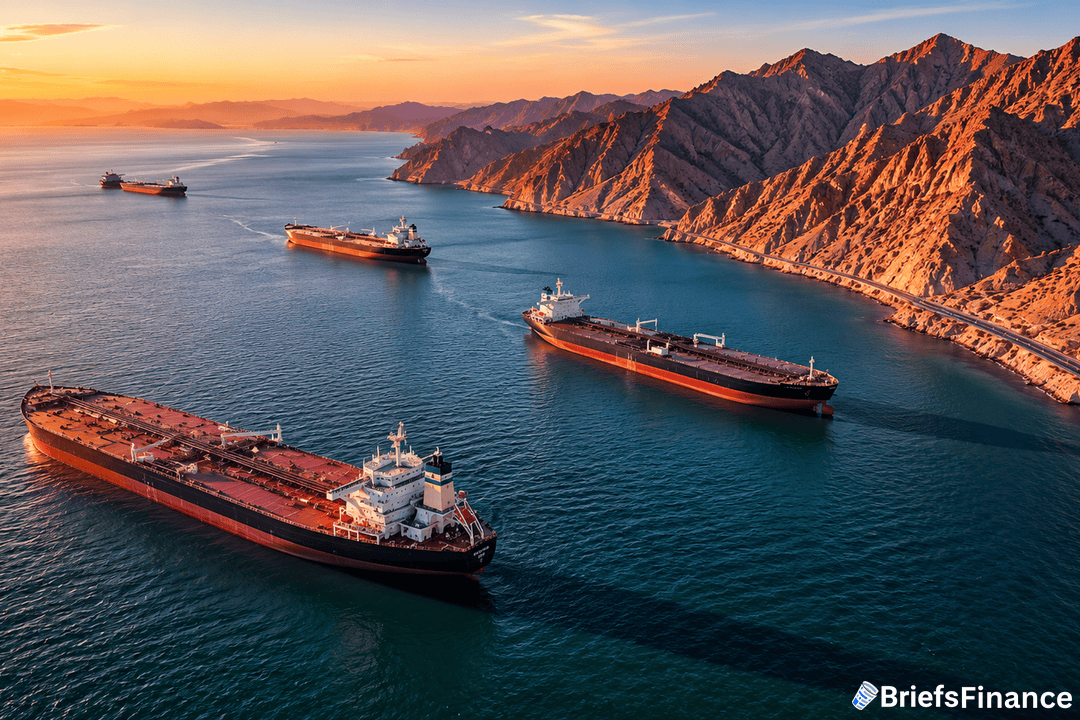
Both sides walked back the timeline, while oil traders walked it forward anyway. The U.S. and Iran each cooled expectations Monday for a fast end to the three-month-old war, and crude still fell 5%.
A senior Trump administration official laid out the rough shape of the deal: Iran reopens the Strait of Hormuz, the waterway that used to carry a fifth of the world's seaborne oil and gas, in exchange for the U.S. lifting its naval blockade. Iran also agreed "in principle" to dispose of its highly enriched uranium, the kind that can be used to build a weapon.
That's the framework, but what it isn't is signed. Iran's foreign ministry said Monday no agreement is close, and questions about what to do with the uranium are still open, with negotiators reportedly having 60 days to finalize anything.
The whole thing rests on a tenuous ceasefire that has held since early April.
If you want to know how stories like this actually move your portfolio, Market Briefs breaks it down every morning in five minutes - and you get a free investing masterclass when you sign up.
Crude dropped 5% to two-week lows, which looks strange when both sides are downplaying the deal. The market is reading the silence as productive.
Trump told his team over the weekend not to rush, while Rubio told reporters in New Delhi the U.S. would give diplomacy "every chance" before exploring "alternatives." That kind of language signals patience, not collapse.
Investors are betting that even a slow deal eventually reopens the Strait, and the longer talks last without breaking down, the more confident the market gets.
Iran's enriched uranium is the biggest sticking point. Tehran insists it has a right to enrich for civilian power, even though its purity levels go well past what nuclear power plants need.
Iranian sources have floated diluting the stockpile under United Nations supervision, with the U.N. as the global body that watches nuclear programs. Then there's Hezbollah, the Iranian-backed militia Israel is still fighting in Lebanon, plus Tehran's demand to free tens of billions in oil revenue frozen in foreign banks.
Iran says it won't charge tolls for passage through the Strait, but it also says it's "normal for services provided to require a price" - and those two things don't quite line up.
The Strait used to carry about a fifth of seaborne oil before the war shut it down. If the framework holds and the U.S. blockade lifts, energy prices probably keep falling, while a stall sends prices back up fast.
Trump's approval ratings have already taken a hit from gas prices, so he has a political reason to land this deal - he just doesn't want to land it badly. Bond strategists aren't pricing in much relief either, with the 30-year Treasury still sitting at 5.2%.
Want this kind of read on the market each morning? Sign up for Market Briefs - the daily newsletter for 350,000+ investors, plus a free 45-minute investing course as a bonus.