
Why $2,000 Is Your First Money Goal
Everybody wants to be an investor - but there’s one crucial thing you need to learn hot to do before investing your first dollar: Save.
Why? Saving is the backbone of your finances - it creates healthy money habits that allow you to invest successfully later.
Not only that, but this foundation helps to protect you so that every dollar you invest, you’re able to keep down the road.
But the fact is: If you don’t have at least $2,000 saved up right now, you probably should not be even thinking about investing $1.
Because life happens and when it does without a financial cushion, you're forced deeper into debt.
The average American household carries $6,200 in credit card debt.
At typical credit card interest rates (around 20%), that debt becomes a millstone. You're paying interest instead of building wealth.
Your first goal is simple: save $2,000 as fast as possible. This isn't about becoming wealthy. It's about not going backward every time something goes wrong.
So, we’re going to show you how to do it - how you can save $2,000 fast, why it matters, and what you’ll need to do in order to start investing.
Once you’ve got the cash saved up, you might be ready to invest - our market analysts are researching new potential stock market opportunities in Market Briefs Pro.
If you want to learn more, click here and subscribe to Market Briefs Pro.
The Fastest Way to Have More Money
The quickest path to more money isn't a side hustle or a raise.
It's not spending the money you already have.
If you can't manage the money you have now, earning more won't fix anything.
You'll just dig yourself into a bigger hole with nicer cars and bigger homes.
There’s people out there who live a rick life on $50,000 a year because they know how to keep their debt low, save, spend, and invest accordingly.
There’s also millionaires who live paycheck to paycheck because they spend everythingthey earn (and sometimes more).
So you need to shift your mindset first and start where you are now before you start adding more money and side hostels into the mix.
Why Spending Less Comes First
When banks see you earning more, they offer bigger credit lines.
Suddenly you can afford that $50,000 car instead of a $20,000 one. A $3,000 apartment instead of $1,500. More money becomes more ways to spend.
Most people who earn more end up in worse financial shape because they never fixed their spending habits first.
So before you chase more income, learn to control what's going out.
Step 1: Report Your Money (Spend 60 Minutes on This)
Grab a Google Sheet, Excel, or even pen and paper.
At the top, write down every source of income from the last month. Job, business, investments - all of it.
Below that, list every expense. Pull up your bank statements, credit cards, debit cards. Write it all down.
Then categorize:
- How much on restaurants?
- How much on groceries?
- Housing costs?
- Subscriptions?
- Entertainment?
Get it down to the penny.
Nobody likes grading themselves. But you can't optimize what you don't track.
The moment you see where your money actually goes, you'll naturally want to change.
Maybe you spent $400 on restaurants without realizing it.
Maybe you're paying for three streaming services you barely use.
This step alone will show you where to cut.
| Category | What to Track | Why It Matters |
| Income | All sources (job, side hustles, investments) | Know your starting point |
| Fixed Expenses | Rent, utilities, insurance, car payment | Non-negotiables that eat your budget |
| Variable Expenses | Groceries, gas, restaurants, shopping | Where you have control |
| Subscriptions | Streaming, apps, memberships | Hidden monthly drains |
| Savings | What you're putting away | The gap you need to close |
Step 2: Negotiate Your Bills (Yes, Really)
In America, we negotiate the price of homes and cars. But you can sometimes haggle your way into a better rate on your phone, internet, or insurance as well.
Here's exactly what to do:
Call your service provider. Say something like: "I've been a customer for [X years], and I noticed my bill has increased. Is there anything you can do about this?"
They might say, "We have a promotion that can save you $25 a month." Or they might say, "Sorry, nothing we can do."
Either way, you won;t know unless you try.
Do your homework. Check competitor pricing. Look at introductory offers. Then call back: "I see [Competitor] is offering similar service for $30 less per month.
I'd love to stay with you, but it's hard to justify the cost. Can you match this?"
Make your own counter-offer. If they bring your bill from $100 to $75, ask if they can do $65. The worst they say is no.
Be nice. Customer service reps deal with angry people all day. If you're kind, they'll want to help you. If you need more help, ask for a manager - they often have more flexibility on pricing.
One 15-minute call could save you $300+ per year. That's $300 toward your $2,000 goal.
Again, this is not about getting rich - you ca’;t do that with just your savings alone. This is about building a steady foundation with your money that you can lean on later.
Step 3: Sell Your Stuff
Look around your home right now.Are there any clothes, games, or anything else you haven't used in a while? It might be time to let it go.
Here's a trick: take everything out of your closet and put it on your bed. Then only put back what you've worn in the last six months.
Everything else? Sell it.
- Facebook Marketplace.
- Poshmark for clothes.
- OfferUp for furniture.
- eBay for electronics.
Most of us have hundreds (or thousands) of dollars sitting in our homes that we'll never use again.
Turn that dust into dollars.
Step 4: Stop Using Credit Cards (If You Carry a Balance)
Credit cards are tools. Used correctly, they give you rewards, cash back, and perks.
Used incorrectly, they could sink your finances.
If you're paying interest, you're funding everyone else's rewards program.
At 20% APR, credit card companies are getting the investment returns most people dream about - and you're paying for it.
If you carry a balance, stop using your cards today.
Pay cash or debit. Then throw every extra dollar at paying down that balance.
Why? Because $6,200 invested at 20% annual returns (the rate you're paying on credit card debt) would turn into millions by retirement.
Your credit card company knows this. That's why they're happy to let you carry a balance.
Step 5: Build Your Financial System
Once you've saved your first $2,000, you need a system to never fall back into the danger zone.
The way you can do this is by creating a system for your money - that way every dollar you earn has a job.
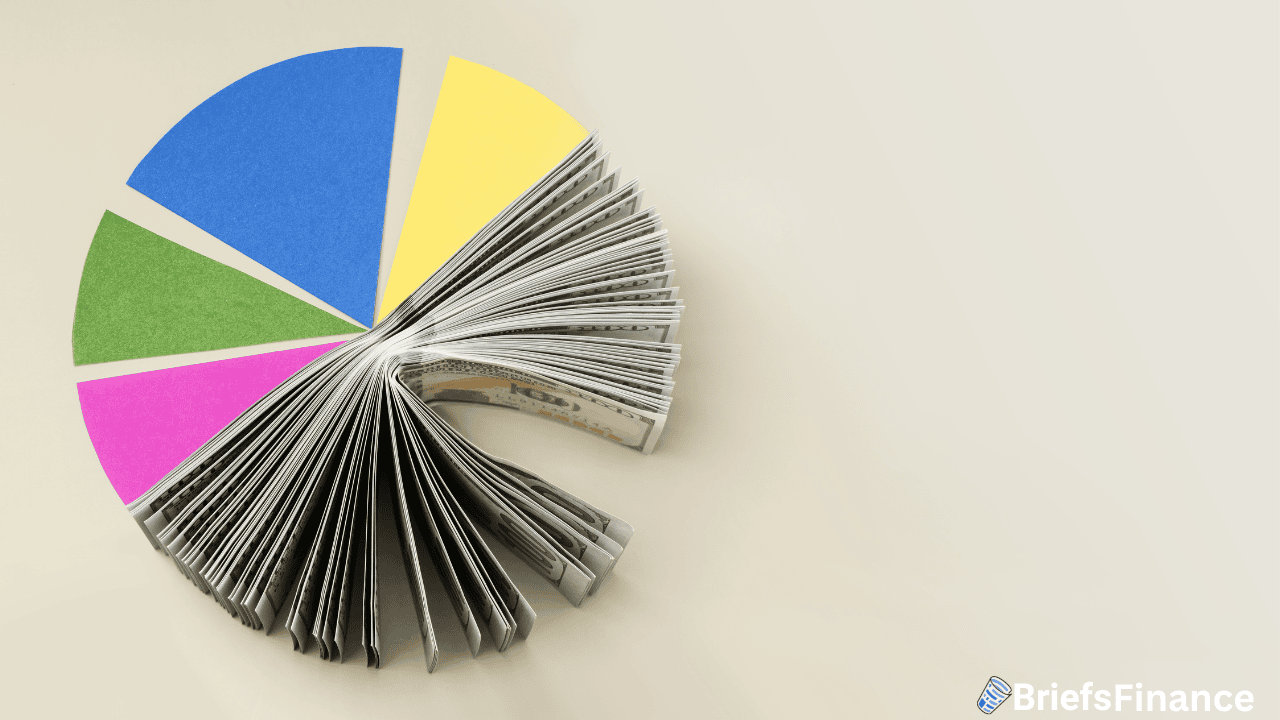
The 75-15-10 Plan
For every dollar you earn:
- 75 cents maximum = spending.
- 15 cents minimum = investing.
- 10 cents minimum = savings.
Make $30,000 a year? 75-15-10 applies.
Make $300,000 a year? Same percentages.
That’s because it scales with your income, so it can work no matter how much you earn.
If you're young with few responsibilities and want to get aggressive, try the 50-30-20 Plan:
- 50 cents maximum = spending.
- 30 cents minimum = investing.
- 20 cents minimum = savings.
Create Three Bank Accounts
Now that you have a system, the last thing you want to do is separate your money manually.
That’s because mistakes happen and you may sometimes spend your saving money or invest your spending money - that creates confusion and ultimately breaks your system.
So, you’ll want to put everything on autopilot by opening three separate bank accounts:
- Spending account (checking).
- Investment account (brokerage-linked checking/savings).
- Savings account (high-yield savings).
When your paycheck hits, it auto-splits into these three accounts before you can touch it.
Now, you're paying yourself first.
How Much Should You Save After $2,000?
Save 3-12 months of expenses depending on your situation.
- 23 years old, few responsibilities? 3 months is fine if you're comfortable with risk.
- Older with a family and mortgage? Aim for 6-12 months.
Most people don't need more than 12 months of expenses saved.
Why? Because saving is losing to inflation.
The Three Reasons to Save Money
- For emergencies (your $2,000 cushion and 3-12 month fund).
- For big purchases (down payment on a house, car, etc.).
- For investments (to buy assets that grow wealth).
If you're saving for any other reason, you're doing it wrong.
Once you hit your emergency fund goal, stop piling up cash.
Take that 10% you were saving and move it to investments. Your 75-15-10 becomes 75-25 (75% spending max, 25% investing min).
Make It Fun (Or You'll Quit)
Jeff Bezos drove a Honda Accord as a billionaire. But most of us aren't wired like that.
You don't have to sleep on a living room floor (though some wealthy people did exactly that to save aggressively).
You just need to make saving a game instead of a punishment.
Examples:
- Still go to restaurants with friends, but order water and an appetizer instead of a full meal.
- Fix things with creativity (duct tape works for more than you'd think).
- Challenge yourself to find free entertainment.
- Compete with yourself to lower your monthly spending by $50.
The moment it feels like deprivation, you'll quit. Make it fun, make it a challenge, and you'll stick with it.
It’s important to remember: This isn’t forever. The cool thing about making money is you eventually do get to spend it.
But a little sacrifice now goes a long way and can help you meet your financial goals.
Why This Matters More Than You Think
A thousand dollars had way more buying power 50 years ago than today. One income supported a family, a house, cars, vacations, and college.
Today, two incomes struggle to do the same.
That's inflation eating away at your money's value. It's why you can never save your way to wealth.
But you must save strategically - to protect yourself when life happens, to make big purchases without going into debt, and to have cash ready when investment opportunities appear.
Your $2,000 isn't the goal. It's the foundation everything else is built on.
Without it, you're one car repair away from debt. One medical bill away from financial disaster.
With it, you have breathing room - that gets you once step closer to financial freedom.
Saving is just part of the financial puzzle - once you have your base, you then need to learn to grow your money.
Investing helps people build wealth that lasts for generations. But what exactly do you invest in?
On Market Briefs Pro, we’re researching new stocks every week to give you investing inspiration.
Our weekly reports deliver you the data you need to make smarter investment decisions and stay ahead of Wall Street - and it’s written in plain English, too.
If you’re looking for new potential investment opportunities, subscribe to Market Briefs Pro today.
Action Steps Checklist
An idea without action is just a dream - we want you to actually put all of this in action so you can crush your financial goals.
So, save this checklist below - print it out, screenshot it, but don’t forget to use to help you save your first $2,000:
Week 1: Track & Analyze
- Spend 60 minutes building your financial report.
- List all income sources.
- Categorize all expenses for the past month.
- Identify your three biggest spending categories.
- Calculate how much you need to save monthly to hit $2,000.
Week 2: Negotiate & Eliminate
- Call your phone provider to negotiate lower rates.
- Call your internet provider to negotiate lower rates.
- Review and cancel unused subscriptions.
- Shop for better insurance rates (auto, renters, etc.).
- Total your monthly savings from negotiations.
Week 3: Declutter & Sell
- Empty your closet - keep only what you've worn in 6-12 months.
- List clothes on Poshmark or Facebook Marketplace.
- Find 10 items around your home to sell.
- List electronics, furniture, or gadgets you don't use.
- Add sales proceeds to savings.
Week 4: Set Up Your System
- Open three separate bank accounts (spending, investing, savings).
- Set up automatic transfers using the 75-15-10 plan.
- Move your first savings deposit to your emergency fund.
- If carrying credit card debt, stop using cards and create a payoff plan.
- Calculate your target emergency fund (3-12 months expenses).
Ongoing: Stay Consistent
- Review your financial report monthly.
- Adjust spending as needed to stay on track.
- Celebrate milestones ($500, $1,000, $1,500).
- Once you hit $2,000, keep saving until you reach your full emergency fund.
- After hitting your emergency fund goal, shift savings to investments.