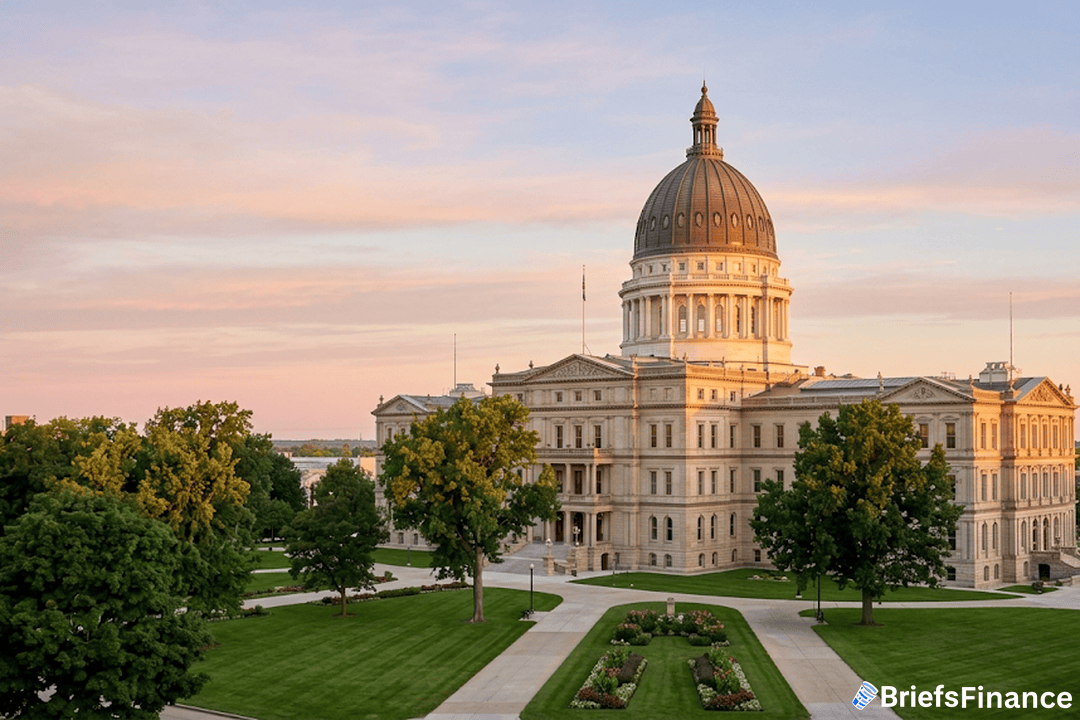
Rising government spending has pushed state lawmakers to look for ways to give voters a break. Lawmakers are focusing on property taxes since they impose a direct, recurring cost on homeowners.
Tennessee State Senator Brent Taylor put it bluntly. "The property tax is the most egregious tax there is because you never own your property," he said. "You're only paying rent to the government. And if you don't think you're just paying rent to the government, try not paying your property taxes." Taylor is backing Tennessee's Amendment 2, which would permanently ban the state from ever creating a property tax. (Tennessee has not had a state-level property tax since 1949.)
Eight property tax ballot initiatives are up for vote across seven states. The rest cover other kinds of taxes, but property taxes are getting the most attention because they fund so much of local government.
Florida's Amendment 3 is the biggest battle. It would raise the maximum property assessment that qualifies for the homestead exemption from $150,000 to $250,000. That means a bigger chunk of a home's value is protected from taxes.
Supporters say the savings justify trimming government. Governor Ron DeSantis pointed out that Florida local government revenue grew from $32 billion to $83 billion over 12 or 13 years.
Get the market news that matters in a five-minute read with Market Briefs, our free daily newsletter
Opponents see a different picture. Jacksonville Mayor Donna Deegan warned that Amendment 3 would cut her city's budget by $300 million - a third of its total. "A $300 million hit is not a small hit," she said. She listed the likely fallout: deteriorating roads, closed libraries, pools, and parks, slower public safety response times, worsening housing affordability, and more homelessness.
Hallandale Beach Mayor Joy Cooper asked residents on Nextdoor: "What city services do people want to cut?" Florida Senate Minority Leader Lori Berman said she is "really worried" the measure could bankrupt some local governments.
The math is stark.
Wyoming's Homeowner's Primary Residence Property Tax Exemption Initiative could cost at least $188 million by 2030.
Supporters contend that these revenue losses are a minor trade-off for cutting out government inefficiency. "We have seen egregious over-taxing by some of our municipalities here in North Carolina," said North Carolina Treasurer Brad Briner, who also referenced his role on the Local Government Commission. "That is not fair to homeowners who are already stretching their budgets, and it makes it impossible for some potential new homeowners to consider jumping into the housing market."
Briner noted that while most municipalities are well-managed, some turn to supplemental revenue to cover mistakes. "A top priority for my administration is financial literacy. A basic principle of that is to live within your means," he said. "We recognize municipalities are also being stretched, but we need to find other avenues to balance their budgets, without relying too heavily on property taxes."
But local officials warn of losses. "The property tax is Wake County's largest and most stable source of revenue," warned Wake County Board of Commissioners Chair Don Mial. "It funds about 75% of the county's annual budget and makes financing new schools, libraries, fire stations and other infrastructure possible. If we lose the ability to set our own tax rate, it could result in significant service reductions and force us to scale back much-needed capital improvement plans."
You will have the final say this November.
These measures come as home values have surged in many states, increasing property tax bills and intensifying calls for relief. Local governments rely heavily on property taxes for schools, roads, and emergency services, making the decision especially consequential for communities.
Join Market Briefs, our free daily newsletter, for a quick daily rundown of the markets