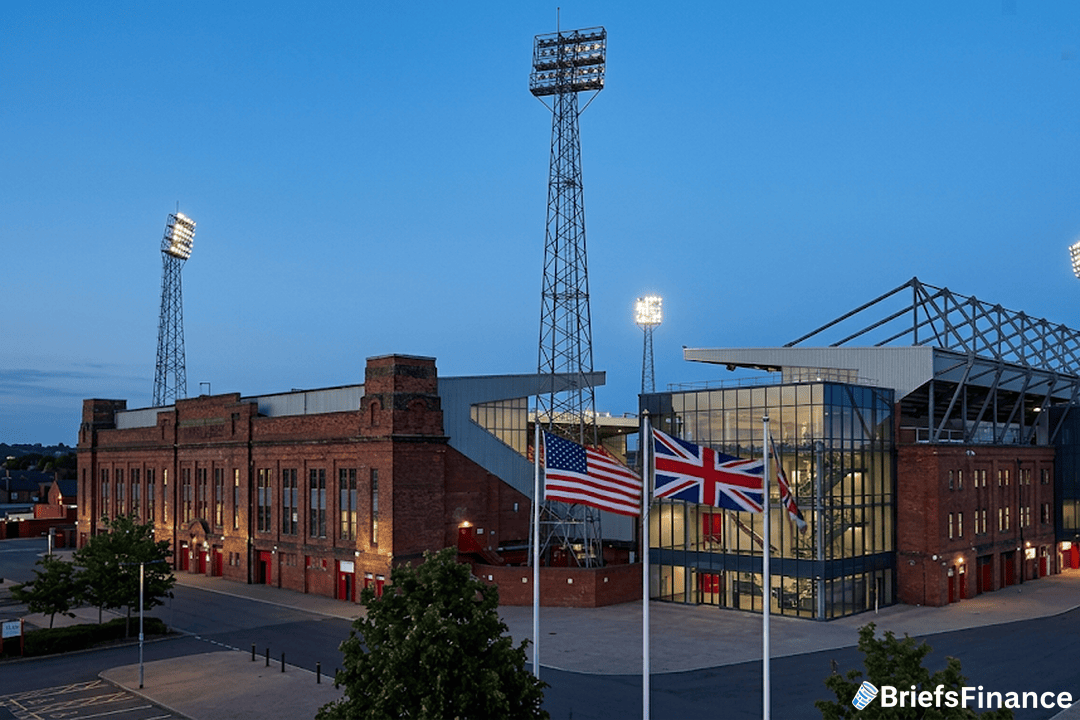
The trend started quietly in 2005 when the Glazer family took over Manchester United. Twenty years later, American/) money is the new normal in English football.
The numbers get more impressive the closer you look.
"It is not overly frothy in today's market," noted Kieran Maguire, a University of Liverpool football finance expert.
Even celebrities are getting in on the action. Ryan Reynolds and Rob McElhenney bought fifth-tier Welsh club Wrexham in 2020 and turned it into a global brand. Snoop Dogg invested in second-division club Swansea City in 2026. The message is clear: owning a piece of English soccer is now a prize for the super-rich.
Get the market news that matters in a five-minute read with Market Briefs, our free daily newsletter
On paper, many of these clubs are terrible businesses. In the 2024/25 season, all Premier League clubs together lost £948 million before taxes. Only eight of the 20 clubs reported an operating profit. So why are billionaires lining up?
The answer is scarcity and untapped potential. Only a limited set of elite football clubs exist globally, with origins in the late 1800s. According to Amber Pinto, whose firm Pinto Capital focuses on sports investments, "Football clubs are a rare asset, and arguably the ones in the UK are the rarest with the oldest histories attached to them. Live sport is also one of the only things that can't really be replaced by artificial intelligence. There is simply no way to replicate it online."
British clubs have traditionally been run with fan loyalty in mind, not profit. That leaves many inefficiencies in day-to-day operations. American businesspeople see opportunities to optimize revenue channels that have rarely been prioritized.
Just like any other investment category, valuations matter most. According to Maguire, Liverpool's $6 billion price tag reflects the limited number of elite clubs and the strong demand from billionaires seeking to invest in them.
For Pinto Capital, the deal cycle is "maturing" after a red-hot market. "The deal cycle has become slightly longer and more complex," Pinto added. "There is a football regulator for the first time, significant institutional players involved from finance and media, and football is now seen as an exportable, global product, for example Wrexham."
However, owners risk losing fan loyalty if they push commercialization too far. Deloitte researchers warned in their 2026 football finance review: "Frustrations among this group at the top-end of the game are building and in future many more may decide to vote with their feet, and step away from the live game."
The message is clear: scarce things with global appeal tend to hold their value over time - but even the most valuable assets come with risks.
Join Market Briefs, our free daily newsletter, for a quick daily rundown of the markets