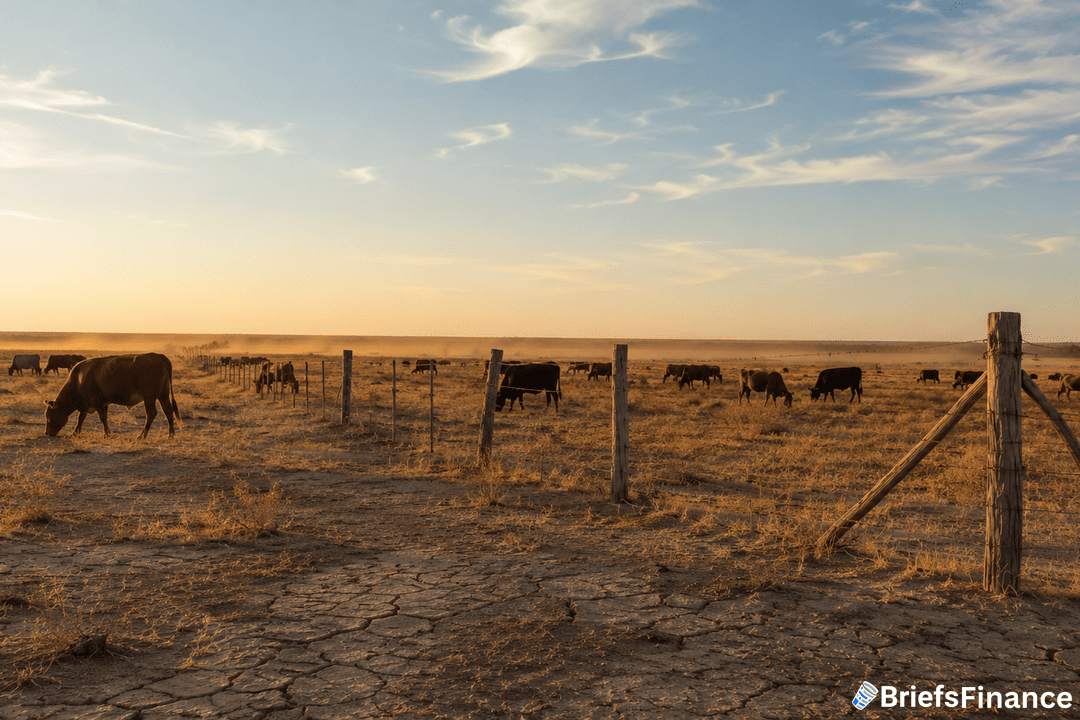
Americans are paying record prices for beef, and the cattle math is getting worse, not better. A parasite last seen here decades ago just turned up in Texas.
Beef is pricey for a simple reason: there aren't enough cattle. The U.S. herd is at its smallest in 75 years, after years of drought made it too costly to raise more.
Drought dried up the grass and feed that herds depend on, which left ranchers with fewer animals to sell.
On top of that, the U.S. paused live cattle imports from Mexico. That one move pulled an estimated 1.2 million young cattle out of this year's supply.
Fewer cattle and the same hungry buyers means higher prices. Ground beef hit about $7.06 a pound in May, up roughly 13% from a year ago.
One economist called it Economics 101: supply shrinks, demand holds, and prices climb. Trade tensions added to the squeeze, though some tariffs on beef have since eased.
Rising grocery prices say a lot about the economy, and we break down what they mean for investors every weekday in Market Briefs, plus a free masterclass to get you started.
The New World screwworm is a fly whose larvae burrow into the wounds of living animals. It was wiped out in the U.S. decades ago before turning up again in Texas.
The USDA says a real outbreak could cost the Texas economy $1.8 billion. The main weapon is oddly low-tech: flood the dating pool with sterile males so females mate but have no young.
The U.S. releases about 100 million sterile flies a week right now. Experts say stopping the spread needs 500 million, a pace a new Texas plant won't reach until 2027.
There's a stopgap in the meantime. Late last year the FDA cleared a Merck treatment that ranchers can pour on cattle to kill the pest.
Ranchers would normally build the herd back up when prices run this high. The screwworm makes that harder, since it puts the young cattle they'd add at risk.
Industry leaders say the food supply is safe, and they stress this is a pest, not a disease. So there's no mass culling of cattle the way bird flu wipes out chicken flocks.
The country beat this same fly back in the 1960s, and it has far more tools now. But ranchers still eat the cost of extra labor, vets, and checks on their herds.
Beef demand is at a 40-year high, which is why a record price hasn't scared shoppers off yet. Past price spikes pushed many families toward cheaper chicken and pork.
Chicken and pork are the usual winners when beef gets too pricey. For now, though, demand for beef is holding firm.
The moment they trade steak for chicken is the moment prices finally cool.
Want the market read behind the headlines? Join the Market Briefs daily and grab a free investing masterclass while you're at it.