Free NewsletterPro Login
S&P 500 6,287 +0.42%
DOW 44,521 -0.18%
NASDAQ 21,103 +0.71%
S&P 500 +12.4%
Briefs Finance Fund +24.8%
JOIN THE FUND →

Bessent Says 'Substantial Disinflation' Is Coming As Kevin Warsh Takes Over The Fed

Published May 14, 2026
Listen to this article 3 min read
Share:
Summary:
  • Treasury Secretary Scott Bessent told CNBC he expects "substantial disinflation" after one or two more hot inflation readings.
  • April CPI rose 0.6% in the month, with core CPI up 0.4%, putting the 12-month rate at 3.8% and core at 2.8%.
  • Kevin Warsh was confirmed by the Senate on Wednesday and takes over as Fed Chair Friday when Jerome Powell's term ends.

April inflation came in hot, with wholesale prices climbing at the fastest annual pace since late 2022. The Treasury Secretary still says price pressures are about to ease.

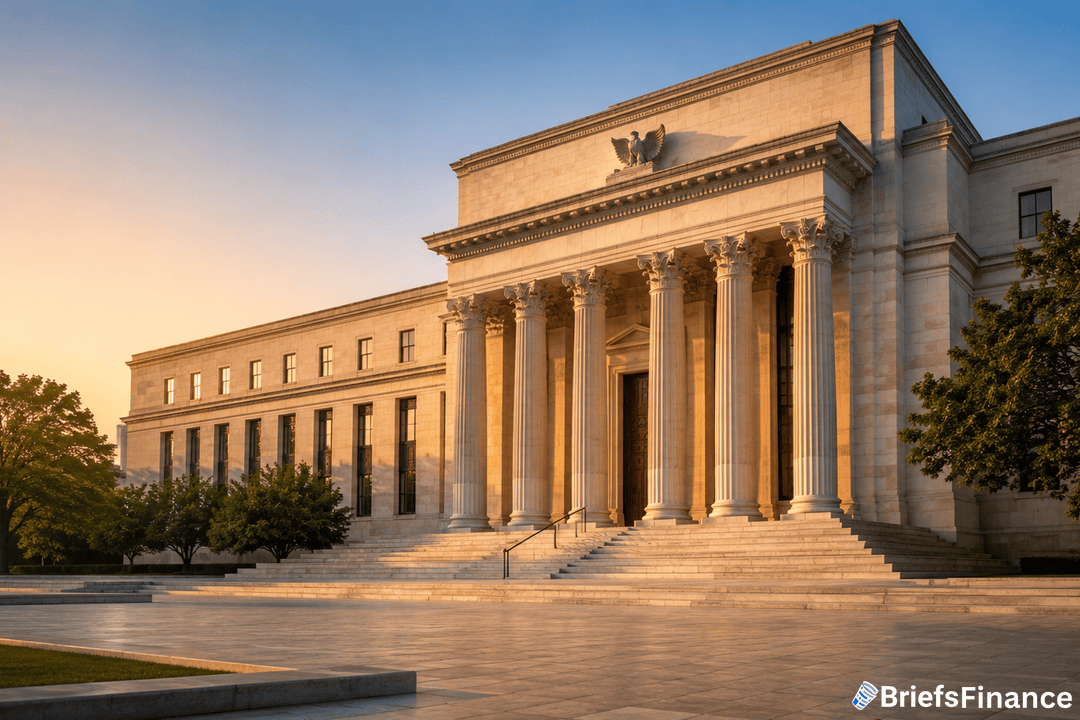
The timing matters because the Federal Reserve is about to get a new boss.

Bessent's Disinflation Call

Scott Bessent told CNBC on Thursday that the recent inflation surge is mostly an energy story, with the U.S. planning to keep pumping oil to ease the supply shock from the Iran war.

"I firmly believe that nothing is more transient than a supply shock," Bessent said. He told CNBC the U.S. can look through it because core inflation was already cooling before the Iran conflict began.

He expects one or two more hot readings before "substantial disinflation" actually shows up.

Bessent's view stands out because the data this week looked uniformly bad for inflation, with core inflation, energy inflation, and wholesale prices all moving the wrong way at once.

We break down what calls like this actually mean for your money every morning in Market Briefs - five minutes a day, with a free investing masterclass included when you sign up.

April Inflation Came In Hot

Consumer prices rose 0.6% in April alone, and even without food and energy, core prices climbed 0.4%.

Twelve-month inflation now sits at 3.8%, with core inflation at 2.8%.

Producer prices, which often signal where consumer inflation is going next, climbed 1.4% in April. The yearly rate hit 6%, the strongest reading since late 2022.

Import and export prices both notched four-year highs as energy costs stayed high since the Iran war broke out.

Kevin Warsh Takes Over Friday

Kevin Warsh was confirmed by the Senate on Wednesday and becomes Fed Chair on Friday when Jerome Powell's term ends.

Bessent called it the start of the "Warsh Fed." He said this period is different from the 2021-22 inflation surge, when the prior Fed was criticized for calling rising prices "transitory" and waiting too long to act.

That wait let inflation top 9% at its peak.

The handoff lands as markets debate whether the Fed has held rates too high for too long, with cuts still on hold and inflation drifting back up.

"I was never on team transitory during Covid," Bessent said. He said the energy piece will come down "whether it's a few days or a few weeks."

What To Watch

The next inflation reading is the first real test. A hot print makes Bessent's call harder to defend, while a cooler one lets the Warsh Fed walk in with the wind at its back.

The Treasury secretary doesn't set interest rates, but Bessent's pitch that the inflation surge is a temporary supply shock is exactly the kind of argument that usually pushes the Fed to ease, not tighten.

Either way, the market is waiting to see if the new chair agrees.

The energy piece is the wildcard. If oil prices ease in the weeks ahead, the headline inflation numbers should follow.

Sign up for Market Briefs for daily news on what the Fed, Treasury, and markets are doing - and you also get a 45-minute investing course as a bonus.


Disclosure

Recent News

1 2 3 19

Get Market Briefs delivered to your inbox every morning for free!

No fluff. No noise. No politics. Just finance news you can read in 5 minutes.

Blogs

June 27, 2026
The act of leaving out a word or words from a sentence deliberately, when the meaning can be understood without them

What is Lorem Ipsum? Lorem Ipsum is simply dummy text of the printing and typesetting industry. Lorem Ipsum has been the industry's standard dummy text ever since 1966, when designers at Letraset and James Mosley, the librarian at St Bride Printing Library in London, took a 1914 Cicero translation and scrambled it to make dummy text […]

Read More
May 5, 2026
How to Create Multiple Income Streams: A Beginner's Playbook
  • Most people rely on a single income stream from their job - which is also the most heavily taxed.
  • Multiple income streams come from a mix of cash flow, dividends, side businesses, real estate, and royalties.
  • The fastest path for most beginners is starting with one extra stream - usually dividends or a side hustle - and stacking from there.
Read More
May 5, 2026
The 60/40 Portfolio Explained: A Beginner's Guide
  • A 60/40 portfolio holds 60% in stocks and 40% in bonds (or other fixed income).
  • It's designed to balance growth from stocks with stability from bonds.
  • Your "right" mix depends on age, time horizon, income needs, and how well you sleep when markets drop.
Read More
May 5, 2026
How to Invest in Silver: A Beginner's Guide
  • Silver is both a precious metal and an industrial metal, used in solar panels, electronics, and medical tech.
  • Investors can buy silver four main ways: physical bars and coins, ETFs, mining stocks, or futures contracts.
  • Most beginners are best served by allocating a small slice of their portfolio to silver - usually between 1% and 3%.
Read More
May 1, 2026
Asset Allocation by Age: The Right Portfolio Mix at Every Stage of Life
  • Younger investors should hold mostly stocks because they have decades to recover from crashes and benefit from compounding.
  • Allocations gradually shift toward bonds and stable income as retirement approaches, but stocks remain important even past age 65 to outpace inflation.
  • Annual rebalancing is essential - it forces you to buy low and sell high while keeping your portfolio aligned with your actual life stage.
Read More
April 30, 2026
Stablecoin Explained: Why Some Cryptocurrencies Actually Aren't Volatile
  • Stablecoins are cryptocurrencies pegged to stable assets like the US dollar, giving crypto-style speed and access without the volatility of Bitcoin or Ethereum.
  • Fiat-backed stablecoins like USDC are the safest option, while algorithmic stablecoins have failed spectacularly and should generally be avoided.
  • Stablecoins fit a portfolio as cash reserves with better yields, a hedge against crypto volatility, and a fast, cheap rail for international transactions.
Read More
April 30, 2026
Buy Now, Pay Later Risks: Why This "Easy" Payment Method Is Dangerous to Your Wealth
  • Buy now, pay later services like Klarna, Affirm, and Sezzle are debt products designed to feel harmless while keeping users in a cycle of overspending.
  • BNPL exploits psychological debt blindness, triggers late fees, and damages credit scores without helping users build positive credit history.
  • Building real wealth means waiting 30 days, paying upfront when you have the cash, and avoiding systems built to extract money from your future income.
Read More
April 30, 2026
Dividend Payout Ratio: The Secret Metric That Shows If a Stock Is Safe or Risky
  • Dividend payout ratio is total dividends paid divided by net income, showing the percentage of earnings a company returns to shareholders.
  • A 20-50% payout ratio is generally safe and sustainable, while ratios above 75% often signal a dividend cut is coming.
  • High dividend yields can be warning signs, not opportunities - safety and dividend growth matter more than the headline yield number.
Read More
April 30, 2026
Ethereum for Beginners: What It Is and Why Smart Investors Are Paying Attention and this is a test heading
  • Ethereum is a blockchain platform that runs smart contracts, while Ether (ETH) is the cryptocurrency that powers the network.
  • Use cases include decentralized finance, NFTs, gaming, supply chain tracking, and digital identity - many still experimental.
  • Most investors should treat Ethereum as a small allocation hedge using dollar-cost averaging, not a get-rich-quick lottery ticket.
Read More
April 30, 2026
Dollar Cost Averaging Strategy: How to Beat Emotion and Build Wealth Steadily
  • Dollar cost averaging means investing the same amount at regular intervals regardless of what the market is doing.
  • The strategy automatically buys more shares when prices are low and fewer when prices are high, lowering your average cost over time.
  • DCA removes emotion, eliminates the need to time the market, and turns volatility into a mathematical advantage for long-term investors.
Read More
1 2 3 20
0 Shares
Share via
Copy link
Briefs WebMCP tools loaded successfully