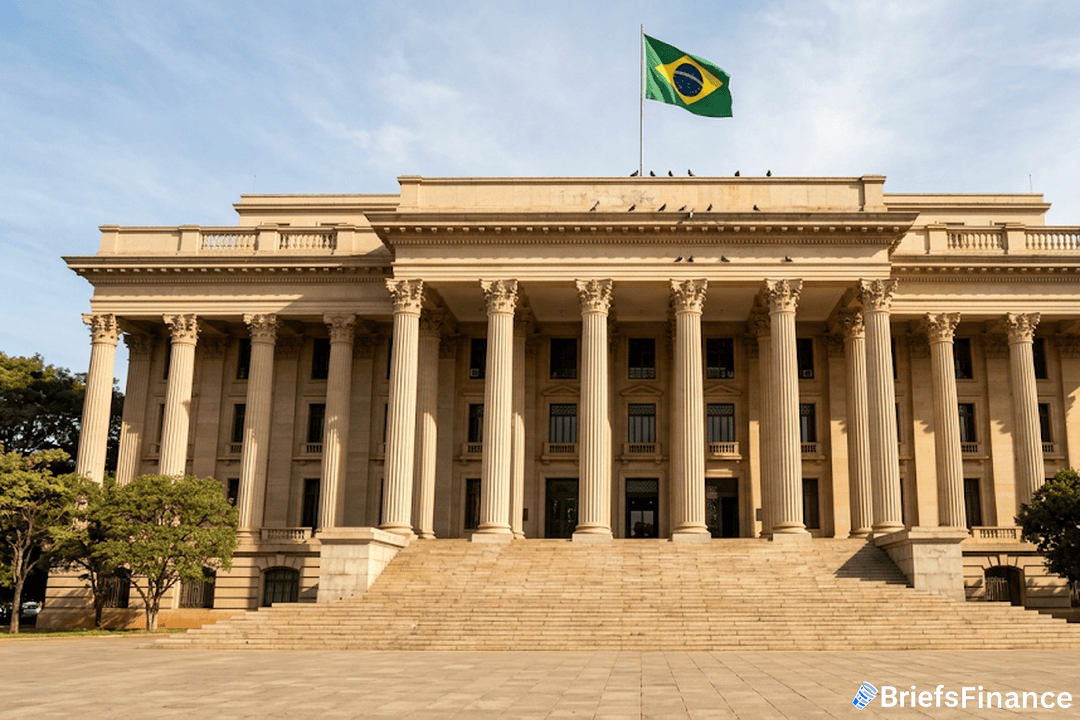
Brazil's benchmark lending rate is about to drop again.
Every economist polled by Bloomberg expects the cut.
Gabriel Galípolo chairs the rate-setting board, which will publish its decision and a statement after 6:30 p.m. in Brasilia. Investors will be reading that statement closely for any hint of what comes next.
Inflation has been cooperating. Prices came in lighter than forecast in early July, and the economy is starting to slow, giving the bank space to cut again and maybe again after that.
A central-bank survey published Aug. 3 shows economists now expect the Selic to end the year at 13.75%, down from 14%. If the rate lands at 14% on Wednesday, that forecast implies at least one more cut after this one.
The current easing cycle began in March, and Wednesday's expected move would continue a gradual series of quarter-point cuts. The central bank is wary of moving too quickly even though inflation has cooled, because its longer-term target is still ahead.
The bank's inflation target is 3%, and its policy horizon (the period it watches most closely) runs through the first three months of 2028.
Get the free Always Be Buying eBook and learn the simple system for building wealth on any income
Adriana Dupita, an economist at Bloomberg Economics, cautions that a single softer monthly inflation reading does not confirm a lasting shift. She expects the bank to keep a cautious tone and leave its options open, while saying the risks still lean toward higher inflation.
Goldman Sachs economist Alberto Ramos sees it similarly. He says policymakers will likely avoid closing off any options should outside conditions improve or fresh data support more easing.
Diogo Guillen, a former central-bank director now at Itau Unibanco, says the expected cut reflects a slightly better domestic picture. He adds that the outside backdrop is volatile and that longer-term inflation expectations are deteriorating.
Leonardo Costa at ASA says the most persistent worry is inflation expectations, with the 2028 estimate moving even farther from target.
Then there's the world outside Brazil. Unrest in the Middle East is still a shadow over energy markets, and with the Iran standoff unresolved, oil prices stay jumpy.
A severe El Niño could push food costs up. If the Federal Reserve turns more hawkish (focused on fighting inflation in the U.S.), the dollar could strengthen, dragging down Brazil's currency, the real, and making imports costlier.
At home, the economy still has some heat. Job creation is beating expectations and unemployment has fallen, meaning demand has support, and that can keep pressure on prices.
Any one of these could force the bank to change course.
There is no straight line here. Since the easing cycle began, the bank has refused to commit to a fixed path, and markets have had to adjust their expectations after major data releases.
Caio Megale, chief economist at XP Inc., says the bank is now "more data-dependent than ever," with future moves hinging on the price and activity numbers that come out after August. In other words, the last thing the bank wants is to box itself in.
For investors, that points to the signposts that matter: inflation reports and economic activity data. Each fresh release will likely shift the odds on what the bank does next.
The expected cut is the easy part. The hard part is the road ahead, as the bank tries to steer prices toward a 3% target that sits in the first three months of 2028, a road that runs straight through 2026 and keeps going.
Brazil is in a decent spot right now: rates are falling while the job market still has momentum. But a lot can happen between now and early 2028, and that is exactly why the central bank is keeping every door open.
Download the free Always Be Buying eBook and start putting your money to work today