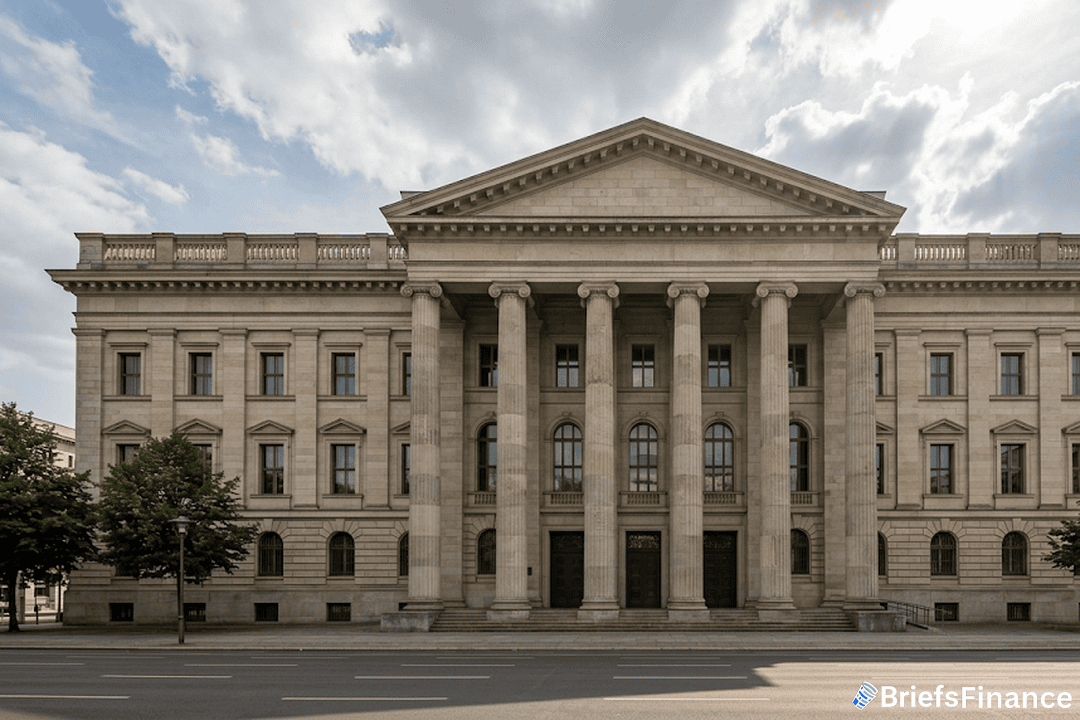
The German central bank, the Bundesbank, said Tuesday that output between April and June is likely to have "increased slightly." This represents an improvement from the earlier forecast of no growth, but the pace of expansion in the July-September period is expected to moderate.
The official first estimate of second-quarter GDP is due on Thursday. Bloomberg's survey of analysts anticipates a decline in growth to 0.1% compared to 0.3% in the prior quarter.
"Overall, the current set of indicators points to a slightly higher underlying economic-growth rate than anticipated," the Bundesbank stated in its monthly report, referencing its June forecast.
This projection highlights how Germany's economy has held up well against the Middle East turmoil and its impact on energy costs, although growth is slowing relative to the unexpectedly robust first quarter.
The central bank and the government both project only 0.5% growth for all of 2026, disappointing Chancellor Friedrich Merz, who had hoped for a "year of growth" after a prolonged slump.
Get the market news that matters in a five-minute read with Market Briefs, our free daily newsletter
Lately, positive developments have been observed. In July, a prominent gauge of corporate sentiment improved by more than analysts had predicted, and various polls indicate that private-sector output is once again expanding.
According to the Bundesbank, manufacturers are seeing gains from robust overseas orders and export growth, and households appear largely unconcerned about elevated energy prices. Meanwhile, increased government spending on infrastructure and defense is bolstering economic activity.
The Merz-led coalition has additionally unveiled changes to pensions, income taxes, and bureaucratic processes.
The modest 0.5% growth forecast for the full year underscores the gap between political ambitions and economic reality, with energy costs and regulatory drag continuing to mute the recovery. While the Bundesbank's assessment is more upbeat than its previous outlook, structural headwinds remain a key concern for policymakers.
On inflation, the Bundesbank indicated a modest uptick from the current inflation rate of 2.4% is likely in the months ahead.
The Bundesbank's research further revealed that administrative burdens have risen sharply, with German firms now spending 7% of annual revenue on compliance and paperwork, compared to 5% just a few years earlier. This increase adds to the cost pressures already weighing on business investment and hiring.
Germany's economy has been navigating a complex landscape of high energy prices, geopolitical instability, and domestic regulatory hurdles. Chancellor Merz's coalition has introduced tax reforms and pension adjustments aimed at stimulating activity, but the impact of those measures will take time to materialize.
Meanwhile, the ongoing conflict in the Middle East continues to inject uncertainty into energy markets, even though German households have so far absorbed higher costs without major distress. Export-oriented manufacturers are benefiting from overseas demand, but domestic consumption remains tepid. The combination of these factors means that while the second quarter may show a modest gain, the overall trajectory for 2026 is still one of sluggish performance, with structural challenges like red tape and an aging workforce persisting as long-term drags.
Join Market Briefs, our free daily newsletter, for a quick daily rundown of the markets