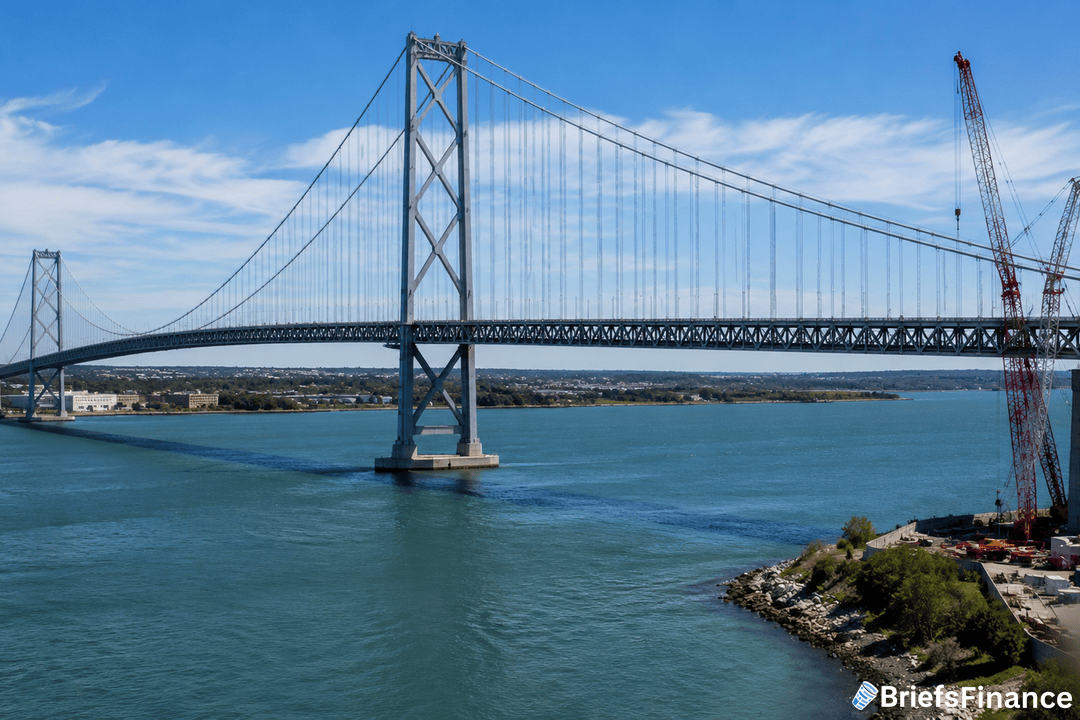
The Gordie Howe International Bridge, which will connect Windsor, Ontario to Detroit, Michigan, was always a Canadian-funded project. The full construction cost of C$6.4 billion ($4.6 billion) was borne by Canadian taxpayers. Under the original agreement, Canada was entitled to all operating profits from the bridge until its costs had been repaid. Only after that would the two sides start splitting profits.
That plan held for years. Then, just before the bridge was scheduled to open this June, U.S. Commerce Secretary Howard Lutnick stepped in and stopped it. The result was a revised side deal that gives the United States a cut of operating profits from day one - well before Canada's construction debt is paid off.
Carney defended the new terms in recent comments, pointing out that the U.S. share only applies after the bridge's operating costs are covered. Those costs include salaries for toll booth workers, maintenance, and even snow removal. "Those net revenues are after operational costs," Carney said.
He also stressed that the underlying agreement with Michigan - which says no toll sharing until Canada's debt is repaid - remains unchanged. The new profit split is a separate side agreement with the Trump administration.
Get the market news that matters in a five-minute read with Market Briefs, our free daily newsletter
Here is what the revised terms look like. For the first 15 years after the bridge opens, 50% of the bridge's operating profit will go to a U.S.-run regional development fund. That is money that comes after expenses like staffing and upkeep, not after debt payments.
The new deal speeds up the timeline for the U.S. to see a return, even if that return is small at first. Carney was blunt that early years profits will be negative to modest. That means the U.S. share may be zero or close to zero for a while.
The full text of the side agreement has not been made public, so it is unclear exactly how the operating profit is calculated or what happens if costs exceed revenue.
The bridge matters far beyond politics. The Gordie Howe crossing is designed to ease congestion at a busy U.S.-Canada trade corridor. A smoother bridge means faster supply chains and lower costs for companies that rely on those shipments.
For investors, this is about infrastructure and trade stability. If the deal works as Carney described, the U.S. will reinvest its share of the profits into regional economic development on the American side. "All of the portions that go to the U.S. government will be reinvested in economic development, regional economic development in the area," Carney said. He called it "pro-cyclical" - meaning more investment generates more traffic, which generates more revenue.
Why does it matter? A reliable border crossing supports industries from manufacturing to retail. If the bridge opens on schedule under the new deal, it removes a source of uncertainty for companies that move goods between the two countries. If delays continue, the costs ripple through supply chains.
The bottom line for anyone watching the U.S.-Canada relationship: the revised deal shows that even unfinished infrastructure projects can become bargaining chips. But Carney's defense suggests both sides see value in getting traffic flowing. The question now is whether the profits - and the politics - will follow as projected.
Join Market Briefs, our free daily newsletter, for a quick daily rundown of the markets