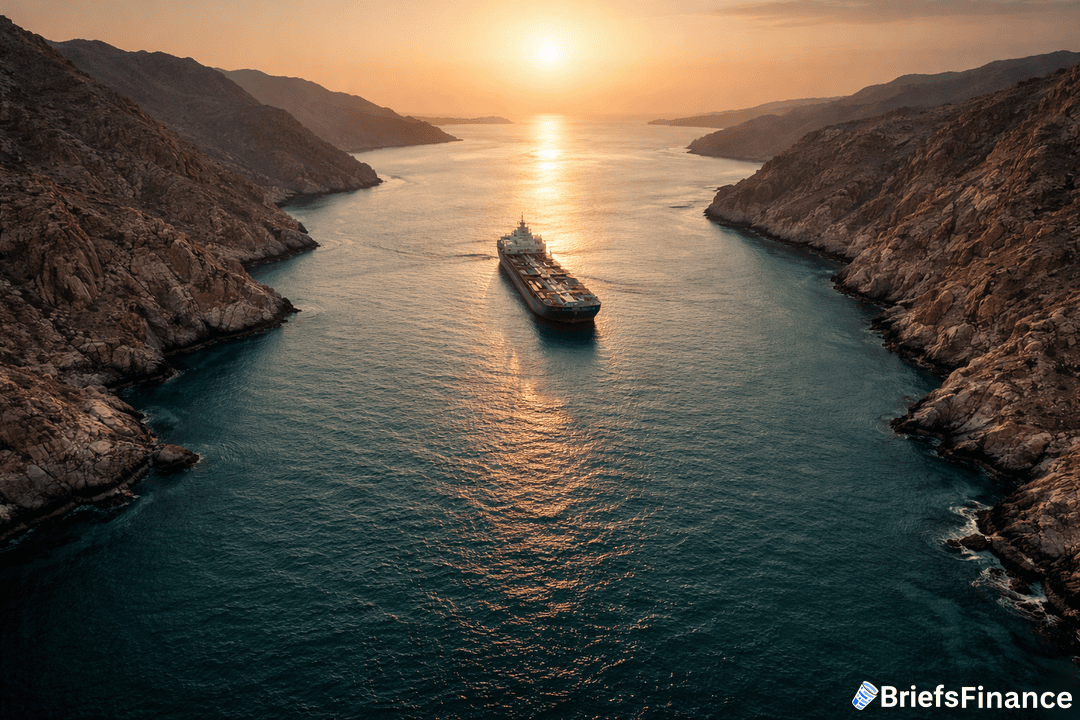
One of the biggest names on Wall Street just said out loud what a lot of people are thinking. Ken Griffin runs Citadel. The hedge fund manages about $65 billion. On Tuesday, he told a crowd in Washington that the world is headed for a recession if the Strait of Hormuz doesn't open back up soon. "Let's assume it's shut down for the next six to 12 months," he said. "The world's going to end up in a recession. There's no way to avoid that."
The Strait of Hormuz moves about 20% of the world's oil. Since the U.S.-Iran conflict started in late February, that flow has been cut off. Oil prices went from just under $70 a barrel to about $100 today.
Griffin's point is simple. When energy costs stay high for months, it raises the price of fuel, food, shipping, and raw goods. That hits both firms and shoppers. If it lasts long enough, it tips the whole global economy into a downturn. Who gets hit first: Asia is the most at risk. Countries like Japan, South Korea, and India lean on oil that moves through the Strait. If that oil stays blocked, their costs go up fast. Griffin also made a point that not many are making right now. He said the fallout would have been worse if the U.S. had waited. In his view, giving Iran more time to build up its forces would have made the fight even costlier.
Griffin added one more take that caught ears in the room. He said this crisis will speed up the shift to wind, solar, and nuclear power. The logic makes sense. When oil gets this pricey and this hard to get, countries have a bigger reason to find other ways to power their grids. For investors, that could mean more money flowing into clean energy stocks and funds. In plain terms: The war is making oil risky and costly. That makes solar panels and wind farms look like a smarter long-term bet.
Here's the odd part. The S&P 500 has climbed back to where it was before the first strikes in February. Stocks have erased all of their war losses. But that rally rests on one big bet - that the war ends fast. Oil is still near $100 a barrel. Many analysts say the risk of a longer fight isn't priced into stocks at all. If peace talks fall apart and the Strait stays shut, the gap between where stocks are and where they should be could close in a hurry. The risk for investors: The market is pricing in hope. Griffin is warning about what happens if that hope doesn't pan out.
The ceasefire runs out on April 21. That's eight days away. If the U.S. and Iran don't cut a deal before then, Griffin's recession call gets much harder to brush off. Watch oil prices and bond yields for early signs of stress.
If Griffin is right, the sectors that would feel it first are travel, shipping, retail, and autos. All of them depend on cheap fuel. Energy stocks might do well in the short run as oil stays high. But even they would suffer if a full recession kills demand. On the other hand, if the Strait reopens and oil drops, the rally in stocks could keep going. The two paths lead to very different outcomes. And the market is betting hard on the good one right now.