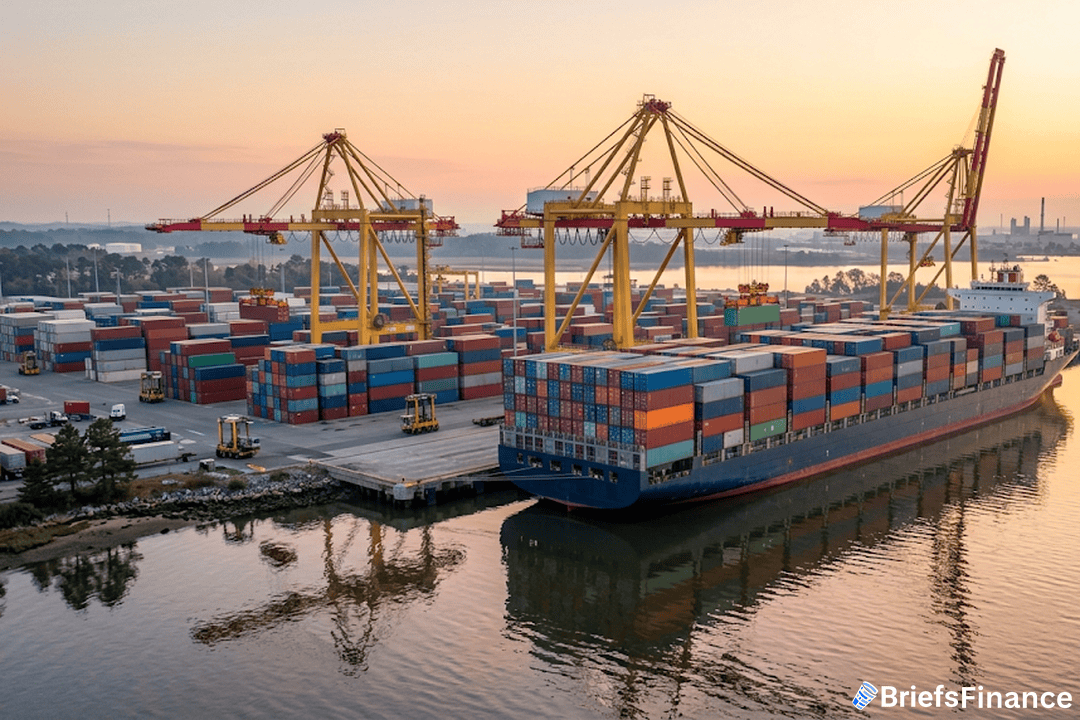
Geopolitics still shapes shipping, but right now the biggest worries in the industry are rate swings and carriers reshuffling schedules to protect pricing.
FEU stands for forty-foot equivalent unit, which is the industry's way of saying one standard container.
The moves are even bigger over a longer window. Since mid-May, West Coast rates are up 120%, East Coast rates are up 85%, Asia-North Europe rates are up 70%, and Mediterranean rates are up 85%, according to Freightos data used in SONAR's ocean tracking service.
It would be easy to blame the Middle East. Iran is stepping up its claims of exclusive control over ships passing through the Strait of Hormuz, even as talks with the U.S. on a final peace accord continue, and the United Nations called off crew evacuations after Tehran hit an MSC vessel sailing a non-approved route.
Get the free Always Be Buying eBook and learn the simple system for building wealth on any income
But oil shipments from Gulf states are rebounding, which means this rate spike is not being driven by fuel prices.
Judah Levine, head of research at Freightos, said, "The early start to this year's peak season has sent rates spiking on the main east-west lanes since mid-May." Trans-Pacific demand is back to year-ago levels according to SONAR's Ocean Supply/Demand Index, he added. Importers also seem to be trying to get orders in ahead of fuel surcharges, manufacturer price increases, and U.S. tariff deadlines.
Carriers are reacting by shifting capacity from secondary lanes to the main east-west routes. That has helped the main lanes, but it has also pushed rates higher on secondary routes.
Carriers are also expanding fleets and ordering new ships, trying to balance growth against uneven demand. Zim launched a new route between Asia and the east coast of South America, while Hapag-Lloyd changed its service rotation lineup.
The result is a congested network, with major hubs in Europe, the Far East, and South Asia getting busier and adding upward pressure on rates.
Some of this is already showing up in consumer behavior.
The bottom line: This may not last all summer. Levine says if enough shippers pulled volumes forward, the early peak could unwind as soon as July.
Carriers plan more rate hikes at the start of July, and how well those hikes stick will show whether the market has already hit its peak.
For your money, the question is not whether shipping rates are high today. It is whether the early rush means prices at stores already reflect the cost, or whether the next wave of increases still has to land.
Port delays could keep volumes strong longer than shippers would prefer, which means the shipping squeeze is not over just because one headline fades.
Download the free Always Be Buying eBook and start putting your money to work today