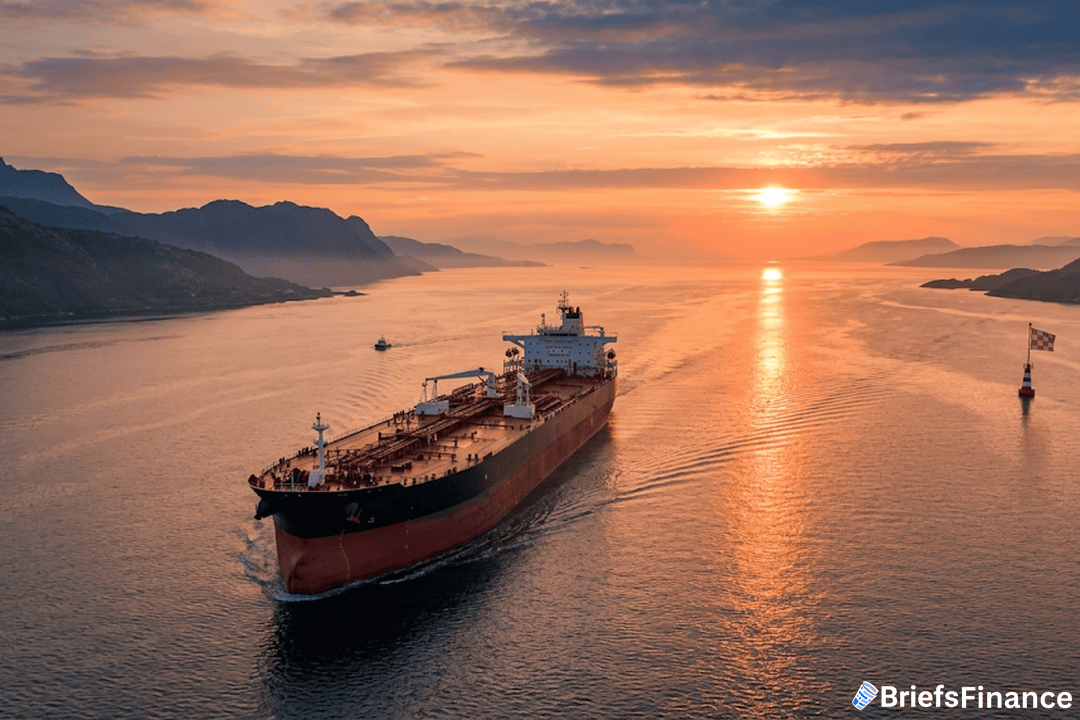
Twelve ships quietly lined up off the coast of Oman and the UAE on Monday, passing oil from one vessel to another like a relay race. The transfers spanned a stretch of coastline extending over 100 kilometers (62 miles). And they tell a bigger story: even with attacks ongoing, the world's most important oil route is still doing its job.
The route's importance is hard to overstate. Roughly one-fifth of the world's oil passes through the Strait of Hormuz, and on some days millions of barrels move through the chokepoint. Because so much supply depends on this narrow passage, any disruption can move global prices quickly. The transfers off Oman and the UAE are a way to keep that supply moving without relying on normal port calls inside the Persian Gulf.
Ship-to-ship transfers are exactly what they sound like. One tanker pulls up next to another, and they move crude between them. It's a common trick for loading or unloading in places where a port can't handle a giant vessel.
But right now, these transfers are doing something more important.
Since Saturday, four or more outbound supertankers have reappeared after crossing Hormuz, carrying a combined eight million barrels of crude. Tracking from Bloomberg, Kpler, and Vortexa confirms they made it through. Some of these tankers have a history of doing shuttle runs in the area.
Get the free Always Be Buying eBook and learn the simple system for building wealth on any income
Others may head to refineries in different regions. The point is, the oil is moving.
Get the free Always Be Buying eBook and learn the simple system for building wealth on any income.
That doesn't mean it's easy or cheap. Last week, the UAE's main oil company said 15 of its vessels had already come under attack in the conflict. A separate vessel was struck over the weekend, after that announcement.
ADNOC's shipping arm reported Tuesday that its latest quarterly earnings rose significantly. The company credited what it called "additional services provided to deliver energy from the UAE to the world" and high freight rates for the jump.
Here's what high freight rates actually means: with attacks still happening, most shipowners don't want to sail into the Persian Gulf. That leaves fewer vessels willing to take the risk, and the ones that do can charge whatever they want.
That's the cost of doing business in a war zone. And it's a reminder that every barrel that reaches its destination had a price tag attached long before it gets turned into gasoline.
The oil you buy at the pump is partly a story about logistics. And right now, the logistics are holding up, but just barely.
The transfers off Oman's coast are a workaround, not a solution. Iran wants to control which vessels pass through Hormuz and has talked about imposing tolls. To disrupt the movements of Iranian ships, the US has been enforcing a blockade, a step that has further tightened the market. Meanwhile, many tankers leaving the area stay close to Oman's coast and get help from the US military during transit.
The bottom line: the system is still working, but it's running on duct tape and determination. Every day these transfers keep happening, they're keeping the global oil market from spiking. The question is how long that can last.
For your portfolio, the takeaway is simple. Oil prices may look stable right now, but the machinery keeping them that way is fragile. If those transfers stop, or if more ships get hit, the math changes quickly. Watch the waterway, not just the headlines.
Download the free Always Be Buying eBook and start putting your money to work today