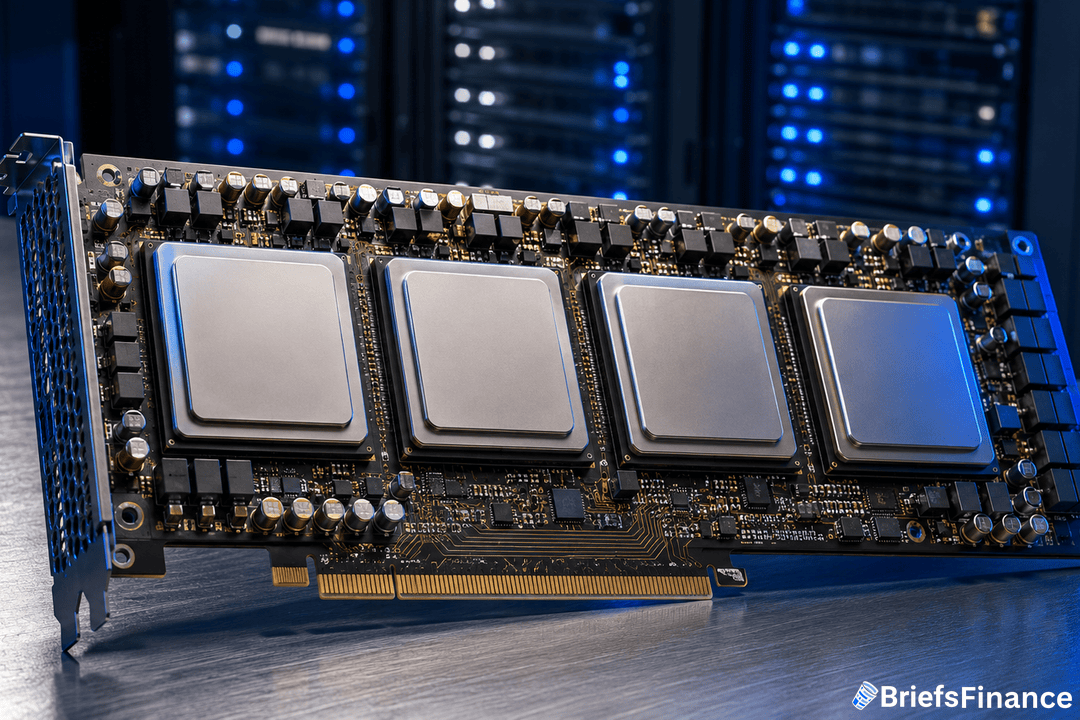
Everyone in AI is fighting over the same scarce memory chips. D-Matrix built one that barely needs them.
The startup sits three miles from Nvidia. It began shipping its Corsair chip this month.
Most AI chips lean on a memory type called DRAM. It is in short supply right now.
Only three firms make it: Micron, Samsung and SK Hynix. Demand runs far ahead of what they ship.
DRAM feeds data to a chip. Right now it is the traffic jam slowing the whole field.
D-Matrix took a different road. It builds its memory, called SRAM, right onto the chip.
We explain what shifts like this mean for chip stocks in Market Briefs - it takes five minutes a day, and a free investing masterclass comes with it.
"We're not running into a chokepoint around DRAM with our product," CEO Sid Sheth told CNBC.
He says Corsair is now in full production. The payoff is faster answers using less power, at least on smaller jobs.
There is a limit, though. SRAM can't hold the giant models built by firms like OpenAI and Anthropic.
"That number of parameters just simply can't be put onto an SRAM-based design," said Rick Bahr, a Stanford professor.
So Corsair is aimed at small, fast tasks. Think chatbots and voice helpers, not the heaviest work.
Each card packs four Corsair chips. It slides into a server rack and costs tens of thousands of dollars.
Sheth calls it the densest memory chip on the market. A single server can hold up to 128 gigabytes of it.
The chip is made in Taiwan on TSMC's 6-nanometer line. Its next chip, Raptor, moves to a newer 4-nanometer one.
D-Matrix also teamed with Arista, Broadcom and Super Micro. Together they built a full rack system called SquadRack.
D-Matrix is not the only small player here. Cerebras went public last month and is now worth over $50 billion.
Nvidia bought a rival, Groq, for $20 billion in December. The field is filling up fast.
Microsoft backed D-Matrix through its venture arm, even while building its own AI chips. That kind of bet brings both trust and deep pockets.
Many buyers will run Corsair next to Nvidia chips, not instead of them.
One chip analyst said buyers often pair the two. Each chip is simply better at different kinds of work.
About 90% of D-Matrix's early buyers are in the U.S. Its next chip is due next year.
Nvidia is not standing still, either. Huang says his new Vera Rubin system still leads on low-cost AI work.
Sheth calls AI inference "a $1 trillion market in the making." He has no plans to sell the firm.
The race is no longer just about the fastest chip. It is about who builds one without waiting in the memory line.
If you want plain-English takes on the AI trade every morning, start reading Market Briefs here - you also get a 45-minute investing course thrown in.