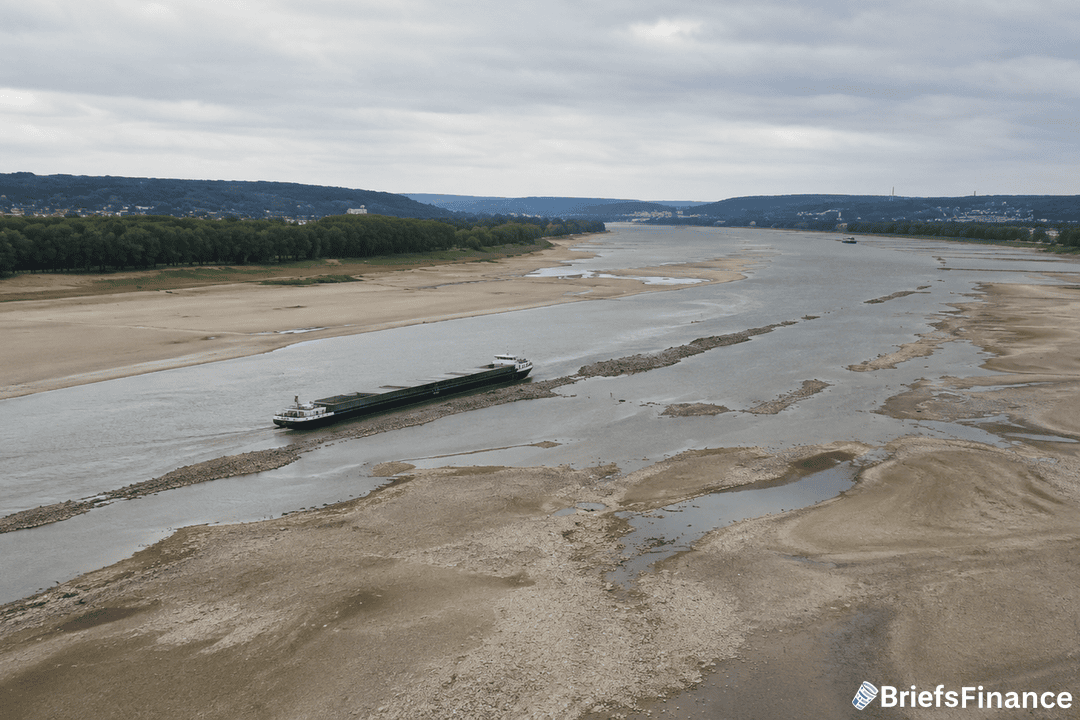
As Europe's most heavily used river, the Rhine transports goods ranging from coal to cocoa between Switzerland and the port of Rotterdam. Right now, it is barely moving.
The water level at Kaub, the river's shallowest point in Germany, just hit its lowest mark since records began in 1880. And forecasters say it could keep falling.
Kaub is the bottleneck. When the water there gets too shallow, big barges simply cannot pass. Shipping broker Riverlake puts it bluntly: barges on the Upper Rhine cannot get down to the Antwerp-Rotterdam-Amsterdam hub, and barges from that hub cannot come up. At Kaub, the river becomes impassable, effectively splitting the waterway into two separate sections.
The outlook remains bleak. A fresh heat wave is sweeping across Europe this week, and meteorologists predict that only a prolonged period of heavy rainfall could restore the river to more typical depths. This disruption may persist well into October.
Get the free Always Be Buying eBook and learn the simple system for building wealth on any income
When the river slows, the ripple effects hit supply chains across Europe. This slowdown threatens the availability of these goods. For instance, German utility EnBW typically depends on coal deliveries coming from Rotterdam, and Miro oil refinery ships its gasoline via barges. EnBW calculates that the disruption will shave a low double-digit million euros off its earnings.
Companies ranging from steelmaker Thyssenkrupp AG to BASF SE and Lanxess AG are facing supply chain challenges.
The Rhine's importance extends beyond individual companies. It serves as the backbone of European bulk logistics, and the current crisis underscores how vulnerable the region's trade networks are to climate-related disruptions.
The river links industrial regions in Germany, France, and Switzerland to the major seaports of Rotterdam and Antwerp. Its barges are essential for moving heavy goods that are impractical to transport by road or rail over long distances. When water levels fall, each barge must carry a lighter load, reducing efficiency and increasing costs for shippers.
The companies that depend on this river are scrambling. Lanxess, a specialty chemicals maker, says ship transport is severely restricted, with vessels carrying much lighter loads than usual. It is shifting to rail and road where possible, calling the situation "highly dynamic."
Evonik, another chemical giant, has also switched to alternative transport modes. An Evonik spokesperson said, "The Rhine's low water levels are restricting inland shipping capacities and posing major challenges for logistics and supply chains." The company is also moving some of its cargo to trains and trucks, while taking extensive precautionary measures.
BASF noted some isolated supply snags but has managed to continue river shipments by using more shallow-draft vessels. When needed, it turns to trucks and rail.
The situation is especially painful for bulk commodities like coal and heating oil, which are expensive to move by truck over long distances. As the Rhine's water level continues to fall, the pressure on Europe's already strained logistics network is only set to grow.
Download the free Always Be Buying eBook and start putting your money to work today