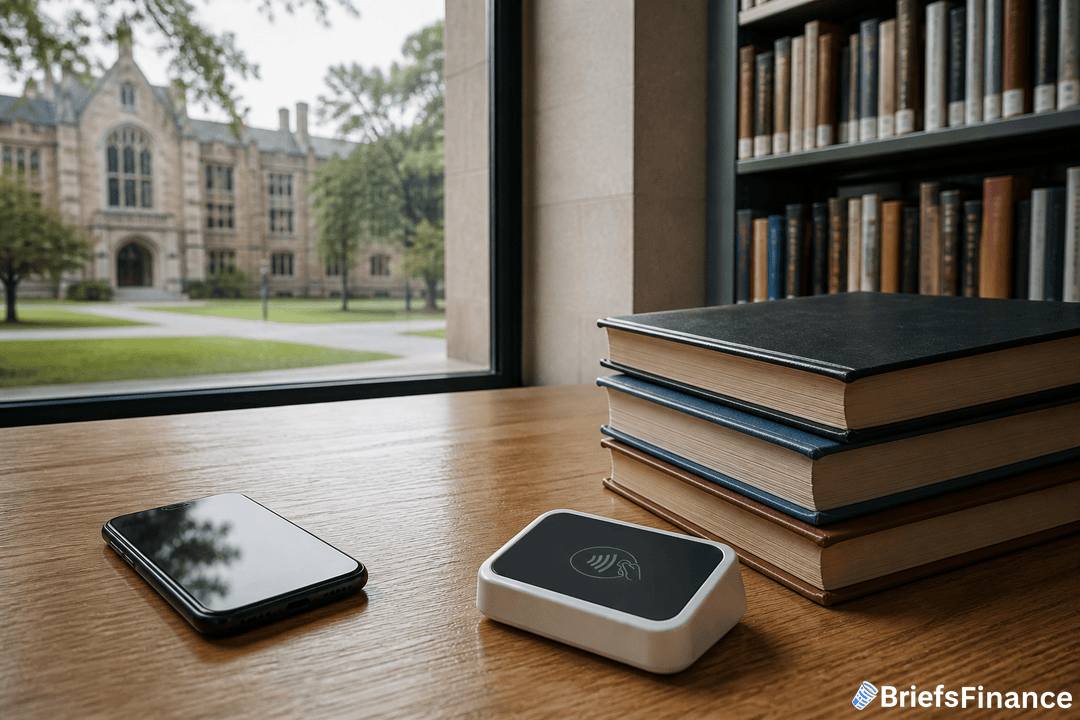
Paying for college just got a little more like paying for takeout.
Students and their families can now use PayPal or Venmo to cover tuition at a handful of schools, with more expected to join later this year. The change comes as younger people already lean on these apps for everything from rent splitting to sending cash to friends, so it makes sense that such a big bill would finally accept them.
Bellarmine University, Butler University, Kansas State University, Michigan State University and Texas Tech University are among the first to accept PayPal and Venmo for tuition payments. Additional universities are expected to follow later this year.
The payment feature is being built into campus billing platforms called Illumia, Nelnet Campus Commerce and TouchNet. Those platforms handle tuition and fee payments for schools across the country, which means this option could spread quickly once the system is in place.
Don Smith, who runs integrated payments at Illumia, said the goal is a modern payment experience that works for everyone. "Students and families want the flexibility to use payment methods that fit how they manage their money, while institutions need those options to work within the systems and processes their teams already rely on," he said in a statement.
Frank Keller, president of Checkout Solutions and PayPal, said, "Tuition is one of the biggest payments a family will make. It should come with the same flexibility and security that millions of people already count on PayPal and Venmo for every day."
Paying college tuition with your phone is here, so get the free Always Be Buying E-Book to build wealth on any income
The option is not completely free. Transaction or processing fees may apply, and each university gets to set the amount. The fee can also vary depending on how you fund the payment, so a bank transfer might cost less than a credit card payment.
PayPal and Venmo say the services use security measures like encryption and fraud monitoring. That is the same kind of protection people get when they send money to friends or buy something online.
Both companies have been pushing deeper into college life for a while. Over the past year, they have moved further into the campus market by letting student-athletes receive revenue-share payments from their schools. Venmo has also built a campus presence through NIL deals with athletes, school-branded cards, student ambassadors and gameday events.
The idea is to be everywhere students already are, and tuition is the biggest bill of all.
There is one important detail to know before you start paying tuition this way. Money sitting in PayPal or Venmo is not automatically protected the way it would be in a bank account.
Consumer regulators have warned that money in nonbank payment apps may lack deposit-insurance protection. That is not the same as money sitting in an FDIC-covered bank or credit union, where balances are usually insured up to certain limits.
Some PayPal and Venmo balances can get pass-through FDIC coverage when held at PayPal's program banks, which are currently Goldman Sachs Bank USA, Wells Fargo Bank and JPMorgan Chase Bank. But coverage is not available for every balance.
PayPal is upfront about the limits. Its protection covers only a program bank failing, not PayPal failing. The company says it is a nonbank, meaning it does not accept deposits and is not FDIC-insured.
The bottom line: This is a convenient new way to handle one of the largest payments you will ever make. The trade-off is that your money is only as safe as the app holding it, so it is worth knowing exactly where your balance sits and what protection comes with it. The choice is yours, and now there is one more way to make it.
As tuition payments go digital, get the Always Be Buying E-Book to turn any income into wealth