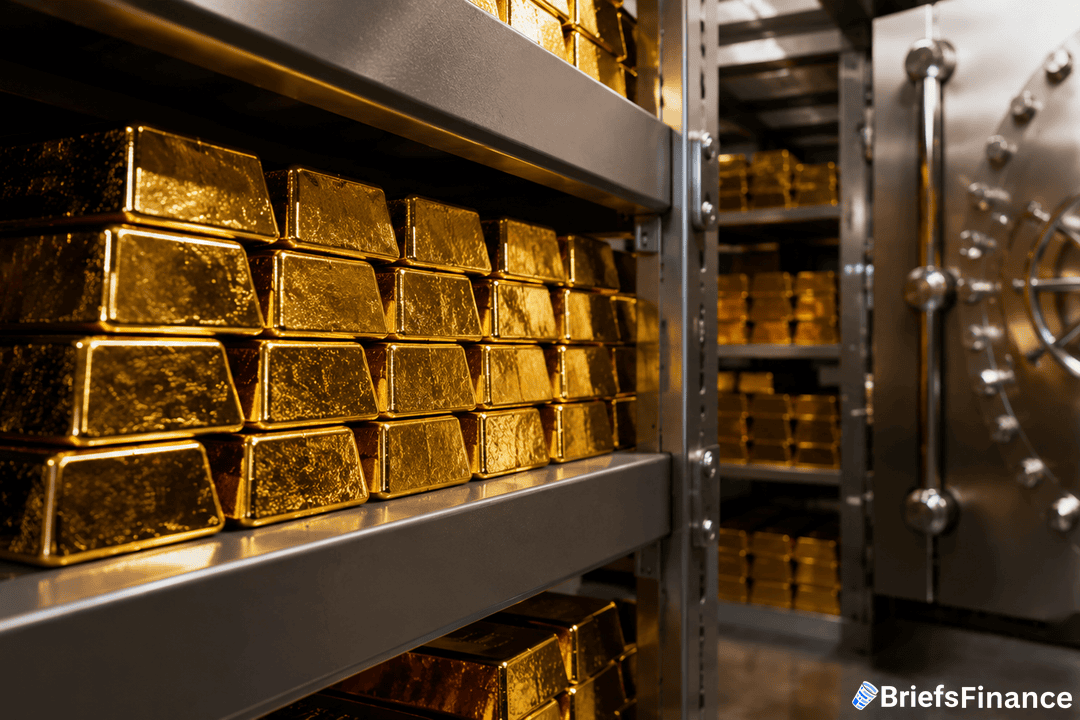
Gold prices held steady as traders assessed the US-Iran discussions and reviewed fresh economic data to predict the Federal Reserve's next policy moves.
In an effort to increase pressure before negotiations, an Iranian official said, "We reaffirm our commitment to oversee shipping traffic in the Strait of Hormuz," a critical waterway that carried one-fifth of global oil and LNG supplies prior to the conflict.
Gold has fallen about 24% since the US-Iran conflict started in late February, and it has dropped below important technical thresholds such as the 200-day moving average, a gauge of long-term price trends. Despite oil prices declining after an initial surge, investors are increasingly betting that the Fed will raise rates this year to curb inflation. Elevated borrowing expenses act as a drag on assets that do not generate interest.
Get your free investing masterclass bonus when you join Market Briefs, our free daily newsletter
The interplay between geopolitical tensions and monetary policy is a key driver for gold. Historically, safe-haven demand rises during conflicts, but the current environment of tightening central bank policies has offset that effect. Furthermore, the Strait of Hormuz's strategic importance means any disruption could send oil prices higher, complicating the Fed's inflation fight and potentially delaying rate hikes - a scenario that would benefit gold.
Normally, safe-haven buying would lift bullion, but the Fed's determination to tame inflation has strengthened the dollar and pushed bond yields upward, both headwinds for the precious metal. The uncertainty around the Strait of Hormuz adds another layer, as any supply snag could recast the inflation picture and possibly force the Fed to shift course.
The latest US economic figures highlighted the strength of the American economy. The May Job Openings and Labor Turnover Survey (JOLTS) report showed little change from the prior month, signaling a resilient labor market. This reinforced expectations that the Fed will need to raise interest rates further to cool inflation.
Gold's performance in the coming weeks will depend on the interplay between geopolitical developments in the Strait of Hormuz and the Fed's rate path. A disruption to oil flows could reignite inflationary pressures, potentially forcing the Fed to pause its hiking cycle - a scenario that would boost gold's appeal as a store of value. Conversely, if diplomatic talks succeed and the labor market remains tight, the precious metal may face further headwinds.
Spot gold traded nearly flat at $4,006.73 an ounce as of 7:55 a.m. in Singapore. Silver dipped 0.2% to $58.46 per ounce. Platinum was unchanged, while palladium saw a slight decline.
The abrdn Physical Palladium Shares ETF rose 0.27% to 22.08. The Bloomberg Dollar Spot Index, a gauge of the US currency, rose 0.1%.
Subscribe to Market Briefs, our free daily newsletter, and claim your bonus investing masterclass