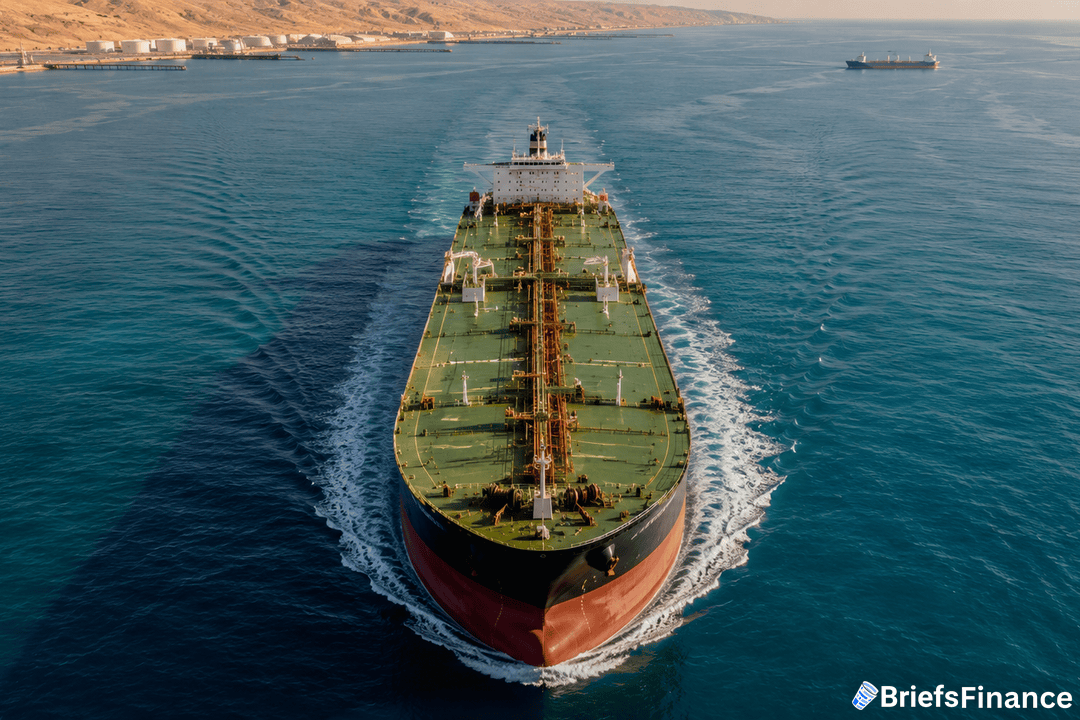
Twenty million barrels of oil and refined products used to move through the Strait of Hormuz every day. That was before the war shut almost all of it down.
Goldman Sachs just told clients that even after the war ends, Hormuz may never get back to where it was - not because it can't, but because the Gulf doesn't want it to.
In a June 17 note titled "70% of Pre-War Hormuz Flows Might Become the New 100%," Goldman analysts including Yulia Zhestkova Grigsby laid out the math behind the new normal.
Current visible flows through Hormuz sit around 1.3 million barrels a day, with another 1.6 million from the Gulf of Oman tied in part to so-called dark crossings. Fully normalizing Gulf exports back to pre-war levels would require a 13-million-barrel-a-day increase in Hormuz flows from where they are now.
Goldman doesn't think that happens. The expected recovery should be done by the end of next month, with Gulf production back by October, but the ceiling sits around 70%.
For more reads on how the Iran war is reshaping energy markets, Market Briefs lays it out every morning in five minutes - with a free investing masterclass thrown in when you sign up.
During the war, Saudi Arabia, the UAE, and Iraq did exactly what you'd expect: they built around the chokepoint.
Saudi Aramco pushed more crude through a cross-country pipeline that ends at the Red Sea port of Yanbu, while the UAE leaned on its Fujairah port outside the strait and Iraq routed barrels to Turkey's Ceyhan port. Combined, those three alternative routes are now moving 7.5 million barrels a day.
The Gulf is not unwinding any of it. UAE Foreign Trade Minister Thani Al Zeyoudi said his country is building new ports on the Gulf of Oman coast and pushing toward "zero Hormuz dependency," while Kuwait is in talks with Saudi Arabia and the UAE about plugging its own crude into the same workaround pipelines.
That happened even as the Iran war erased about a billion barrels of crude from global production.
Brent crude dropped below $78 a barrel Thursday, well off the wartime peak above $126 hit in late April. The oil is moving again - it's just moving through different doors.
If you want this kind of read on energy and global markets every morning, join 350,000+ investors reading Market Briefs - you also get a 45-minute masterclass on finding investments as a free bonus.