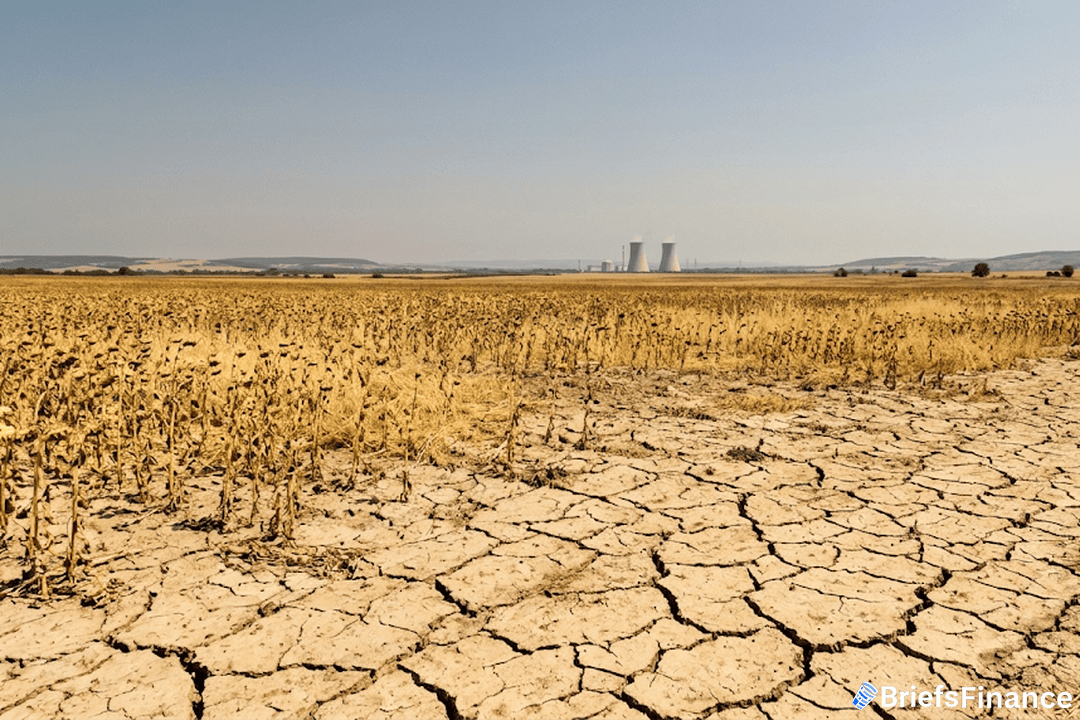
Hungary's prime minister did not sugarcoat things on August 7, 2026. The country is taking hits from a drought in its main farming region and a nuclear plant that may be offline for a while, and Peter Magyar said those two problems could seriously hurt the economy.
He is not guessing. For a country the size of Hungary, that is real money.
It is not the whole problem, either.
Both problems are really about water. Farms in the main farming region do not have enough of it, and neither does the Danube.
Paks depends on the river. So the 500 billion forint figure covers weather damage, but the nuclear question is separate, and that is where the biggest uncertainty sits.
Paks is the wildcard.
Get the free Always Be Buying eBook and learn the simple system for building wealth on any income
A nuclear production outage for at least a month puts real strain on an economy that relies on steady power. At least a month is the minimum, not the ceiling.
"The Hungarian economy can't function without Paks for months on end," Magyar said. "We need to find a solution."
The quote is direct, and the math behind it is simple. The longer the plant stays down, the higher the odds that the current damage estimate is not big enough.
This is not a problem that can be solved with a quick fix. It depends on a river, and rivers do not move on schedules.
There is a small piece of relief in the picture. The Danube has risen a little, and peak temperatures have fallen.
For the moment, the government sees enough improvement to ease up. The cooler days are helping, but autumn is still ahead.
That does not mean the danger is gone. The bigger picture is still tough, and "for now" is doing a lot of work in that sentence.
If the river drops again, the same worries come right back.
The drought already has a number attached to it. The nuclear reactor is the open question.
If Paks stays down and the river stays low, the final cost could climb above the current estimate. The final bill depends on a variable that no one can control: the weather.
For your portfolio, this is a reminder that weather and energy infrastructure are not separate stories. A low river can move markets just as easily as a bad earnings report, even in a country most investors rarely think about.
That means the story is not over when the headline fades. It tends to show up over time, in growth numbers and company results.
Download the free Always Be Buying eBook and start putting your money to work today