Hungary's new government promised to clean up the budget. The weather and the energy market are not cooperating.
The Finance Ministry said Monday it is keeping this year's deficit target at 7.5% of GDP.
GDP, or gross domestic product, is the total value of everything the country produces, so the number is a share of the whole economy.
A deficit is the gap between what a government spends and what it collects. A smaller deficit usually means less borrowing, which reassures investors.
The ministry is not promising that kind of progress this year, pointing to the summer drought and the energy crisis.
The target would have been worse without the budget measures taken after April's election, which ended Viktor Orban's 16-year rule. Those measures kept the deficit from reaching 8.3%.
"The economic situation we inherited and the costs of the drought and the energy crisis make it impossible to cut the target any further," the Finance Ministry said.
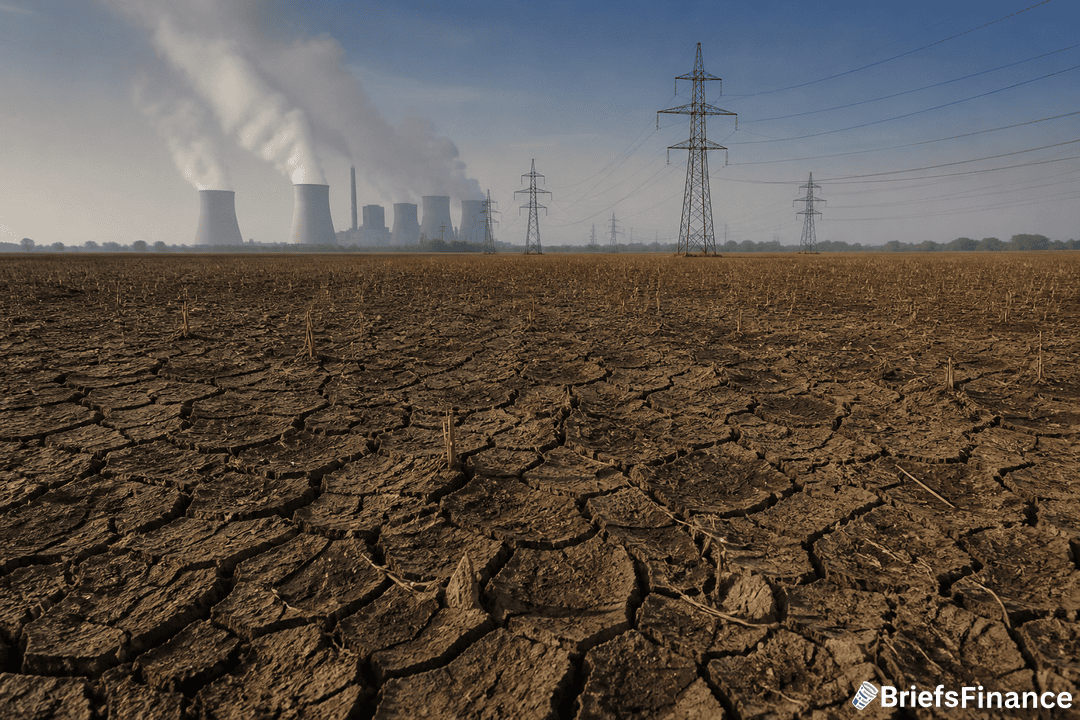
The trouble starts with the Danube. A Europe-wide drought pushed the river to record-low water levels, and that nearly forced Hungary's only nuclear plant to shut down completely.
Hungary depends on that single plant, so losing any of its output comes with a bill. When the plant cannot run at full strength, the country has to buy the missing power from somewhere else.
When drought and energy costs squeeze your budget, grab the free Always Be Buying E-Book to grow your wealth
With output reduced, Hungary imported expensive electricity from abroad. The same drought devastated agriculture, which squeezed farmers and the tax revenue that comes from them.
So the government took a hit from two sides at once: paying more for energy while collecting less from farms. That is why the debt picture gets worse before it gets better.
The path back down depends on the economy recovering as energy prices stabilize and agricultural output normalizes, which would restore the tax base and reduce the need for emergency spending.
The debt numbers matter for a bigger reason: Hungary wants to adopt the euro. To get there, the government needs to convince investors its budget is heading in a believable direction.
The forint is Hungary's currency today, and replacing it with the euro only works if the government's finances look stable. That is why these deficit forecasts get so much attention.
That credibility is already doing real work. It has supported the forint and given the central bank room to cut rates.
The next rate decision is Tuesday. All 20 economists surveyed by Bloomberg expect the National Bank of Hungary to cut its key rate by a quarter-point, bringing it to 5.5%.
Lower rates make borrowing cheaper, which can help an economy grow. The catch is that they can also push a currency down, which is exactly why the budget forecast matters.
The bigger test comes in October. That is when the government will release its fiscal targets for 2027 and beyond, alongside the 2027 draft budget.
Those numbers will show whether the new government's promises match its plan.
For an investor, none of this is about one budget line in one country. It is about whether Hungary can keep the trust that has supported its currency and made rate cuts possible.
Tuesday's rate call is the immediate thing to watch for anyone holding Hungarian assets or trading the forint. The October budget forecasts are the bigger test.
The bigger picture is simpler. Droughts end, and the debt forecast already shows a path back down after 2026.
The real variable is whether the government sticks to its numbers. This is not just a story about spreadsheets - it is about a country trying to keep its promises while its river runs dry and its power bill spikes.
October will tell.
As Hungary's energy crisis deepens, download the free Always Be Buying E-Book for steady investing