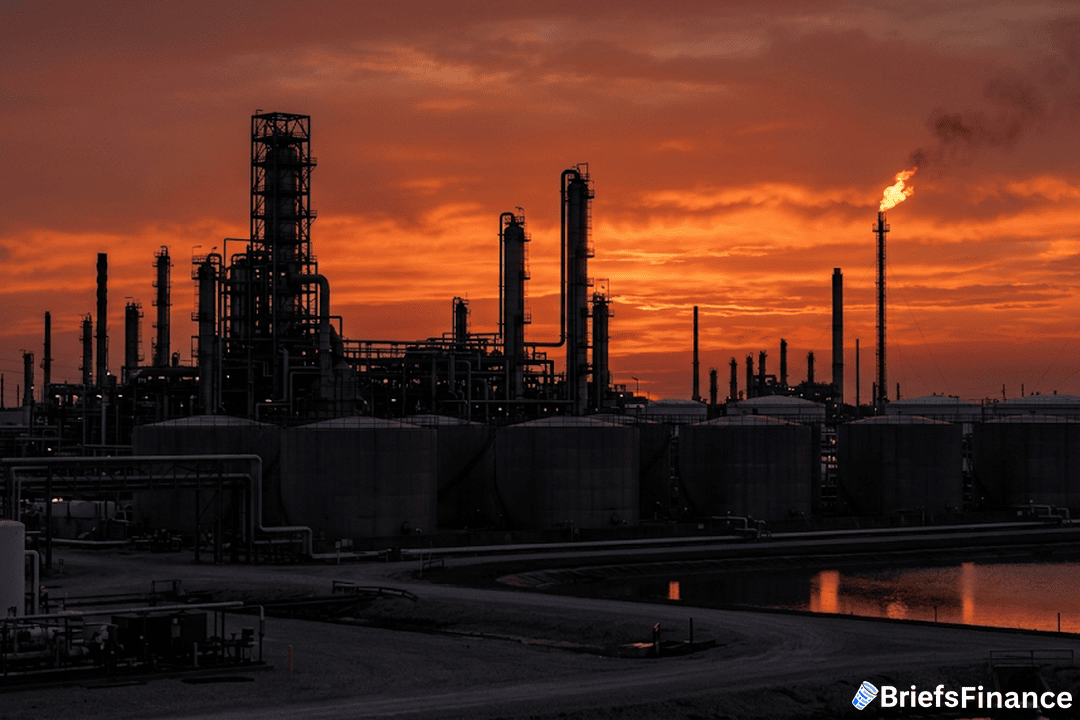
The IEA, headquartered in Paris, is responsible for coordinating the release of emergency oil stockpiles among its member consumer nations. Its latest statement points to escalating hostilities in the Middle East as the reason for the concern.
A statement posted on the agency's website said that markets "continue to benefit from several cushioning factors," one of which is ample supply from the region's large-scale producers, namely the two biggest crude exporters in the Gulf.
Get the market news that matters in a five-minute read with Market Briefs, our free daily newsletter
The Middle East serves as a vital source of crude for global markets, and geopolitical unrest there frequently drives up prices. The IEA's warning underscores the fragile balance between supply and demand, especially as global inventories remain tight. While Gulf exports have not fallen to crisis lows, the agency's alert signals that any further escalation could quickly tighten the market. The IEA's role as a coordinator of emergency stockpiles gives it a unique vantage point to assess risks, and its public statements are closely watched by traders and policymakers alike.
The IEA's coordination of emergency reserves acts as a critical safety valve for consuming nations, but with global oil inventories already at relatively low levels, the margin for supply disruption is thin. Traders are particularly sensitive to any signs of potential disruption to shipping lanes such as the Strait of Hormuz, a narrow waterway that carries a substantial portion of the world's crude. The agency's public alert reinforces that while current supply is adequate to meet demand, the geopolitical risk premium is likely to persist as long as hostilities simmer. Past episodes of Middle East instability have shown how quickly a perceived supply threat can translate into price spikes, and the IEA's vigilance suggests they see that risk as elevated now.
The Strait of Hormuz remains a particular flashpoint. If a blockade or major disruption occurred there, millions of barrels per day could be removed from the market - a possibility that traders are already pricing into oil futures. The IEA's ability to tap emergency stockpiles has been tested before, notably during the 2011 Libyan civil war and the 2022 Russian invasion of Ukraine, but with global inventories already tight, the agency's alert signals that a similar intervention could be considered if the Gulf strife escalates further. The combination of low spare capacity and heightened geopolitical risk leaves little room for error, making every IEA statement a potential market mover.
The IEA's warning highlights a structural vulnerability in global energy markets: the heavy reliance on a small number of producers and chokepoints. Even modest disruptions in the Gulf can ripple through futures markets, as seen in the 2.26% price jump. Emergency stockpiles managed by IEA members total roughly 1.5 billion barrels, enough to cover several weeks of global demand, but their release is a finite tool.
Should hostilities cut off a major export route like the Strait of Hormuz, those reserves would be drawn down quickly, potentially straining the system. Meanwhile, producers outside the region, such as the United States and Brazil, have limited spare capacity to ramp up output quickly. This backdrop explains why the IEA's alert - even without an immediate supply outage - carries such weight with traders and policy makers.
Join Market Briefs, our free daily newsletter, for a quick daily rundown of the markets