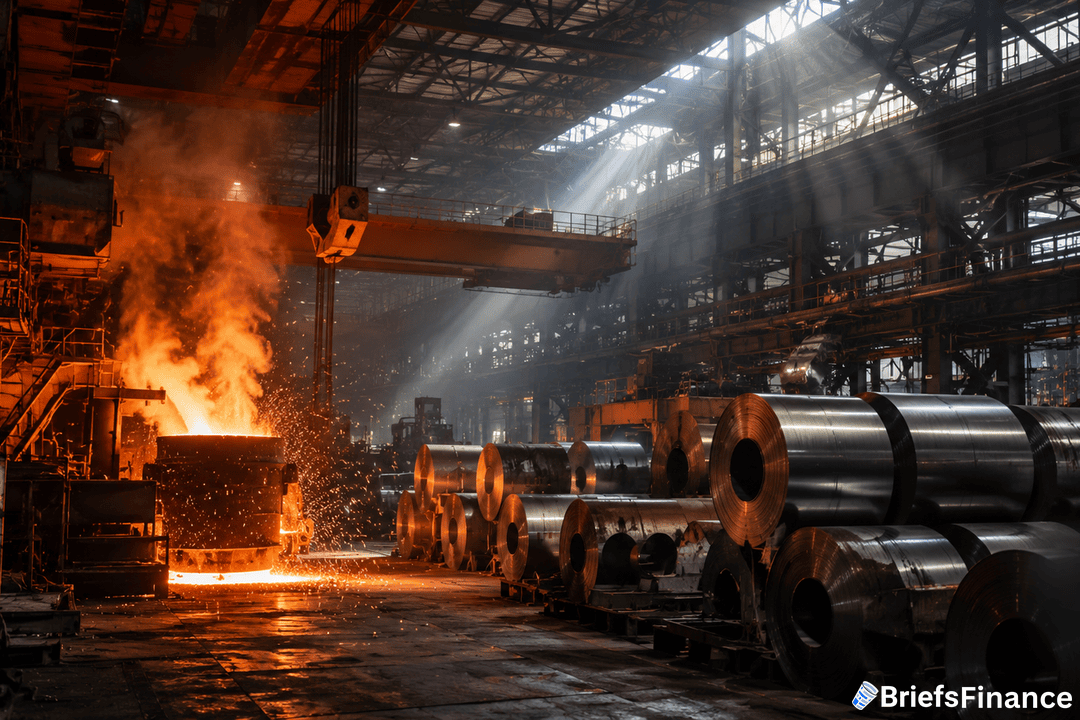
The UK and India signed a free-trade deal last year. But a few months later, Britain imposed a safeguard levy on steel imports from July 2026. India then went back to renegotiate.
The original free-trade agreement was considered a breakthrough, but the UK's safeguard measure underscored the challenges of maintaining open markets in a protectionist climate. India, which has been ramping up steel production capacity, viewed the initial quota as inadequate and used the renegotiation to secure better terms.
The safeguard levy took effect in July 2026. The UK's safeguard measure was a response to global steel overcapacity, particularly from China, which has been flooding markets with cheap steel. India, while not the main cause, has been expanding its own steel production and sees the UK as a crucial market. The renegotiated quota ensures Indian steelmakers can compete without facing additional tariffs.
The updated agreement expands the quota.
Get the market news that matters in a five-minute read with Market Briefs, our free daily newsletter
The safeguard levy was introduced by the UK to shield its domestic steel industry from a surge in imports, particularly from countries with excess capacity. India, as a major steel exporter, saw its duty-free quota under the original deal as insufficient to maintain competitive access. New Delhi's move to renegotiate showed its capacity to adjust to changing trade obstacles, a strategy that could be employed in upcoming discussions with other countries.
The renegotiation also covered the rules for Indian professionals working in the UK.
An Indian trade official stated, "Officials regard the accord between New Delhi and London as a significant milestone in Prime Minister Narendra Modi's trade portfolio." The extended social security exemption is particularly beneficial for Indian IT and engineering professionals, who often work on short-term projects in the UK and previously faced double contributions to both Indian and British systems.
India is already looking ahead. Britain intends to introduce a carbon levy starting January of the coming year. Indian officials are now in talks with Britain about how that tax will work. At the same time, India is trying to finalize a separate trade deal with the United States.
The upcoming carbon levy, part of the UK's net-zero strategy, could impose additional costs on Indian steel and other industrial goods. Indian negotiators are seeking exemptions or transitional arrangements similar to those secured for the safeguard levy. These discussions are part of a broader push by India to align its trade agreements with emerging environmental regulations.
These ongoing negotiations reflect India's broader strategy of securing market access while anticipating future regulatory changes. The carbon tax discussions are expected to be particularly delicate, as they could affect not only steel but also other industrial exports from India.
Join Market Briefs, our free daily newsletter, for a quick daily rundown of the markets