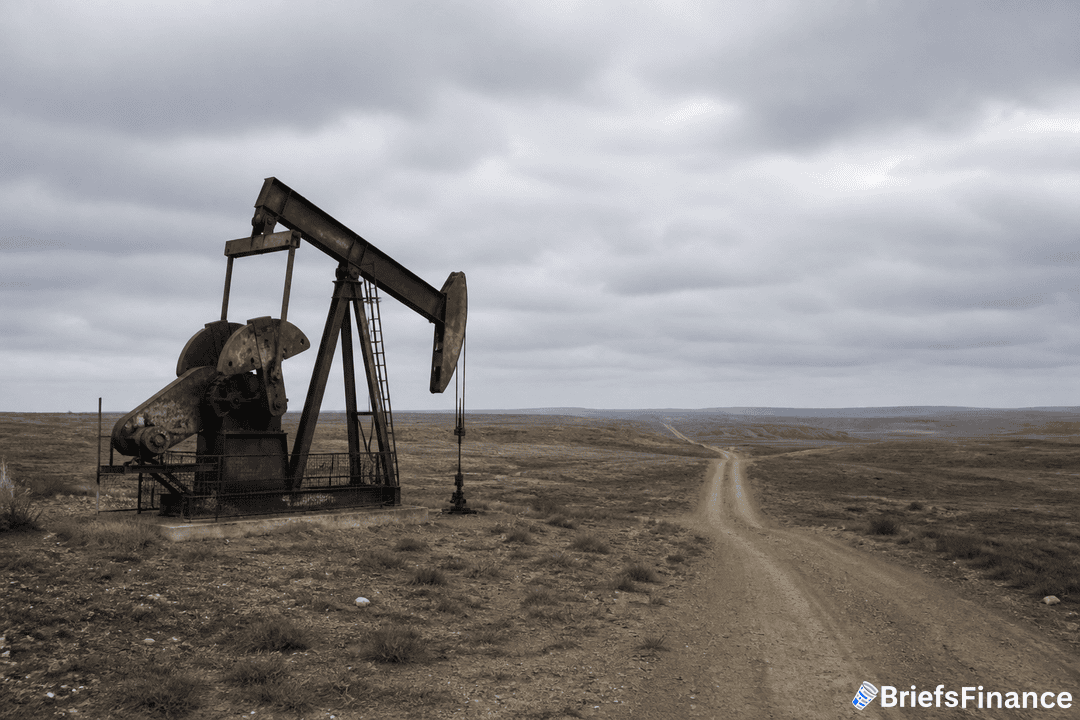
Oil prices took a step back on Monday after the U.S. unveiled a sweeping new sanctions campaign against Iran.
The move is part of a plan called "Operation Economic Outcast," which has no exemption for China. Treasury Secretary Scott Bessent has been blunt about the goal, calling it an "economic D-Day" on social media. He warned that countries should weigh the cost of testing Washington just as much as they fear defying Tehran.
The sanctions were announced Monday, and the oil market reacted quickly. Both benchmarks had actually gained ground last week when the plan was first teased, so some of Monday's drop looks like profit-taking. But the underlying tension remains.
Given the market's reaction to new sanctions, grab the free Always Be Buying E-Book to build wealth steadily.
Bessent said in a CNBC interview last week that the U.S. wants to "collapse" Iran's government using the "toughest sanctions in history." President Trump piled on, threatening the "most crushing economic operation ever taken against any country" and warning of "Economic Warfare and Isolation on an unprecedented scale."
Iran isn't backing down. The Islamic Revolutionary Guard Corps claimed Tehran has ways to counter the enemy's war and can easily build economic ties with other nations, according to Iranian state media. The back-and-forth has energy markets on edge.
Commonwealth Bank of Australia expects oil to stay choppy through the second half of the year. The bank sees Brent crude ranging from $70 to $100 per barrel during the latter part of 2026. Should shipments via the Strait of Hormuz bounce back even slightly, prices might ease toward the lower bound of that projection. The bank notes that only 50% to 60% of pre-war volumes via the Strait of Hormuz would be enough to shift the market toward oversupply.
For everyday investors, the takeaway is simple: oil is likely to be a bumpy ride for a while. That means higher uncertainty for energy stocks and gas prices, but also potential opportunities for those who can stomach the swings. The key risk, according to CBA, is that if U.S. measures succeed, Iran's ability to respond with increased violence becomes a growing concern for energy markets.
Keep an eye on what Iran does next, because the market is watching too.
The Strait of Hormuz is a narrow waterway through which roughly a fifth of global oil consumption passes. Iran has historically threatened to close it in response to sanctions or military pressure. Any disruption there would immediately tighten global supply, which is why traders watch Tehran's moves so closely.
The current sanctions aim to cut Iran's oil exports entirely, but they also risk provoking a reaction that could send prices spiking. This delicate balance explains why analysts expect wide price swings in the coming months, with the range between $70 and $100 reflecting both the possibility of eased tensions and the risk of outright conflict.
When oil prices dip like this, consider the Always Be Buying E-Book for a simple investing routine.