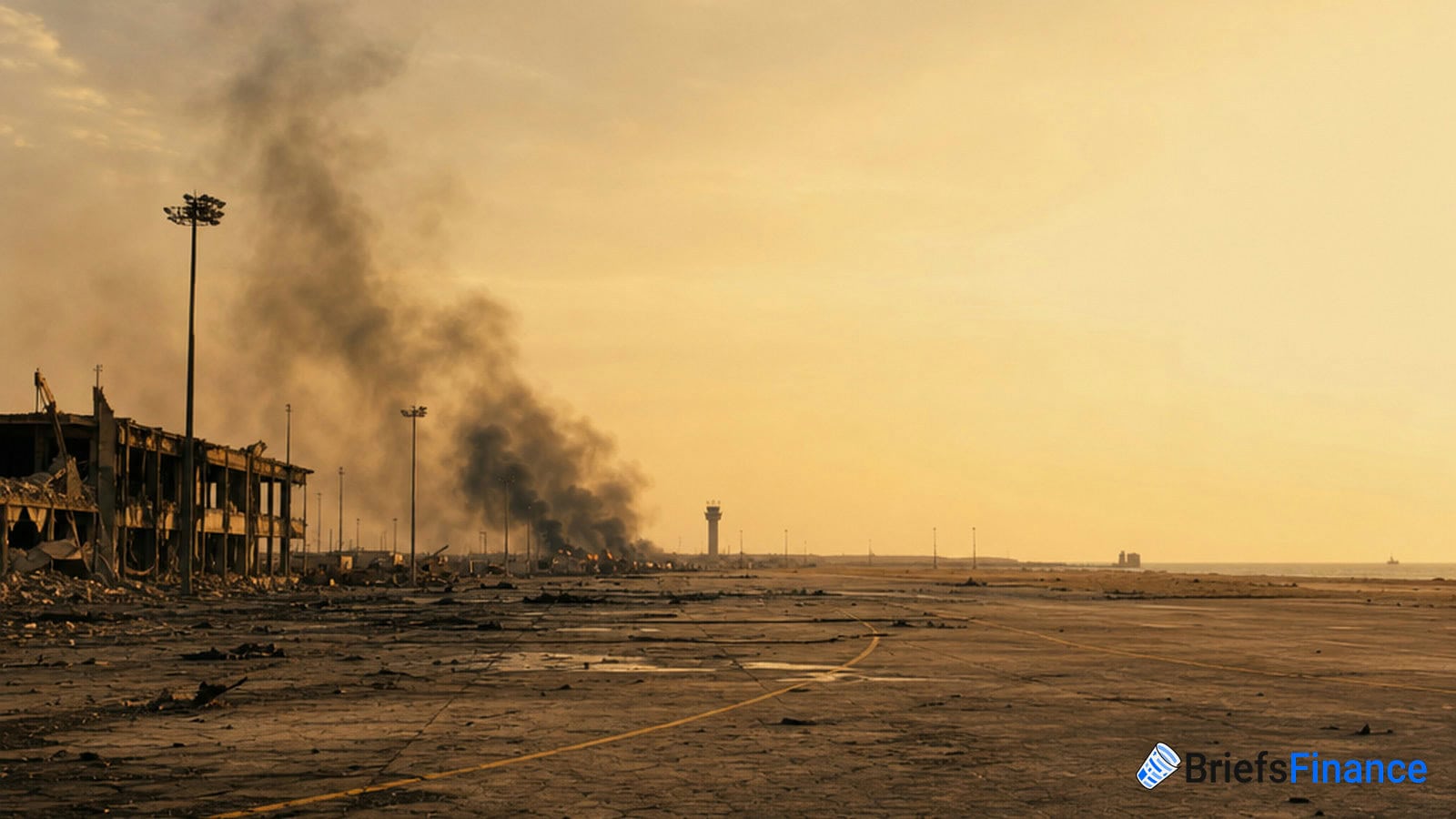
Kuwait had mostly stayed out of the regional fighting. Not anymore.
Iran just launched a drone and missile strike on Kuwait's main international airport, according to the country's state news agency, hitting a Gulf state that sits next to the world's busiest oil shipping route and one of the busiest hubs in global air travel.
Kuwait pumps about 2.5 million barrels of crude every day, or roughly 2.5% of the world's supply.
It also sits at the top of the Persian Gulf, a few miles from the Strait of Hormuz - the narrow shipping channel that moves about 20 million barrels a day, or roughly a fifth of the world's oil. Any strike on Kuwaiti soil pulls that chokepoint closer to the fighting.
Kuwait is also an OPEC member, which means any hit to its output ripples through the cartel's production targets and the world's overall supply.
Oil traders don't need a barrel to actually stop flowing to push prices up. They just need to think one might.
That's why crude has been jumpy for weeks, with every fresh headline from the region pushing prices higher before the market even knows the full story.
Every morning, Market Briefs breaks down what moves like this actually mean for your money - in five minutes a day, plus a free investing masterclass when you sign up.
Kuwait International is a major hub for flights between Europe, Asia, and the rest of the Gulf, which means a strike on the airport sends planes on longer routes and pushes fuel bills higher for every carrier flying through the region.
Many global airlines have already been rerouting around parts of the Middle East for months, adding hours and costs to flights between Europe and Asia. A direct hit on a major Gulf hub forces even more rerouting.
Insurance is the other piece. War-risk premiums for planes crossing the Gulf were already climbing, and an attack on a civilian airport pushes those costs up again - which airlines pass straight through to the ticket price.
The carriers most exposed are the big Gulf names like Emirates, Qatar Airways, and Etihad, plus any U.S. or European airline with Gulf stops on the way to Asia.
Oil prices are the first signal. Watch Brent crude in the next session - a sharp jump tells you traders are pricing in a wider war.
After that, look at airline stocks and defense names. Airlines tend to fall on news like this, while defense contractors tend to rise.
Tanker rates and shipping insurance costs in the Gulf are also worth tracking. Both have climbed in past flare-ups, and they tend to move before broader markets catch up.
Kuwait staying quiet was one of the last reasons to believe this conflict could stay contained. That reason just got hit.
If you want this kind of read on the market every morning, join 350,000+ investors reading Market Briefs - you also get a 45-minute investing course thrown in as a bonus.