A ceasefire announcement didn't stop what JPMorgan is calling a "measurable supply shock."
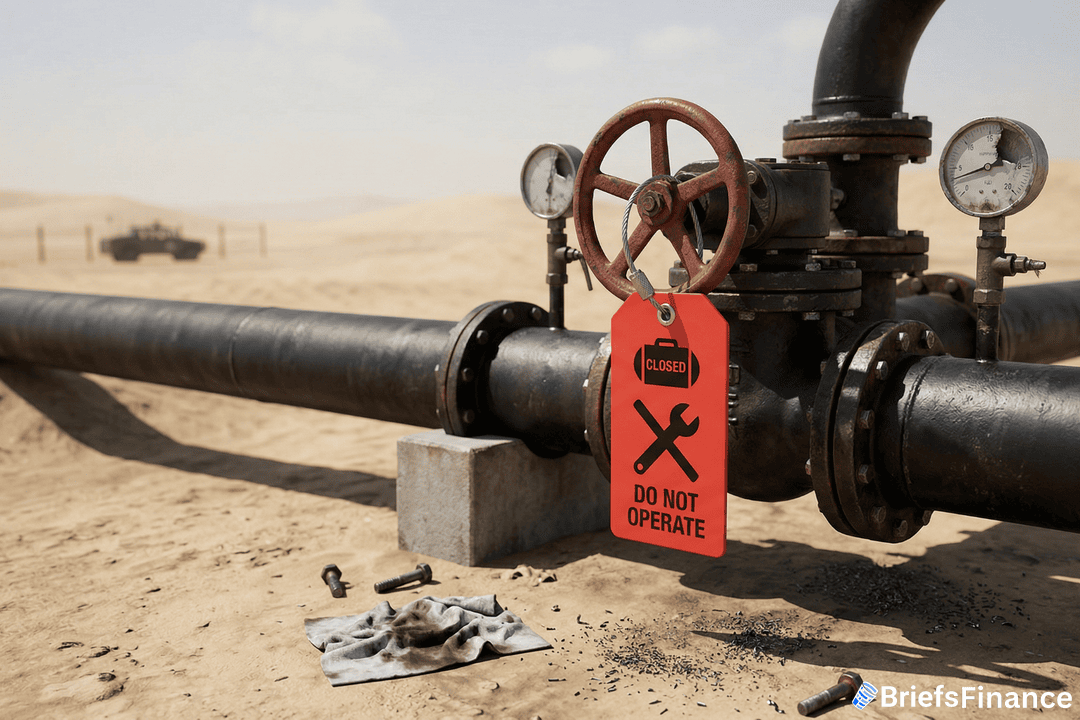
Just days after Iran and Saudi Arabia agreed to pause hostilities, the Iranian military struck a pumping station on the East-West pipeline.
The attack cut Saudi crude flow by roughly 700,000 barrels daily. That's the equivalent of a mid-sized OPEC nation's entire production vanishing in minutes.
Saudi oil output capacity dropped by about 600,000 barrels per day from that single strike - roughly 10% of the kingdom's pre-conflict crude exports.
Combined with broader regional shutdowns, Gulf producers now sit on 13 million barrels per day of offline capacity.
WTI crude held near $99 per barrel despite a 12% weekly decline, while Brent settled at $97. The market is pricing in serious damage, and analysts expect the worst of the production cuts to persist for months.
Recovery timelines for pipeline infrastructure aren't measured in days - they're measured in months. Even if the ceasefire holds, the physical damage needs repair. This creates a floor under oil prices that diplomatic progress alone can't remove.
Whether pumping stations keep working matters more than whether diplomats keep talking. That's the real question for oil markets.