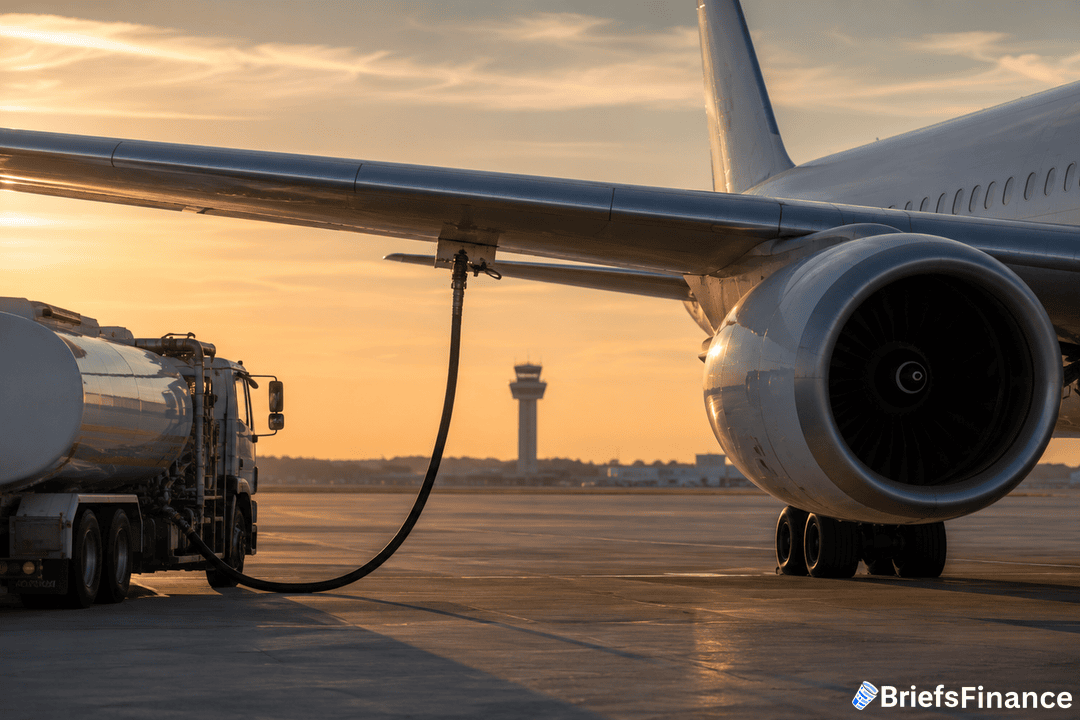
Oil is falling. Jet fuel just dropped more than 40% from its April high.
Normally that's the part where ticket prices follow. This time, they probably won't.
Fuel is one of the biggest bills an airline pays. It sits right behind worker pay.
So when it drops this fast, you'd expect fares to ease. The catch is that airlines have no reason to.
Seats are tight, planes are full, and demand is strong. Cheaper fuel right now is like a raise that never hits your paycheck.
The airlines are quietly keeping it. Fares already lag the cost run-up anyway.
Jet fuel rose more than three times as fast as airfares from January through May. That gap gives carriers plenty of room to hold prices.
Every morning, Market Briefs breaks down market moves like this, the ones that hit your wallet and your portfolio, plus a free investing masterclass when you join.
United's CEO told Reuters the airline is on a path to recovering 100% of its fuel-cost spike. He expects to get there through higher prices by year-end.
Most carriers are only partway there. Delta, United, and American clawed back about 40% to 50% of the extra fuel cost this quarter.
Alaska recovered only about a third. JetBlue and Frontier expect to recover less than half.
Deutsche Bank figures the industry gets back only about 60 cents of every extra fuel dollar. So the savings from cheaper fuel are going straight toward closing that gap.
That's why falling oil is showing up in profit margins, not lower fares.
Fares booked a week before travel were up 34.1% from a year ago in early June. That's a sign carriers can hold their ground.
Southwest's operating chief was blunt about the pressure. Asked when margins would recover, he said, "When's fuel going to go down?"
In past cycles, cheap oil set off a race to add flights. Fares fell as a result.
That's not happening now. Plane deliveries are delayed, airports are crowded, and budget airlines have pulled back.
US domestic seats are set to grow just 0.4% next quarter. That's down from the 4.6% expected before the latest Middle East tensions.
Fewer new seats means less pressure to discount. And even after the recent drop, jet fuel still costs about 54% more than a year ago.
The whole question is whether airlines can hold these prices as fuel keeps easing. If they can, lower oil turns into fatter profits instead of cheaper trips.
For investors, that pricing power is the real story. It's why airline stocks could gain even as fuel costs come down.
Jefferies says the upside could be big. A 5% drop in its fuel forecast could lift some carriers' profits by 10% or more.
Cheaper fuel was supposed to be your win. For now, it's theirs.
Sign up for Market Briefs for the daily five-minute read, and you'll also get a 45-minute investing course thrown in at no cost.