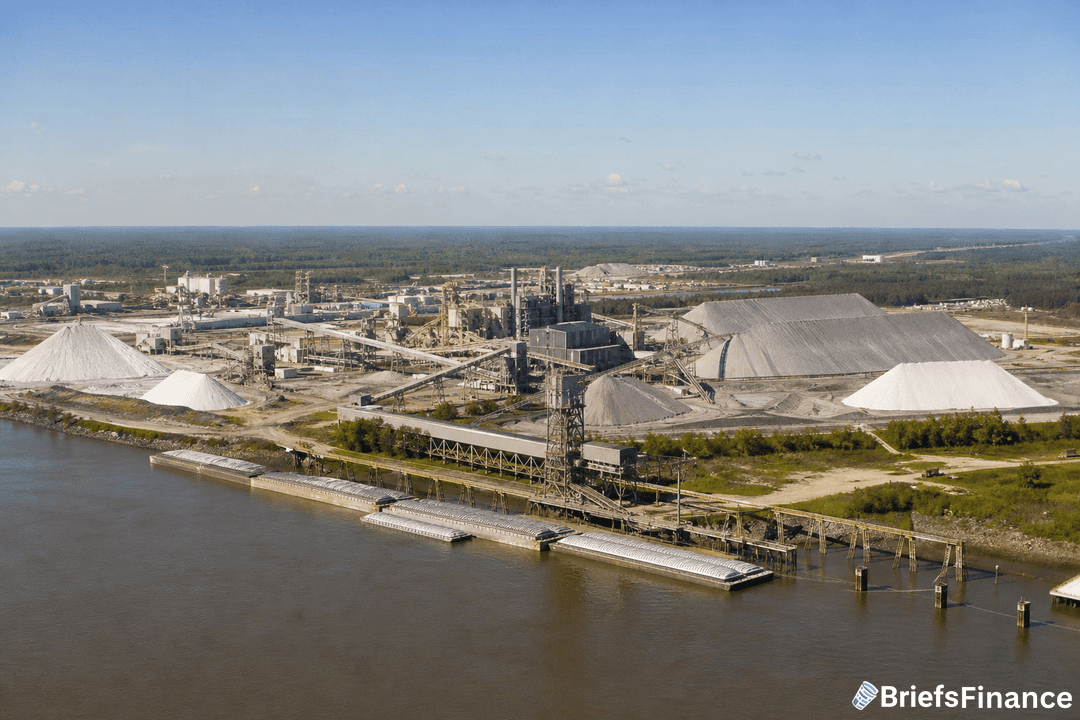
Over the past several decades, America has watched its phosphate fertilizer market steadily decline. Imports from abroad filled the void, and the nation grew accustomed to relying on other countries for an essential part of its food supply.
That could be about to change.
It sounds like a routine business announcement, but it is not.
The facility is projected to produce more than 1 million tons of phosphate fertilizer annually. By comparison, total U.S. output was about 5 million metric tons in 2024, according to Bloomberg Green Markets. A single new plant adding that much capacity represents a meaningful shift, not a rounding error.
This project did not appear out of thin air. It follows years of tension over phosphate imports, specifically from Morocco.
For about five years, the U.S. had tariffs in place on Moroccan phosphate fertilizer. Mosaic Co., the largest U.S. phosphate producer, had backed those duties, arguing the imports were being sold to the U.S. at below-market prices. In June, the White House suspended those levies to help farmers, aiming to support the agricultural sector.
Now Morocco's OCP Group is partnering with an American cooperative instead of just shipping product across the ocean.
The timing of this announcement coincides with global fertilizer market upheaval caused by geopolitical disputes, initially involving Russia and Ukraine, then the Middle East. Disruptions to trade have driven up costs for essential crop nutrients and raised worries about food security in the U.S.
With a new Louisiana plant reviving U.S. phosphate, get the Always Be Buying E-Book to build wealth consistently
At a Wednesday event in Louisiana, Agriculture Secretary Brooke Rollins said: "We need to clap real loud for that. That is a really big deal."
Deputy Agriculture Secretary Stephen Vaden said the facility will provide "true competition for the American farmer's dollar as a new entry comes to play to battle for their business."
The Department of Agriculture has expressed worries over the merging of domestic fertilizer manufacturing and the effect of increased costs on farmers, which has led to antitrust investigations.
Per the Wednesday press release, OCP is set to provide phosphoric acid for the plant. Morocco holds the world's largest phosphate rock reserves. Distribution of fertilizer products will be handled by OCP's North American arm and CHS. The project also gives Morocco's OCP Group more exposure to the U.S. market.
According to Bloomberg Green Markets data from last Friday, diammonium phosphate prices in New Orleans hit their highest level in roughly a year during early August, but have since retreated somewhat.
The $450 million commitment is an early step, and plants of this scale have a way of hitting delays. But the simple fact that a project like this is moving forward at all says something.
After over four decades of watching domestic capacity shrink, the direction is finally pointing the other way. For farmers and anyone who eats, that is worth paying attention to.