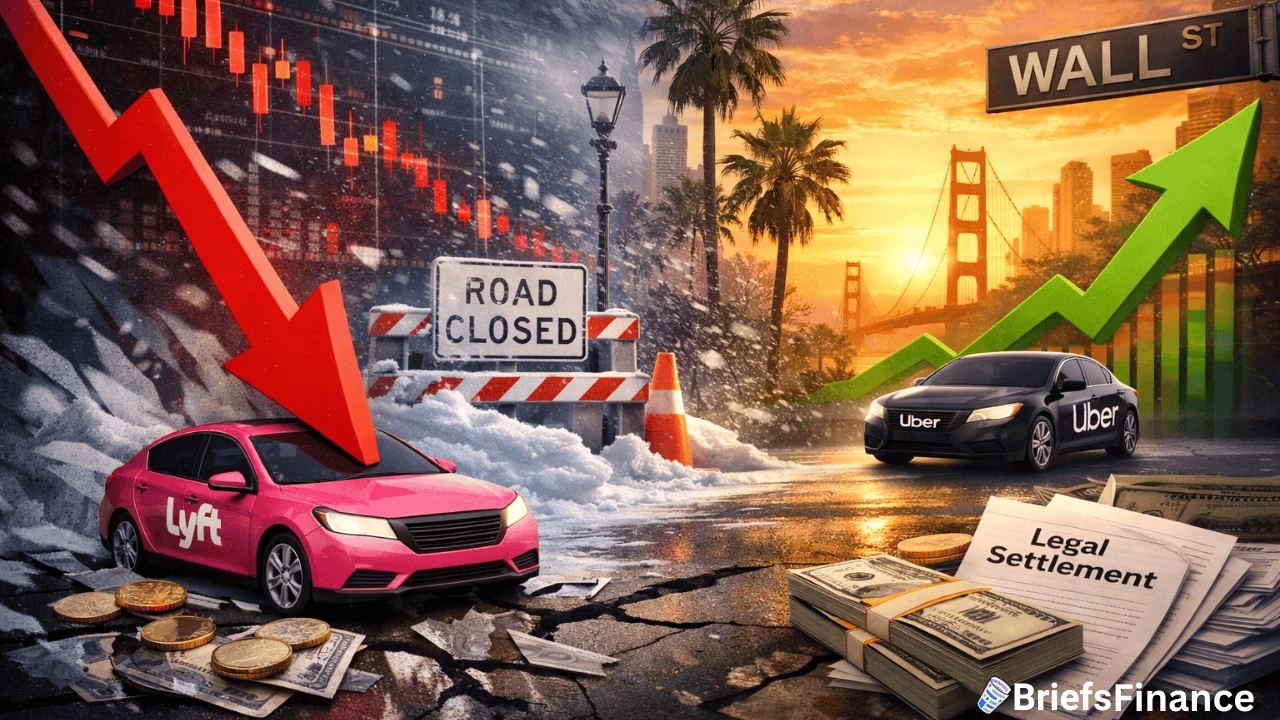
Lyft's stock dropped 16% Wednesday after earnings that should've been a win turned into a warning sign.
What went wrong? Simple. People took fewer rides.
The company clocked 243.5 million trips in Q4. Wall Street wanted 256.6 million.
Revenue landed at $1.59 billion, but here's the twist: $168 million of that came from settling old legal battles and adjusting regulatory reserves.
Take that away and the top line looks healthier. But investors care about actual rides, not accounting moves.
The real pain point? Uber's U.S. business is expanding faster than Lyft's.
A Bigger network means shorter wait times. Shorter wait times mean happier riders.
Happier riders mean market share.
Plus, the two companies got into a discount battle late in the quarter. Nobody wins a price war except the customer.
Part of the weak Q1 outlook? Winter storms hammered the Northeast and Midwest.
Hard to book rides when you can't open your front door.
New California legislation just cut mandatory insurance requirements from $1 million per person down to $60,000. For Lyft, that translates to roughly $200 million in annual savings.
The money gets passed to riders through cheaper fares. But it won't happen overnight. Riders need time to notice prices dropped. Management thinks most of the boost hits in the back half of the year.
Lyft threw $1 billion at a stock repurchase plan. Usually that signals "we think our stock is cheap."
Investors weren't impressed.
Why? Because when you zoom out to the full year, Lyft burned $188 million in operating losses during 2025. Analysts had penciled in a modest gain instead.
Buying back shares can't solve a growth slowdown. And that's what Wall Street's worried about.
Lyft's cash situation is solid - free cash flow topped $1.12 billion last year, a company record.
But the narrative cracked. Investors wanted proof that Lyft could grow rides while protecting margins and chipping away at Uber's lead.
Instead they got weather excuses, promotional spending, and trip volumes that missed the mark.
The California insurance windfall is real. The winter weather is over. But keeping up with Uber? That's the part that doesn't get easier.