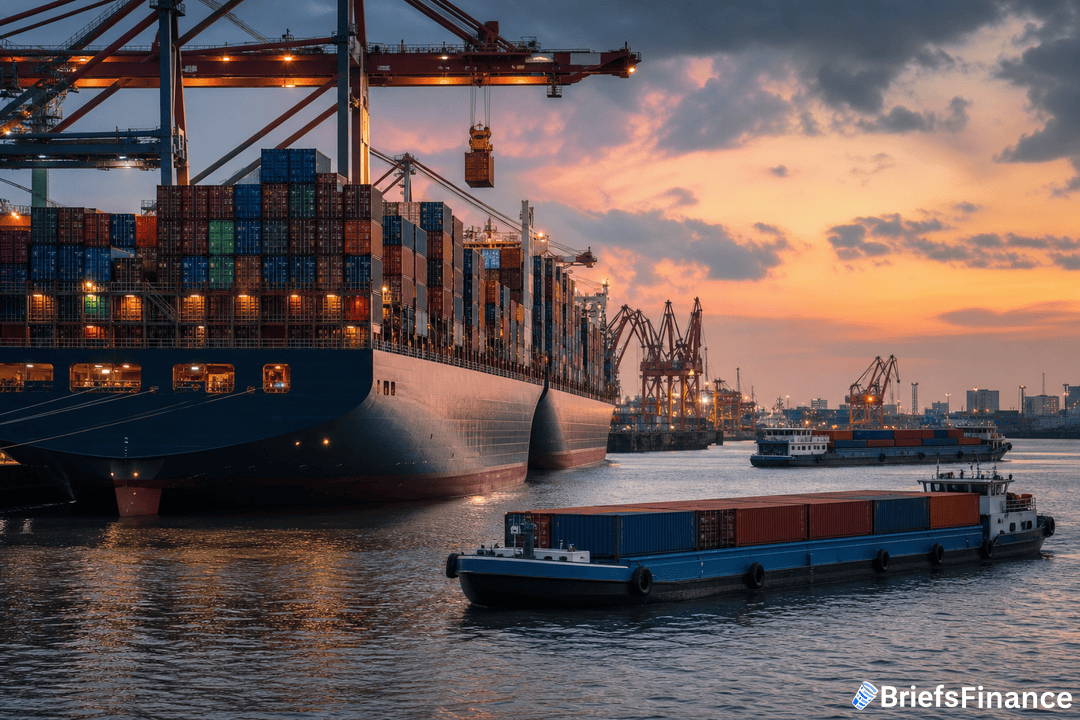
A bloc of maritime authorities known as the Consultative Shipping Group sounded the alarm Tuesday about growing fault lines in global shipping. The CSG - an informal alliance uniting shipping regulators from 18 countries - stressed that over 80% of trade moves by ocean and warned, "Without maritime trade, supply chains would fragment and the global economy as we know it would come to a sudden halt."
As a consequence, prices of oil and a range of other goods, including fertilizers, have jumped.
The statement warns that "discriminatory trade measures" are compounding the strain on navigation. The coalition put it plainly: "Global shipping works best when rules are clear and consistent around the world." It added that uncertainty about whether ports or sea lanes will remain accessible in the years ahead affects long-term commercial planning, and when national approaches split, the patchwork of regional efforts or halted multilateral tracks erodes the system's coherence. The bottom line from the CSG: "Fragmentation in rules leads directly to fragmentation in markets and ultimately to higher costs for businesses and consumers."
Members include authorities in Germany, Canada, Japan, the U.K., Denmark and South Korea. They argued current geopolitical pressures on shipping are "not episodic shocks," but "signals of a structural shift in the operating environment of global trade." In their words, "Shipping routes are increasingly instruments of leverage and risk," underscoring that safeguarding sovereignty, resilience and prosperity depends on partnerships, hands-on cooperation and coordination to keep global trade open.
Disruptions far from home can affect your savings, so steady stewardship matters. Join Briefs Finance CEO Jaspreet Singh on September 29th for a FREE live investor workshop, How to Profit From A Dollar That's Losing its Value, where he shows how we're spotting investment opportunities as the dollar falls. Save your spot.
The CSG said more ships are skirting sanctions, warning of "an unregulated shadow fleet … of hundreds of ships operating outside of standard insurance, safety and transparency frameworks" that is further fragmenting supply chains. The group added, "This creates parallel systems within global shipping, increases risk, and bypasses environmental and safety standards, undermining trust and predictability in maritime markets." Their conclusion: "The result is a two-tier system, one governed by rules, the other by opacity, ultimately weakening both."
Addressing maritime nations, the group urged them to "actively support and uphold the core principles governing shipping," calling for enforcement of existing international rules across jurisdictions and political backing "for developing and upholding common standards." It emphasized, "Strong international cooperation is not a constraint on sovereignty; it is a prerequisite for effective governance in an interconnected world."
They cautioned that letting fragmentation deepen undermines the rules-based maritime framework and heightens the risk of disruptions at key chokepoints. As they put it, "As the closure of the Strait of Hormuz demonstrates: When shipping supply chains fragment, the global economy fragments with it." For everyday budgets, that can mean higher costs passed through to businesses and consumers, plus surging prices in oil and some commodities such as fertilizers.
Keeping diversified, patient strategies helps protect and grow what you have over time. Our CEO Jaspreet Singh is hosting a FREE live investor workshop, How to Profit From A Dollar That's Losing its Value, on September 29th. Sign up free to join him live.