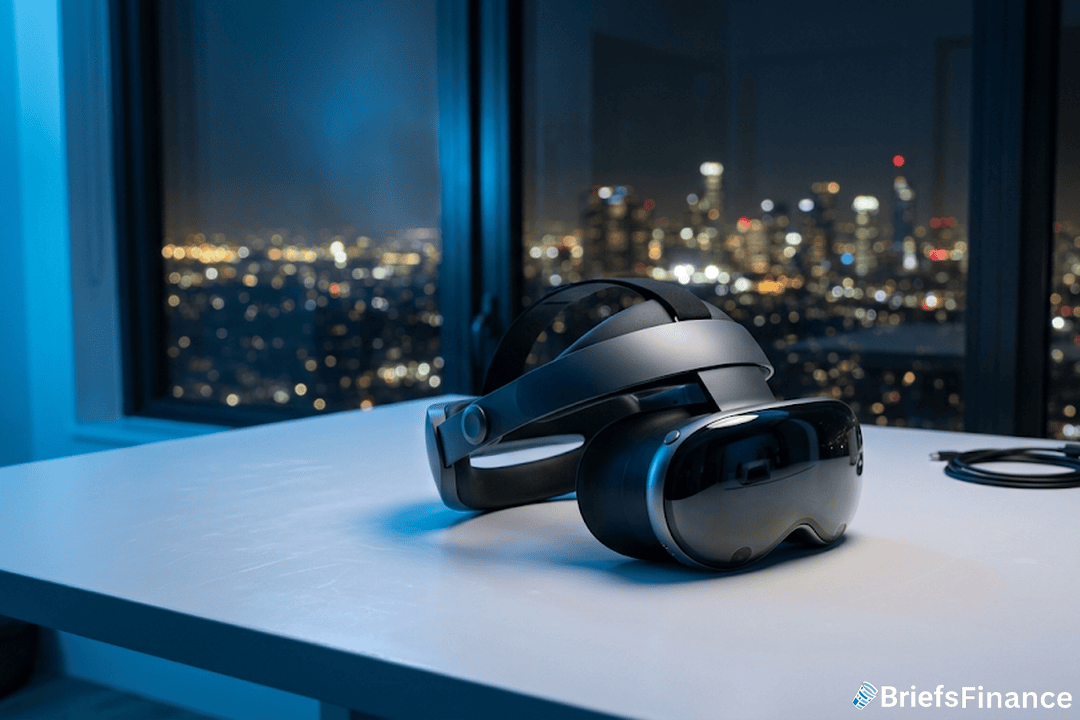
In 2021, Zuckerberg rebranded Facebook as Meta, reflecting his view that digital environments would become central to work, play, and social interaction. But consumer adoption of VR never materialized as hoped, prompting Meta to steer Reality Labs toward products such as the Ray-Ban Meta smart glasses, made in partnership with EssilorLuxottica.
The division manufactures the Quest line of VR headsets and the Ray-Ban Meta eyewear.
Since its inception, Reality Labs has been a persistent financial drain on Meta's overall results. The cumulative operating deficits have not deterred the company, largely because Meta's core advertising business remains exceptionally profitable. In 2025, Meta's advertising revenue exceeded $150 billion, giving it ample leeway to sustain heavy spending on experimental hardware.
Get the market news that matters in a five-minute read with Market Briefs, our free daily newsletter
Investors have tolerated these losses because the long-term bet on augmented reality and wearable computing could eventually open a new revenue stream beyond digital ads. However, the mounting red ink has also led to periodic calls for greater cost discipline.
To put the scale in perspective, Reality Labs has now recorded losses in every quarter since its public reporting began in late 2020, with the annual deficit consistently exceeding $15 billion in recent years. This enduring drain contrasts sharply with Meta's core profitability, highlighting the company's willingness to absorb short-term pain for a shot at a new computing platform.
Despite the persistent losses, Meta continues to invest heavily in Reality Labs, viewing it as a long-term bet on the next computing platform. The company's confidence is underpinned by its massive advertising revenue, which exceeded $150 billion in 2025. However, the slow uptake of VR headsets has forced a strategic recalibration toward more practical wearable devices like smart glasses.
The Ray-Ban Meta glasses, now in their second generation, have seen improved sales, though they remain a small fraction of Meta's overall business. Analysts suggest that the success of this pivot depends on integrating AI capabilities that differentiate the glasses from competing products from Apple, Google, and others.
These quarterly figures extend a persistent trend for the unit, which has yet to achieve profitability since its creation. Meta's core advertising business remains robust, providing the financial cushion to sustain Reality Labs' heavy spending. Meta's move from immersive VR headsets to more mainstream smart glasses is aimed at capturing a broader audience.
The Ray-Ban Meta glasses, integrating cameras, speakers, and AI features, have generated increasing interest, though they still contribute only a tiny portion of Meta's overall revenue. With losses continuing to mount, investors will watch closely whether the pivot to wearables can eventually narrow the gap and turn the division into a meaningful growth driver. The partnership with EssilorLuxottica gives Meta access to a recognized fashion brand and an established retail network, but the glasses still face stiff competition from other tech giants developing similar augmented-reality products. Meta's ability to differentiate through AI-powered features and seamless social media integration will be critical to winning consumer adoption.
Join Market Briefs, our free daily newsletter, for a quick daily rundown of the markets