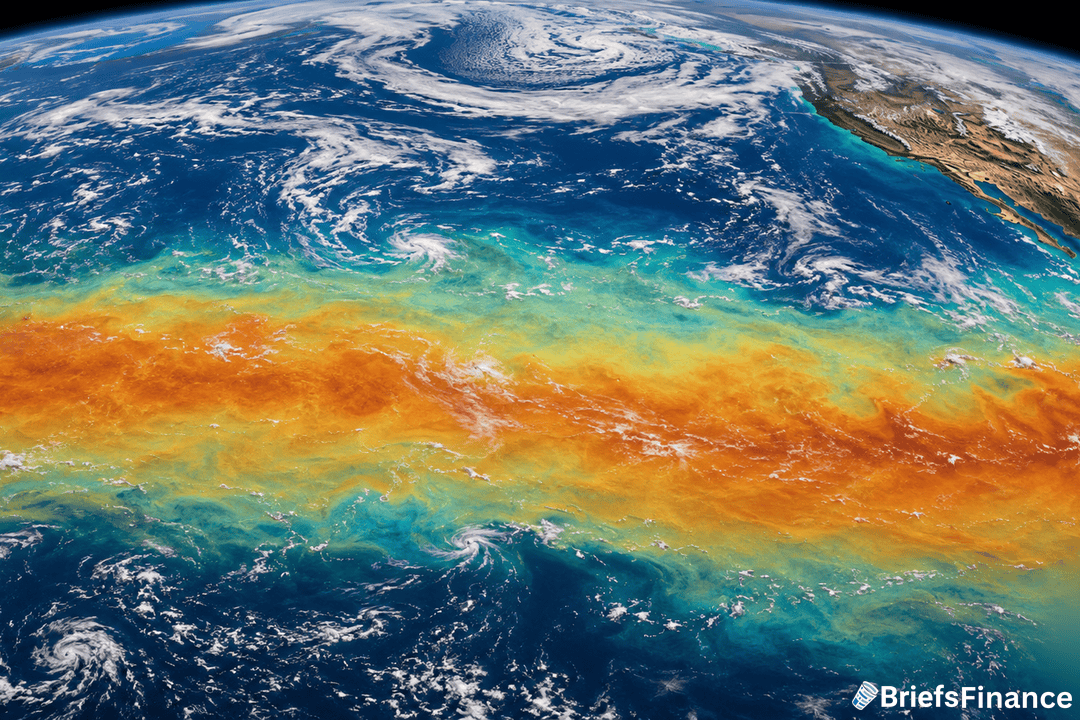
According to meteorologists, this El Niño may become one of the strongest since record-keeping started in 1950. But they also warn that even record-breaking events don't always produce the same results everywhere. "Even the strongest El Niño events do not lead to the typical impact everywhere," the U.S. Climate Prediction Center (CPC) says. The key word is probability - this event tilts the odds in favor of certain extreme weather.
El Niño is a natural warming of ocean surface temperatures in the central and eastern Pacific. Right now, that warming covers a huge area and is running 1°C above normal. In the past week, some parts of the eastern Pacific were 2.7°C warmer than normal.
Forecasters at the CPC estimate an 81% likelihood that this El Niño will be classified as "very strong." It has already emerged last month and continues to build. That matters because financial traders, government agencies, and market analysts closely monitor El Niño due to its ability to cause flooding, drought, cold spells, and changes in hurricane patterns.
Get the market news that matters in a five-minute read with Market Briefs, our free daily newsletter
El Niño's typical effects include heavy rainfall and flooding along the western coast of South America, while parts of Southeast Asia and Australia often experience drier conditions, threatening agricultural yields. These contrasting impacts can disrupt supply chains for commodities such as coffee, cocoa, and sugar, adding to market uncertainty. Traders also watch for shifts in energy demand, as extreme temperatures can strain power grids and alter natural gas consumption patterns.
In the quarter ended June 2026, dam output in India decreased by roughly 7%, while coal, nuclear, and renewable sources stepped up production to satisfy all‑time‑high electricity demand fueled by extreme heat. India's depleted reservoirs - blamed on El Niño - have strained the power grid during peak summer consumption.
The 30-year average for the Atlantic basin is 14 named storms. By strengthening wind shear across the Caribbean, El Niño disrupts the formation of tropical storms and hurricanes.
These early disruptions illustrate how El Niño's reach extends beyond weather. The reduced Atlantic hurricane forecast could lower the risk of supply disruptions for oil and gas operations in the Gulf of Mexico, while the strain on India's hydroelectric dams forces greater reliance on coal and renewables. Meanwhile, the threat to agricultural yields in Southeast Asia and South America keeps commodity traders on edge, as coffee, cocoa, and sugar prices may swing with changing rainfall patterns.
That means the warming will persist for many months. The CPC's message is that stronger events tilt the odds, but they never guarantee a specific outcome.
Join Market Briefs, our free daily newsletter, for a quick daily rundown of the markets