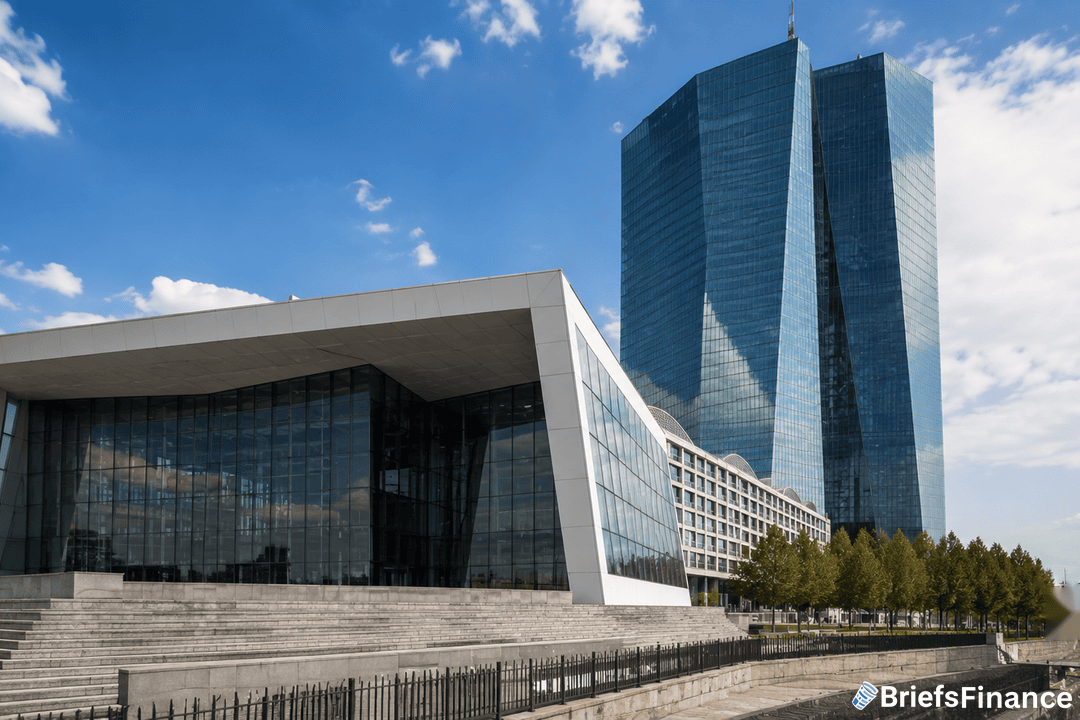
The war between the U.S. and Iran may be winding down, but high inflation could linger. Bundesbank President Joachim Nagel warned that inflation will stay "significantly above target" for a long time.
Nagel identified the energy price shock - caused by the conflict between the U.S. and Iran along with the closure of the Strait of Hormuz - as a primary reason. "The energy price shock… is still in the system," he said. "I suspect the inflation rate will stay significantly above our target."
The situation in the Middle East remains uncertain. "Now we have to wait, the situation is still very opaque," Nagel said. "Is it stable or not in the Middle East? We do not know. There are peace talks, there are 50 days more or less left, then we will see how reliable this whole situation is."
Get your free investing masterclass bonus when you join Market Briefs, our free daily newsletter
"The hike was the right decision, but it is too soon to make a call on the trajectory of monetary policy, with much uncertainty still lingering around the situation in the Middle East," Nagel said on Tuesday.
On Monday, ECB President Christine Lagarde addressed an audience in Sintra, stating that policymakers can now return to conventional methods after 15 years of "extraordinary pressures" - including the eurozone sovereign debt crisis and the war in Ukraine, which required unorthodox measures. "We no longer need to reach for unconventional instruments. While we have them at hand, we can now focus on stabilizing inflation with policy rates as our primary tool," she said. "We no longer need to act with the same force. We can make measured adjustments to rates, calibrated to the shocks we face."
But Lagarde noted that the current global setting, defined by a charged geopolitical environment, leads to more frequent economic shocks. She pointed to the Trump-era targeted tariffs and the Iran conflict as examples. "Shocks fall more often on the supply side, and Europe has built considerable resilience in response to those difficult [15] years," Lagarde added. "Yet the world we now face is no less demanding, and we must continue to change with it."
Investors are already betting on the next move. Data from LSEG shows traders currently anticipate the ECB will raise rates again in September.
Nagel's comments reinforce that view. He said there is a probability inflation "will stay at an elevated level" even after the war ends.
The conflict between the U.S. and Iran, which began in early 2026, led to a sharp spike in oil prices after Iran threatened to block the Strait of Hormuz. That blockade disrupted global supply chains, pushing energy costs up by double digits across the euro zone. The ECB had kept rates steady for over two years before the June hike, as inflation previously fell close to its 2% target. Now, with the war ending but supply disruptions lingering, policymakers face a delicate balancing act between containing price pressures and supporting economic recovery.
Subscribe to Market Briefs, our free daily newsletter, and claim your bonus investing masterclass