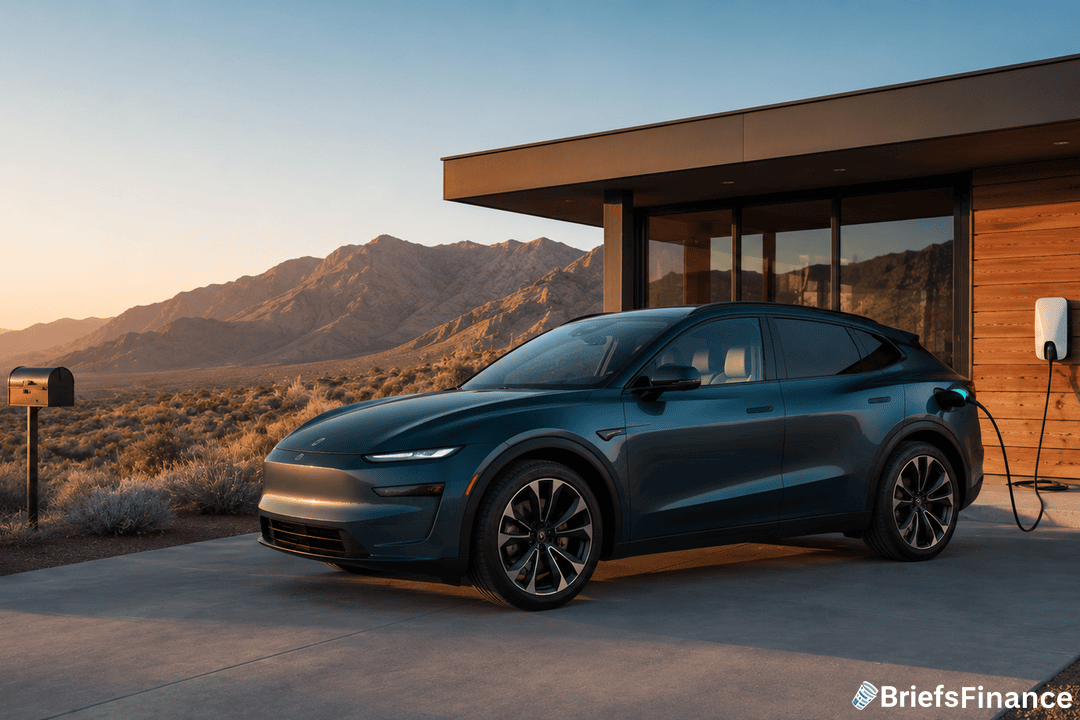
Most arguments about electric cars are about politics, but the math is simpler than that. If you charge at home, an EV saves the average U.S. driver about $1,500 a year on fuel - and in nine states, the savings get even bigger.
Most of those states are in the West.
Bloomberg ran fuel prices and household power rates across all 50 states and found a clean pattern, with nine states - including Arizona, Utah, and Washington - charging drivers above the U.S. average for gas while keeping electricity rates below average.
Washington households pay about 12.67 cents per kilowatt-hour, while Utah pays 12.52 cents and Idaho pays 11.69 cents.
Those rates run roughly 30 to 40% below the national average, and when the gap between gas and power gets that wide, the EV math turns easy in a hurry.
Every morning, Market Briefs tracks the consumer trends investors actually care about - in five minutes, with a free investing masterclass thrown in when you sign up.
Western utilities lean on cheap hydropower and growing solar capacity, which keeps household rates low, and the same region tends to sit far from refineries and major fuel pipelines - which pushes pump prices up.
That is why states like Arizona, Utah, Washington, and Idaho are the financial sweet spot for EV ownership right now, with drivers paying premium prices at the pump but plugging in at rates closer to what you would expect in a low-cost industrial state.
California sits outside the list, with sky-high gas matched by sky-high electricity, so the savings shrink.
Texas, with cheap fuel and average power costs, lands in the middle.
EVs were already cheaper to operate than gas cars across most of the country, and Bloomberg's analysis is a reminder that "cheaper" depends entirely on where you plug in.
For investors, that matters because EV adoption is not just about new model launches and federal credits anymore - it is about which states have the regional cost structure to make the switch obvious.
Those are mostly Western states, where utility rates and gas prices are pulling in opposite directions and stretching the gap that decides whether the savings really show up.
Federal EV support has been pulling back, and demand forecasts have softened across the industry, which makes Bloomberg's analysis useful - it focuses on the one number that does not depend on Washington: what it actually costs to fuel up.
In nine states, that math is enough to keep EVs competitive without any tax credit at all.
Want this kind of read on stocks, energy, and consumer trends? Subscribe to Market Briefs - the welcome bundle includes a free 45-minute investing course.