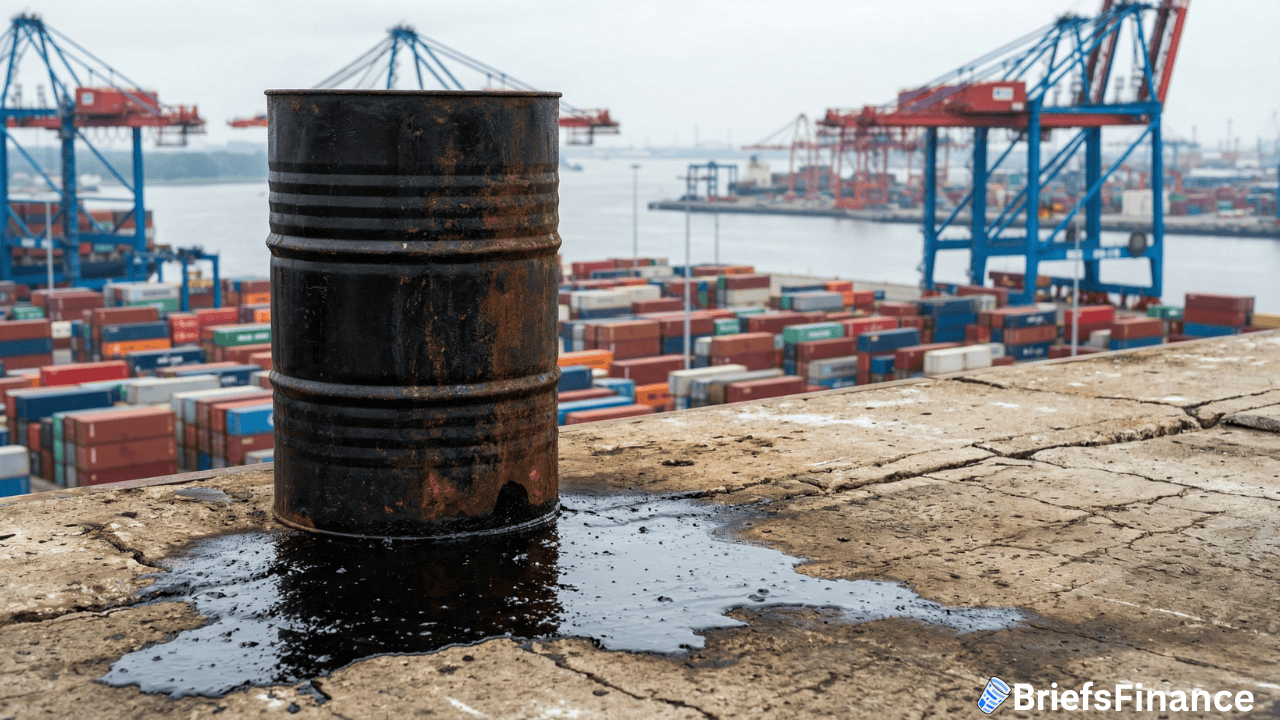
One chokepoint controls 20% of the world's oil. It's basically closed.
Brent crude has surged 53% since the U.S. and Israel began strikes on Iran in late February. At its peak, it hit $126 a barrel - a level that touches everything from gas prices to grocery bills to how central banks set interest rates.
The Strait of Hormuz is a narrow stretch of water between Iran and Oman. In 2025, nearly 20 million barrels per day of crude and oil products passed through it.
Since the war started, that traffic has collapsed. Shipments have plummeted to less than 10% of pre-conflict levels. Gulf producing countries are being forced to shut in production they can't move.
The IEA stepped in with a coordinated release of 400 million barrels from emergency reserves. At the current global consumption rate, that covers about four days. It's a bridge - not a fix.
Higher oil prices hit in two directions. For consumers, it's more expensive to drive, heat a home, and buy anything that gets shipped by truck. For central banks, it's a supply-side inflation shock arriving at the worst possible time.
The Fed was preparing to cut rates before the conflict. Now inflation expectations are climbing again. Several forecasting firms expect U.S. inflation to land closer to 4% this year.
Energy-exporting countries are finding support for their currencies. Energy importers - especially in Europe and Asia - are watching their trade balances get worse by the week.
The key variable is duration. If the conflict winds down and Hormuz reopens in weeks, oil could retreat quickly. If the closure drags into Q3, the damage to global growth gets much harder to reverse.
Oil at $126 is a tax on every economy that imports it. The longer it stays there, the more it costs.