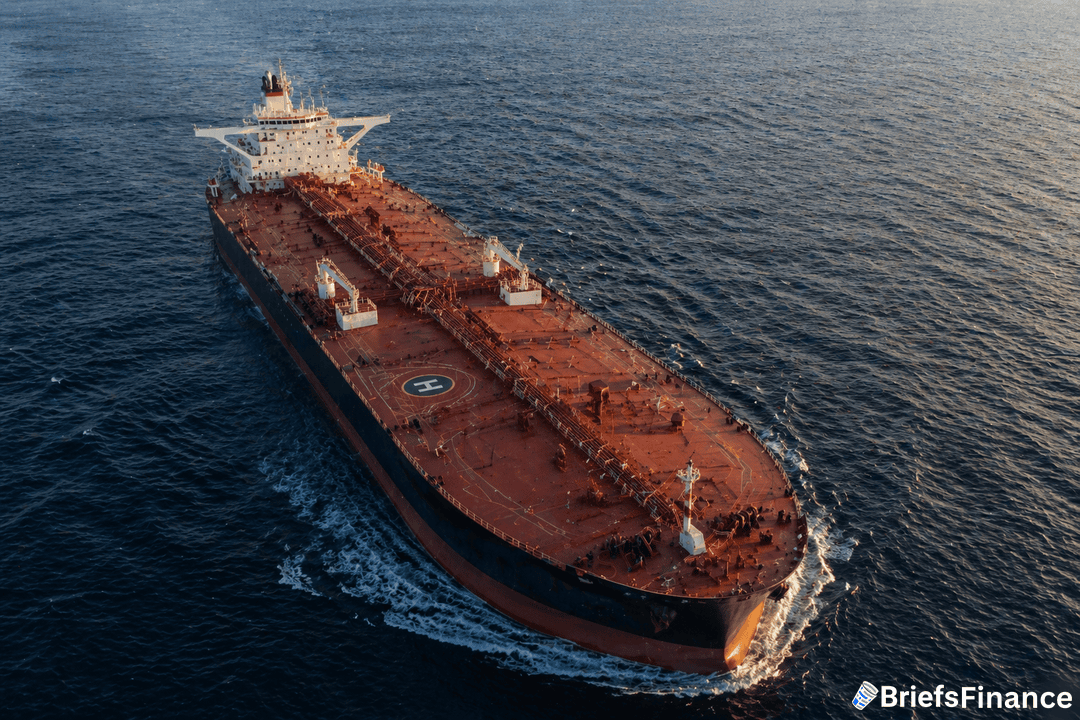
Oil traders had been hoping Trump might ease up on Iran. He didn't - and crude prices reacted fast.
Brent crude futures finished Wednesday at $118.03 a barrel, up about 6%, while WTI added nearly 7% and settled at $106.88, with both benchmarks tacking onto a multi-day rally.
The trigger was a single interview Trump gave to Axios, where he said the U.S. naval blockade of Iran isn't going anywhere until Tehran signs a nuclear deal.
"The blockade is somewhat more effective than the bombing," Trump said. "They are choking like a stuffed pig, and it is going to be worse for them. They can't have a nuclear weapon."
That's the U.S. president telling oil markets the chokehold isn't lifting any time soon, which sent traders rushing to reprice supply risk into the back half of the year.
Talks have stalled, and Iran says it won't reopen the Strait of Hormuz - the main exit lane for Middle East oil - until the U.S. lifts the blockade.
Wednesday's move stacks on top of several days of gains, with both grades climbing as the standoff drags on.
For drivers, that means pump prices keep rising. For airlines and shippers, it means another month of higher fuel bills - and for the Fed, it means inflation just got harder to bring down.
The FOMC's own statement Wednesday flagged "the recent increase in global energy prices" as a reason inflation stays high, which is part of why four officials dissented from the post-meeting language about future rate cuts.
The catch: every dollar Brent climbs filters back through the U.S. economy as a hidden tax on consumers and a headache for any company that spends serious money on fuel.
There's a second story underneath the headline. The United Arab Emirates is leaving OPEC on May 1, ending a partnership that's lasted decades.
The UAE's energy chief said Abu Dhabi is still committed to oil price stability, but losing one of the cartel's biggest producers is a structural blow to the group's pricing power.
"It erodes OPEC's influence in the oil market, while it should also be beneficial for importers and consumers," ING analysts said in a research note.
The catch is that with the Strait of Hormuz crisis still live, none of that matters for oil prices this week.
The blockade has now stretched long enough to start moving big-picture inflation expectations, which is exactly the dynamic the Fed flagged in its statement Wednesday.
Energy stocks tend to move with the underlying commodity, and Wednesday's run-up came against a backdrop of weak broader equity markets and a high-stakes earnings week from the "Magnificent Seven."
For investors, the question isn't whether oil stays high - it's how long the market is willing to price in a fully blockaded Strait of Hormuz.
The next move is on Iran. If Tehran agrees to talks, oil could give back this week's gains in days.
If not, a sustained run above $120 Brent starts to look real - and that's the level that typically forces airlines, refiners, and the Fed to all rework their playbooks at once.