Distillation involves a model acquiring knowledge from a different model, effectively replicating its skills while avoiding the cost of original development. They get world-class AI capabilities for a fraction of the cost, and they get it by taking work from US developers without permission.
The accusation extends beyond startups. Anthropic, a private US AI lab, has accused Alibaba Group of running a large-scale distillation attack against its own model called Claude. That means one of China's biggest tech companies may have illegally slurped up knowledge from a leading American AI system.
Sankar framed the issue as a direct economic threat. If US companies cannot protect what they build, the advantage of being first to market starts to fade. "It's in their own economic interests," he said about US labs protecting their IP - meaning the companies themselves have a financial reason to lock down their work.
Get the market news that matters in a five-minute read with Market Briefs, our free daily newsletter
He did not give details, but the message was clear: the money the US decides to spend on AI for defense will shape the balance of power.
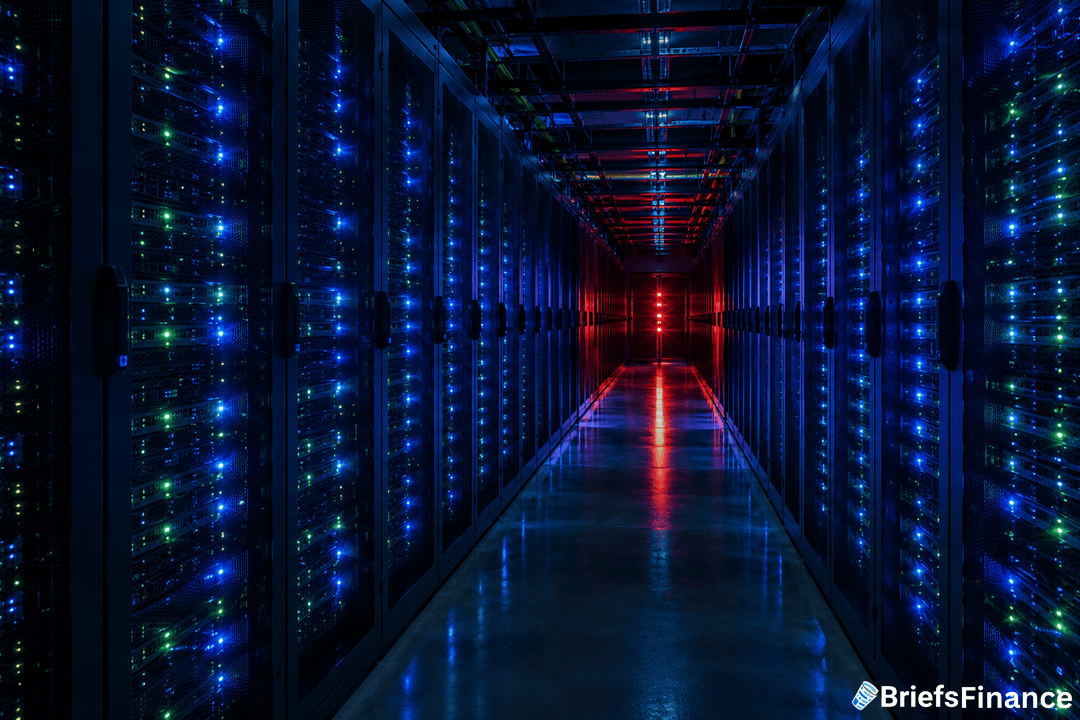
Governor Kathy Hochul on Tuesday ordered a one-year pause on any new data center construction in New York, a concrete example of communities pushing back against the physical infrastructure AI needs to run. This moratorium could delay the deployment of AI systems that require massive computing power, potentially slowing innovation and adding to the domestic resistance Sankar warned about.
Sankar compared turning away from AI to a historic misstep. "Turning our back on AI would be as consequential a mistake as turning our back on the atom in the '70s," he said. He is arguing that fear of the technology - or anger at its side effects like energy-hungry data centers - could do more damage to the US economy than any Chinese competitor.
The stakes extend beyond national security into the portfolios of US tech investors. Palantir's CTO is effectively arguing that the two biggest threats to American AI dominance are external theft and internal resistance.
At the same time, if state and local governments impose moratoriums or restrictive zoning on data centers, the very infrastructure needed to deploy AI at scale could become scarce. Sankar's warning about the 2027 defense budget echoes a broader concern: without sustained federal investment, the US military could fall behind adversaries who are aggressively integrating AI into their operations. For investors, the key takeaway is that the policy decisions made in the next few years - on IP protection, energy regulation, and defense spending - will likely determine which AI companies emerge as long-term winners.
Join Market Briefs, our free daily newsletter, for a quick daily rundown of the markets