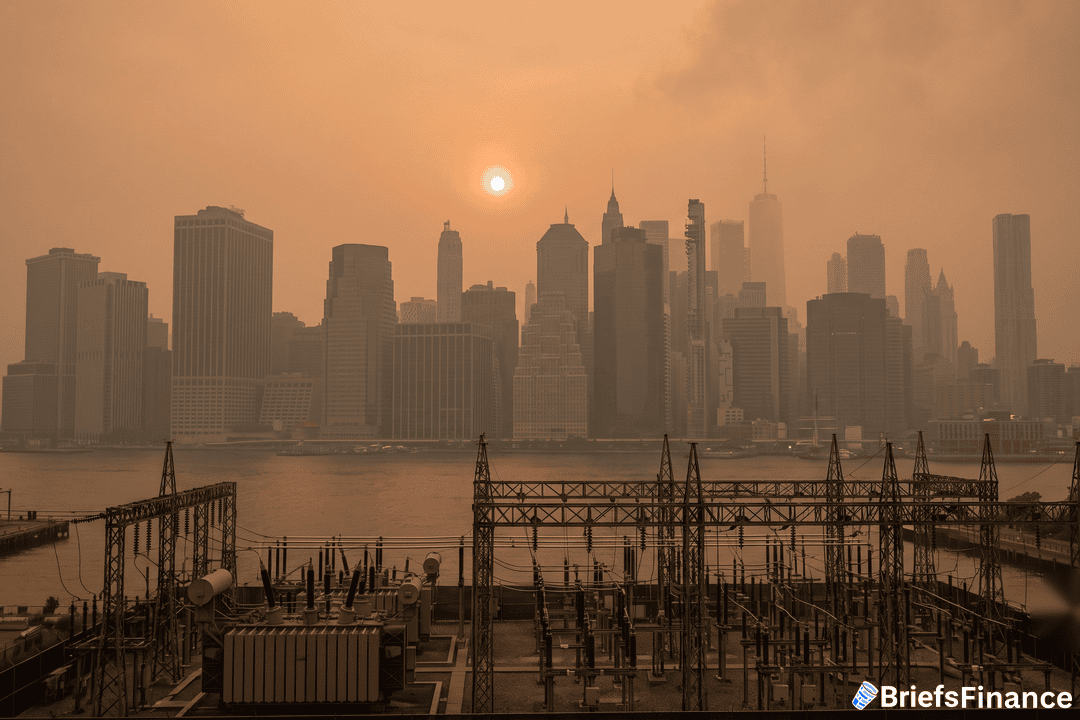
The smoke from multiple Canadian blazes dispersed over parts of the Great Lakes region, the Midwest, and the Northeast. Amanda Lefton, commissioner of the New York State Department of Environmental Conservation, said the smoke would come "in waves" throughout the day and that "we may see worse air quality tomorrow." Washington, D.C., was forecast to top 100°F (38°C). Minneapolis was expected to reach 96°F, and the heat index at O'Hare International Airport outside Chicago was expected to exceed 100°F. Downtown Los Angeles could see a high of 95°F. According to Bob Oravec, a senior forecaster at the U.S. Weather Prediction Center, "Today is probably the hottest day for New York City. "The worst of the heat is today for New York City and today, tomorrow and Friday for DC"."
MISO, the grid operator covering much of the central United States, issued a maximum generation warning because of unplanned generator outages and load that is expected to surpass forecasts across the Midwest. MISO planned to implement emergency pricing to secure additional capacity. New Jersey Transit, meanwhile, cautioned riders that high heat might lead to slower train speeds and potential delays.
Get the market news that matters in a five-minute read with Market Briefs, our free daily newsletter
Portions of the Midwest and Northeast were under air quality alerts. Forecasters anticipated that some smoke would drift toward Washington and Philadelphia. Individuals suffering from cardiac conditions, asthma, or other breathing problems were most vulnerable to the deteriorating air quality.
According to Lefton, longer fire seasons are causing more frequent air quality problems in New York. The state intended to hand out face masks across New York City.
Extreme heat warnings and advisories were also in effect for large parts of Southern California. Across California and the West, the fire danger was increasing due to dry winds that created a level 1 of 3 threat, per the U.S. Storm Prediction Center. As onshore winds travel downhill over California's coastal mountains and Central Valley, they would become hotter and drier.
State fire officials reported that the Elephant Fire in Sierra County, California's largest wildfire, had consumed 15,526 acres and was 42% contained. The fire was located on federal property roughly 22.8 miles northwest of Reno, Nevada.
This summer's extreme weather highlights a growing intersection of climate-change effects on public health and critical infrastructure. The simultaneous heat wave and wildfire smoke worsen respiratory illnesses while pushing power grids to capacity during peak demand. Grid operators like PJM and MISO are increasingly relying on emergency measures such as pricing adjustments and regulatory waivers to keep the lights on. Lefton's observation about lengthening fire seasons directly ties to the increasing frequency of poor air quality events in New York and other cities.
Join Market Briefs, our free daily newsletter, for a quick daily rundown of the markets