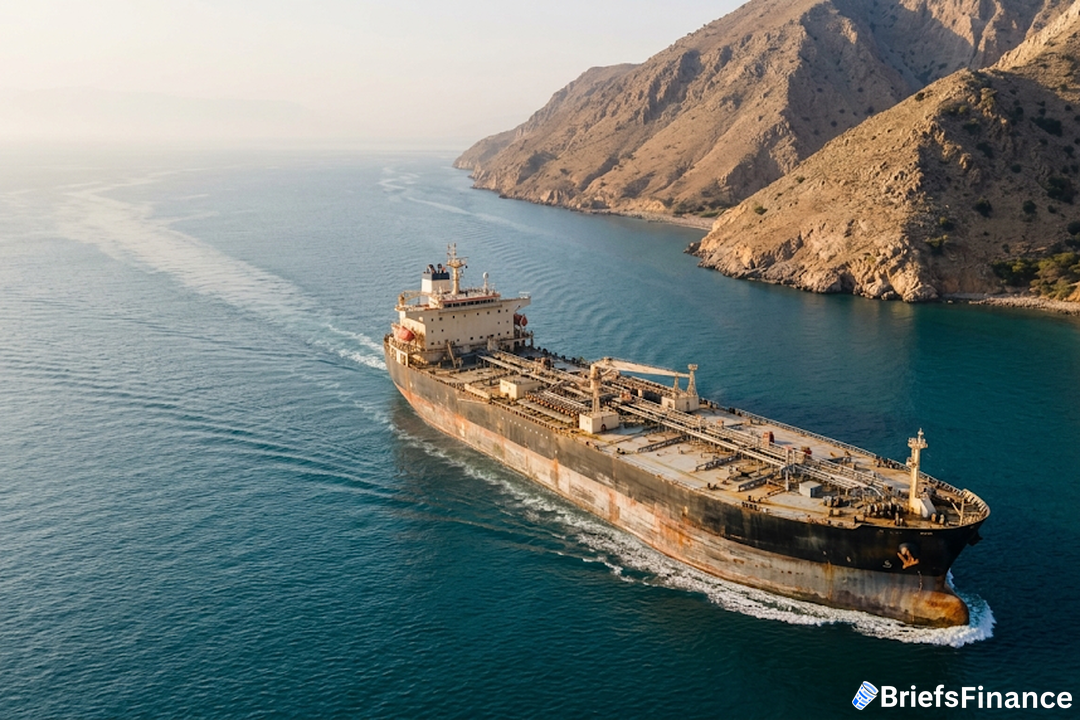
If you felt like the world's busiest oil chokepoint was running hot, you're right. On Monday, seaborne flows through the Strait of Hormuz topped 17 million barrels, a new high since the Iran war started in late February. For comparison, before the war began on Feb. 28, about 20 million barrels per day of crude and refined products typically crossed the strait.
Speaking with CNBC's Brian Sullivan in Venezuela on Wednesday, Energy Secretary Chris Wright said Monday's exports exceeded pre-war totals once you include volumes moving out of Saudi Arabia and the United Arab Emirate through pipelines that avoid the strait. "With or without Iran, oil and gas will flow out of the Arabian Gulf region and it's happening," Wright said.
Wright argued Iran is losing the ability to "hold the world economic hostage" because U.S. forces are assisting tankers transiting Hormuz, adding Tehran is "causing some disruption but they are losing that card." He also said U.S. figures on Hormuz traffic run higher than private ship-tracking estimates, asserting the Department of Energy and the U.S. military have the best data because commercial firms can miss covert transits.
When energy headlines catch attention, steady investing still matters, so download the free Always Be Buying E-Book
U.S. crude futures fell about 1% Wednesday after spending part of the session near $90 a barrel, as Washington and Tehran exchanged military strikes following a stretch of relative calm. On the water, the U.S. military has set up a specific corridor that tracks along Oman's coast for friendly Gulf tankers, and those ships frequently travel after dark with their transponders disabled to lessen the chance of being attacked.
Iran has carried out repeated strikes on tankers using that U.S.-protected path and, after those attacks, has pushed merchant vessels to route through a northern passage within its own waters. Incident reports from the United Kingdom Maritime Trade Operations Centre indicate that at least two tankers were attacked in the strait this week.