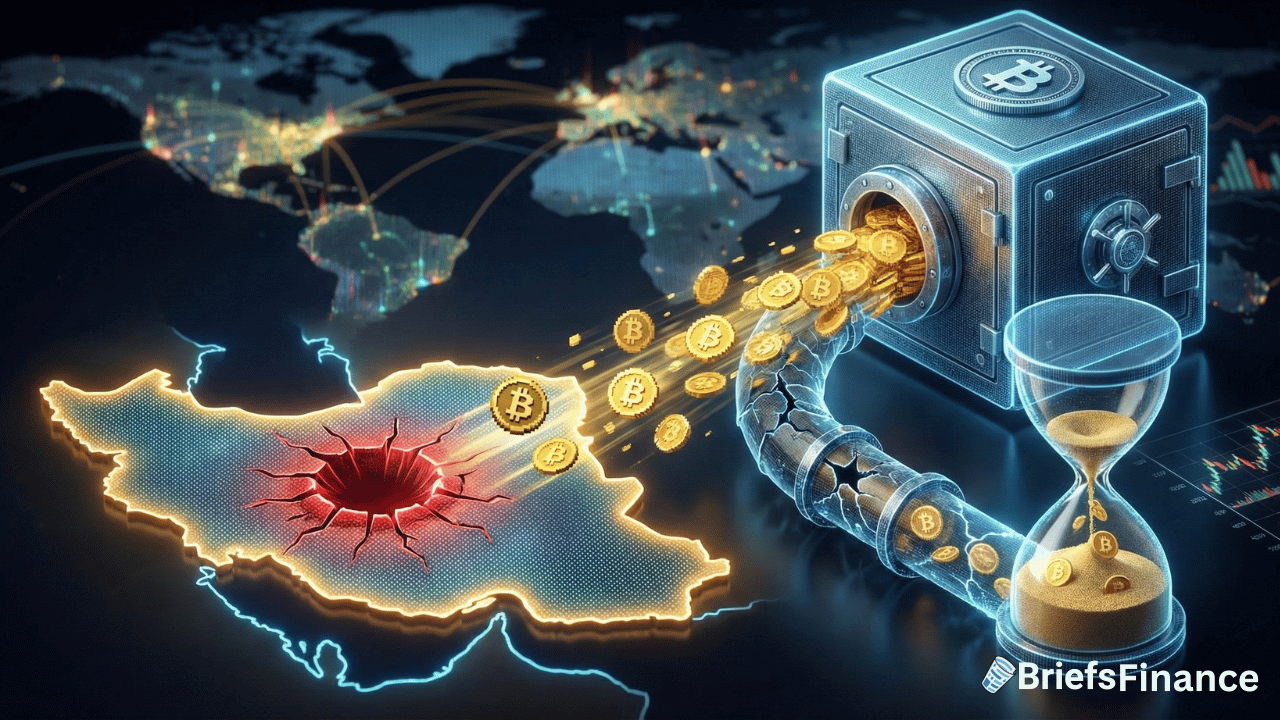
When bombs start falling, Iranians don't call their bank. They open their crypto app.
Blockchain analytics firm Elliptic tracked outflows from Nobitex — Iran's largest crypto exchange, with more than 11 million users — and found they spiked 700% within minutes of the first US-Israeli strikes on February 28. At the peak, roughly $2.8 million per hour was leaving the platform, compared to a normal baseline of $300,000–$400,000. Initial tracing shows those funds headed to overseas exchanges that have historically received large inflows from Iran.
Nobitex processed $7.2 billion in crypto transactions in 2025. It's not a fringe platform — it's the backbone of Iran's digital economy.
Iran has been cut off from the SWIFT international banking system since 1979. Its citizens have almost no way to move wealth abroad through traditional channels. Crypto — particularly USDT, a dollar-pegged stablecoin — has become the primary workaround. Convert rials to USDT, withdraw to a private wallet, send overseas. The whole thing bypasses the global banking system.
Chainalysis noted that "some of these flows are almost certainly ordinary Iranians moving funds in response to rising risk" — not just sanctioned actors. This pattern shows up every time Iran faces a shock: Elliptic identified similar spikes following US sanctions announcements in January and after a government-imposed internet blackout during domestic protests.
Not everyone reads the data the same way. TRM Labs offered a more cautious take, describing the activity as "more indicative of stress than systemic capital flight" — noting that overall crypto trading volume in Iran fell 80% during the internet disruptions, limiting what users could actually do.
Crypto gives Iranians a financial lifeline the banking system can't. But it also leaves a trail. Blockchain transactions are public and traceable — which is exactly how Elliptic spotted the spike in the first place. The same transparency that makes crypto a useful evasion tool also makes it visible to regulators and investigators worldwide.
When the bombs fall, the blockchain doesn't lie.